
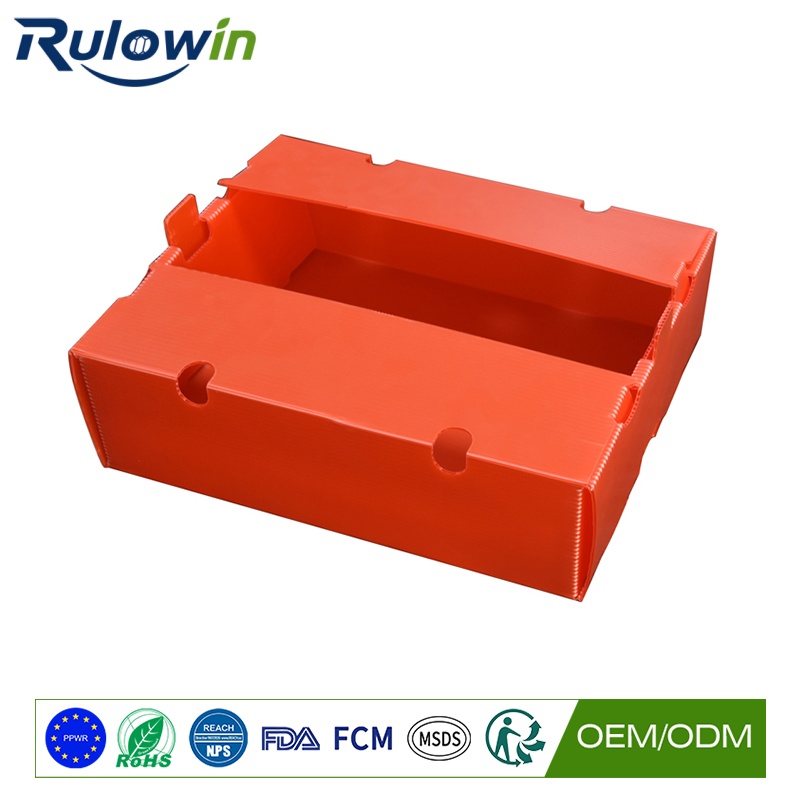
Root vegetables come out of the ground with soil attached, and a lot of that soil travels with them into the crate, into the wash bay and into whatever the crate is used for next. It is the single most abrasive thing a crate carries, and it is a cross-contamination risk that most sites underestimate.
What soil does to a crate
Soil is quartz and mineral particles, harder than polypropylene. Carried wet in a crate it polishes the internal surfaces, rounds the edges of drain paths and, over enough trips, noticeably thins the base. Crates used continuously for root crops wear faster than crates used for anything else, and the wear is usually visible as a smooth, shiny base.
Drain paths block
The same soil packs into drain channels and hardens when it dries. A crate that has been through root crops and then stacked dry for a month will have blocked drains, and it will not drain on its next trip until somebody clears them. That is a maintenance task, and it is usually discovered when a washed crop arrives wet at its destination.
The cross-contamination rule
A crate that has carried soil should not carry a ready-to-eat crop without a full wash in between. That sounds obvious and it is routinely broken on mixed farms where one fleet serves every crop. The cheapest control is physical separation by colour – root crop crates in one colour, salad and soft fruit in another – because a colour rule survives a busy day better than a written procedure does.
Washing root crop crates
A pre-rinse to remove the bulk of the soil, then a wash. Going straight to the wash tunnel with a crate full of soil puts an enormous load on the filtration and the water, and it is the reason wash water quality collapses in root crop season. Where the wash is recirculated, that matters more. Wash regime design is discussed in washing and sanitising reusable produce boxes.
Wear life and retirement
Because root crops wear crates faster, a mixed fleet will have a subgroup that needs retiring earlier. Inspecting for a thinned or cracked base and retiring those crates to non-food use is cheaper than discovering a crate has failed under a load. The judgement is the same one described in repairing reusable produce boxes, applied earlier in the crate’s life.
Where a crate wins against a carton here
Cartons and root crops are a poor combination because the soil carries moisture with it and the carton base goes soft. A crate handles the weight, the water and the abrasion. For washed root crops in particular – where the crop goes into the container wet – this is one of the clearest cases for switching.
Keeping soil out of the wash water
The bulk of the soil comes off in the first minute of rinsing. A pre-rinse stage – a simple spray bar over a drain before the crates reach the wash – removes most of it and keeps the wash water usable for far longer. Where wash water is recirculated, that stage pays for itself quickly.
The second half of the problem is the crate design. Wide, open channels clear with a rinse; narrow ones need a brush. If the fleet is going to run root crops regularly, wide channels are worth specifying even if they make the crate marginally less stiff – the alternative is a manual cleaning step that will not happen consistently.
What we can do
We supply heavy-duty produce crates with wide drain channels that clear easily and a thicker base section for abrasive crops. Tell us the crop and whether it goes into the crate washed or dry, and we will say which specification suits it.