
Stone fruit – peaches, nectarines, plums, cherries – has a particular problem: impact damage is not visible when it happens. Fruit is picked, packed, cooled and transported looking perfect, and the bruise appears at the retail end where nobody can explain it. By then the crate is long gone and the argument is unresolvable.
Why the damage is delayed
Bruising is cell damage under the skin. It takes hours for the affected tissue to discolour and soften, so a fruit that was damaged at packing shows no sign at packing. That means any inspection done at the packhouse finds nothing, and any inspection done at retail finds everything. The only way to control it is to prevent the impacts, which is a crate and handling question.
Where the impacts happen
Three places dominate. Fruit dropping into the crate from height during field packing. Crate-to-crate contact when a stack is moved or when a pallet is jolted. And fruit settling against the crate base or wall during transport over a long distance. The first is a picking discipline issue, the second and third are crate design issues.
Base design is the main lever
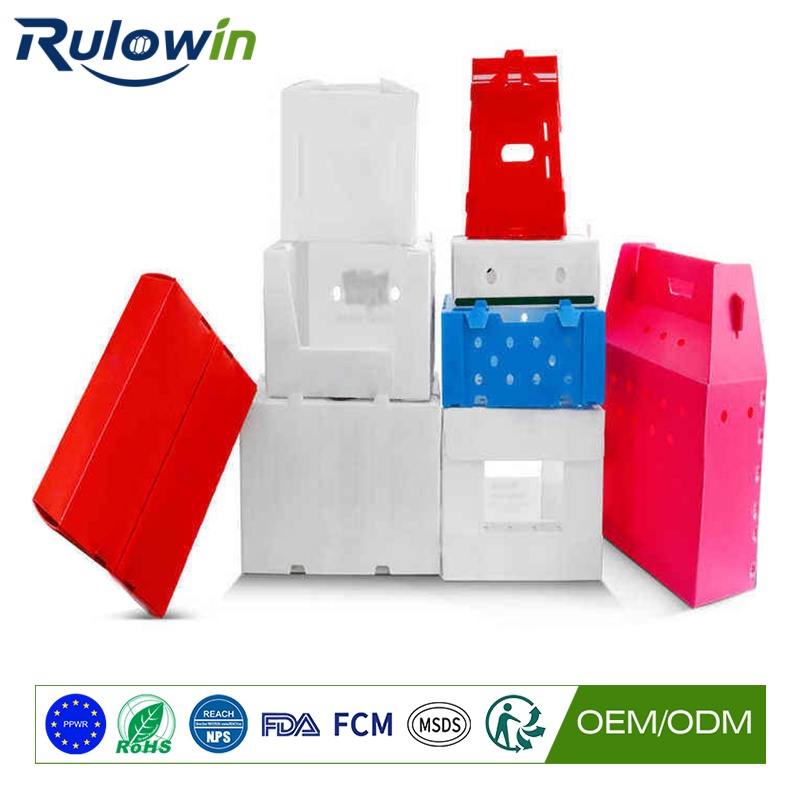
A hard, flat base transmits every jolt directly to the fruit resting on it. A base with some compliance – a slightly radiused surface, or a rigid corrugated PP sheet layer pad cut to fit – spreads the contact and reduces the peak pressure on individual fruit. Pads are common in stone fruit packing for exactly this reason, and a reusable PP pad is cheaper per trip than a single-use alternative and does not go soggy.
Fill height and headroom
Overfilling a crate so fruit sits proud of the rim guarantees that the crate above crushes the top layer. Underfilling lets fruit move during transport, which causes its own bruising. The right fill leaves the top layer just below the rim so the crate above bears on the rim and not on the fruit – and it is worth marking that level on the crate so pickers can see it.
Cooling changes the fruit’s behaviour
Cold stone fruit is firmer and bruises less readily than warm fruit, which is one of the strongest arguments for rapid pre-cooling. It is also why a crate that supports fast, even cooling reduces bruising indirectly. The relationship between crate venting and cooling speed is the same one discussed in crates for pre-cooling after harvest.
What cannot be fixed by packaging
Fruit dropped from shoulder height into a crate will bruise regardless of what the crate is made of. Fruit picked overripe will bruise regardless. Some of the bruising attributed to packaging is picking practice, and being straight about that is more useful than selling a crate as a solution to it.
Measuring bruising so you know if it improved
Take a sample of fruit at packing, hold it at the temperature the crop will travel at for three days, then cut or assess it. That delayed assessment is the only way to see the damage that was actually being caused, because the bruise is not visible at packing. Twenty fruit a day is enough to build a trend.
Then change one thing at a time – fill height, pad, drop height into the crate – and watch the number. Bruising has several causes and the only way to know which one is dominant on your line is to vary them separately. It is slow and it is the only method that produces a real answer.
What we can do
We supply stone fruit crates with radiused bases and rim bearing, plus reusable layer pads cut to fit. Tell us the crop, the transport distance and whether fruit is packed in the field, and we will say what will and will not help.