
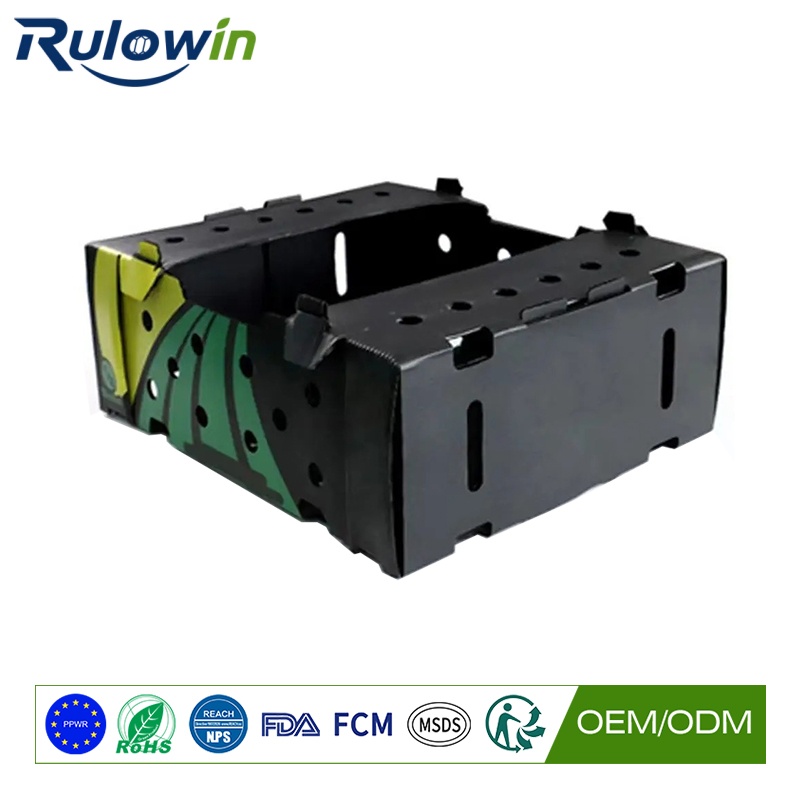
Some produce ships with ice – crushed ice over the top, ice in the base, or slurry ice injected into the load. It is an effective way to hold temperature on a long journey, and it means the crate sits in meltwater for most of that journey. Anything that does not handle that is not suitable.
Where the meltwater goes
Ice at 0C melting into water at 0C, running down through the load and out through the crate base. The volume is not small – a load iced at departure can lose a substantial proportion of its ice mass on a two-day journey, and all of it leaves as water. That water goes onto the crate below, onto the pallet and onto the trailer floor.
Crates do not care, cartons do
This is the clearest case in the whole carton-versus-crate argument. A carton iced at departure is structurally finished within hours, and the usual response – a waxed board, a plastic liner – adds cost and still fails at the corners. A crate is unaffected by the water and drains it. If iced shipping is part of the operation, the carton comparison is not close.
The load shifts as ice melts
Ice takes up volume and holds the load in place. As it melts, the load settles and the top of the crate is no longer supported. That settling is a source of movement damage on a long journey, and it is also why stack height matters – a tall stack with a lot of ice settles more. Where the crate above bears on the rim rather than on the contents, settling does less harm.
Drainage versus retention
There is a genuine tension: a crate that drains freely loses the meltwater and the cooling that came with it, while one that retains it keeps the produce cold and sitting in water. For short journeys drainage wins. For long ones, some retention of meltwater around the load is actually useful for temperature, provided the produce tolerates being wet. The crop decides this, not the crate.
Salt and slurry
Slurry ice and salt icing are more aggressive. Salt is corrosive to metal fittings and it needs a rinse, and the residue left in drain channels and corners has to be washed out before the crate goes back into a normal produce loop. Where salt icing is used, that rinse step is part of the specification rather than an optional extra, and it is the sort of detail that gets missed when a wash regime is written for a different crop.
What to check on arrival
How much ice is left, whether the drain paths are clear, and whether the bottom crate in the stack has been sitting in a pool. Those three tell you whether the icing rate is right, whether the crate drained properly and whether the pallet needs a drip tray. They also tell you, over a season, whether the stack height is too ambitious.
Checking whether the icing rate is right
Too little ice and the load warms; too much and the meltwater floods the bottom crates and the extra weight is being paid for on every journey. The check is simple: on arrival, look at how much ice is left in the top crate and whether the bottom crate is standing in water. Ice remaining at the top plus a dry bottom means the rate is about right.
If the bottom crate is flooded, either the icing rate is too high for the journey or the drainage is inadequate – and distinguishing them matters, because one is a cost and the other is a crate specification. The same crop and journey in a different crate will usually tell you which. Ice handling is covered further in PP crates in seafood, ice, salt and smell.
What we can do
We supply iced-shipping crates with drain channels sized for meltwater rather than just for wash water, and we will advise on stack height for iced loads. Tell us the journey length, the icing method and whether salt is used.