
Reel failures get reported as product defects far more often than they are. Watching a crew work for half an hour usually identifies the cause, and it is nearly always one of three habits rather than anything wrong with the reel.
One: dragging instead of turning
A reel lying on its side with the cable pulled off it adds one twist to the cable for every turn removed. By twenty metres you have enough stored torsion to make the cable kink on its own, and it will keep doing so for the rest of the run.
The fix is a spindle, a shaft, or two people with a bar through the hub. Nothing elaborate. This is the single change that removes most tangle and kink reports, and it costs nothing.
Two: over-winding
A reel is rated for a length at a given cable diameter. Wind past it and the cable starts pressing on the flange near the rim as well as at the hub, and the flange goes from being loaded in one zone to being loaded everywhere.
The crack still starts at the hub, because that is where the section is thinnest – which is why it looks like a weak hub rather than an over-filled reel. We went through the mechanism in why cable reel flanges crack near the hub.
Three: reusing a reel for a different cable
A reel that carried a thin cable last time is rated in metres for that cable. Put a thicker cable on it and it fills the same volume in fewer metres – but the radial pressure goes up. Reuse is when over-winding happens, because the reel “held that much before”.
Re-rate before every reuse, for the cable you are actually winding. It takes a minute and it is the difference between a reel that lasts and one that splits.
Four, and worth mentioning: cold
Reels unloaded outdoors in winter are more brittle than the same reel at twenty degrees. Handling practices that are fine in July break reels in January, and the crew usually reports a bad batch. It is not a bad batch; it is temperature.
Five: no inspection before reuse
A reel should be looked at before it is rewound – hub fillet, flange, bore. All three take seconds to check and all three are visible without instruments. There is no reason not to, and yet it is the step most often skipped.
The full list of what to ask before ordering is in what to ask a cable reel supplier before ordering.
The one that costs the most
Rewinding a reel that should have been scrapped. A reel with a cracked flange will not fail politely – it lets go during winding or during a pull, and cable under tension at that moment is dangerous as well as expensive.
The inspection is thirty seconds: hub fillet, flange, bore. Make it a named step rather than a habit and the problem largely disappears.
Everything else on this list costs money. This one is the only one that can hurt somebody, and it is the one most often skipped on a busy day.
What we can do
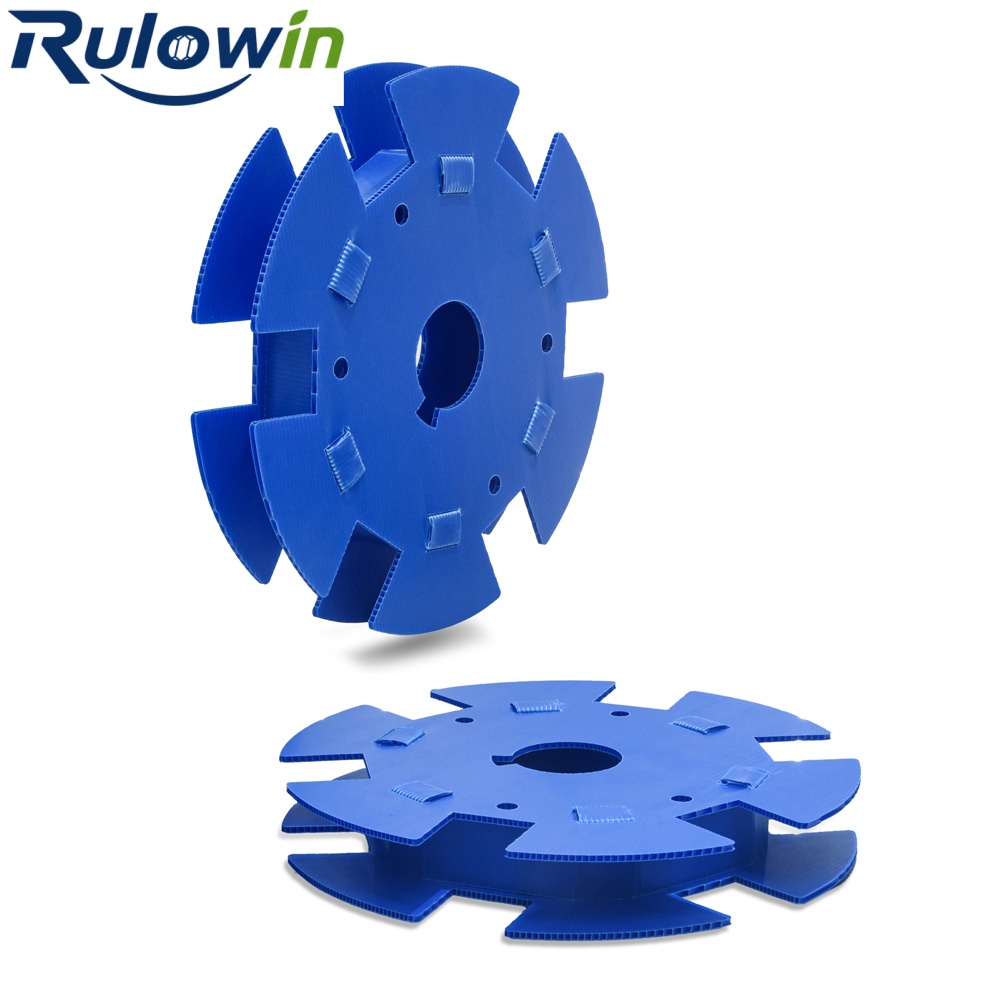
We supply custom plastic fiber optic cable reels rated for the cable and length you specify, and we will tell you the rating in writing. Tell us what you are winding and how, and we will size it – including telling you when your current practice, not your current reel, is the problem.