
The first year of a pallet sleeve system is where most of them fail, and the failures cluster into a small number of decisions made at the ordering stage. None of them are about the sleeve.
Mistake one: buying as sets
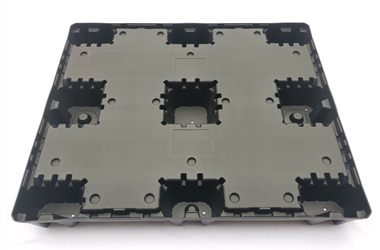
Sleeves, bases and lids wear at very different rates. Bases take the forklift and the floor and go first; sleeves last longest; lids die by crushing. Buying them as matched sets means you end up with a surplus of sleeves and a shortage of bases within about a year.
Order them separately, with more bases than you think you need. That single change is the largest available saving in running a sleeve system, and it is frequently missed because a set is easier to order.
Mistake two: no return lane
The whole economics rest on empties coming back collapsed. If nobody has established which vehicle brings them back and when, they accumulate at the far end and you buy new sleeves while a yard full of them sits three hundred kilometres away.
Establish the lane before the boxes arrive. This is a scheduling decision, not a purchasing one, and it is the most common reason sleeve systems underperform.
Mistake three: sleeves too tall
A sleeve sized by volume rather than by the tallest item plus lid clearance wastes cube on every trip, and the wasted cube is paid for for the life of the sleeve. It also leaves a void under the lid, so the lid has nothing supporting its middle and gets crushed by whatever is stacked above.
We covered the sizing in what height a pallet sleeve should be.
Mistake four: no instruction at the far end
Sleeves folded badly – against the crease, or with a knee in the middle – come back with creased walls and are scrap. Five minutes of instruction at the receiving site prevents most of it, and almost nobody does it in year one.
Mistake five: expecting them to take abuse
A sleeve box is not a crate. In an open pool where boxes are handled by people who do not own them, sleeve walls get punctured and the system looks fragile. It is not fragile; it is being used in the wrong application.
If your boxes go out to customers who do not ship back, a sleeve system is the wrong answer and no amount of specification changes that.
The mistake that is really a measurement problem
Not knowing how many trips the boxes make. Without that number there is no way to know whether the system is paying, and the conversation in year two becomes about impressions rather than figures.
It is easy to fix: mark twenty sets when they go into service and keep a tally at each turn. A clipboard at goods-out is enough. Within six months you have a real trip count and a real damage rate, and both are worth more than any estimate.
Do this from the first week. Reconstructing it later does not work.
What we can do
We supply pallet sleeve box systems quoted base, sleeve and lid separately, and we will ask about your return lane before quoting. Tell us the lane, the load and who handles the boxes, and we will tell you what to expect in year one – including when sleeves are not the right answer.