
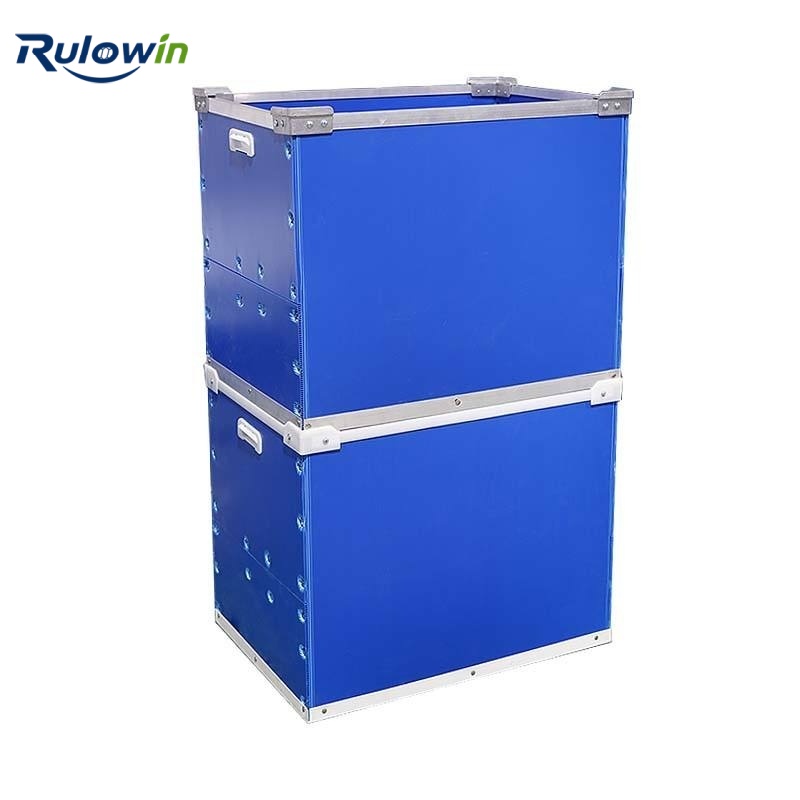
Fasteners, fixings and small machined parts are the classic way a box specification gets broken. They are dense, so a modest-looking box reaches its weight limit while it still looks half empty. They are sharp, so they attack the base. And they are small, so they escape through drainage holes and vents that were specified for a completely different part.
Weight, not volume, is the limit
A box of steel fasteners will hit forty kilograms well before it looks full. That has two consequences: the stack height has to be set by weight rather than by the box’s volume, and the handling spec has to assume a heavy box – which usually means trolley handling rather than hand carrying. Check the weight of a full box before finalising the size; a box that is pleasant to carry when two-thirds full is unpleasant at full.
The base takes the punishment
Sharp, dense, and moving: a box of fasteners abrades its own base every time it is slid or set down. The cheapest answer is a base pad – a loose sheet of corrugated PP that takes the abrasion and is replaced for pennies – rather than a thicker wall on every box. Where the parts are sharp enough to punch through a pad, a second pad or a thicker base panel is still cheaper than thickening the whole box.
Close the holes
Drainage slots sized for a large part will pass a small fastener, and a box that leaks M6 bolts into the bottom of a trolley is worse than a box that holds water. If the box carries small parts, either delete the drainage or size it below the smallest dimension of the smallest part. Where the box needs drainage for a wash and carries small parts, specify a drain hole small enough, or a mesh insert, rather than accepting the loss.
Dividers for counting
A box of fasteners is counted by weight or by compartment, and compartments are faster and less error-prone. A divider layout with a known count per compartment makes a visual check possible – count the empty compartments rather than the contents. Where the count per compartment is standardised across the fleet, a stock count becomes a glance rather than a weigh-in. Whether a barcode survives that environment is covered in whether barcode labels stay on PP boxes.
Weight and manual handling
A box of fasteners gets heavy fast, and manual handling limits arrive well before packaging strength limits do. A forty kilogram box is at or beyond what one person should lift at waist height, and a box that is routinely lifted by two people or dragged is a box whose specification is wrong regardless of whether it survives.
The usual answer is a smaller box, not a stronger one. Halving the fill volume halves the weight and roughly doubles the number of boxes, which costs more in boxes and less in injuries and in damaged bases. Where volume per movement is high, put the boxes on a pallet and move them with equipment rather than sizing boxes for manual handling at all. The packaging decision and the handling decision are the same decision at these weights, and treating them separately is how heavy-box injuries happen.
Labels and small parts do not mix
A box of loose fasteners covered in labels is a box where the labels get destroyed by the contents and where the contents get contaminated by label adhesive. The answer is to keep labels off any surface the parts touch: label the outside of the end panels only, or use a card in an external document pocket.
Where the box contents change frequently and labelling has to be rewritten, a write-on wipe-off panel on the outside end is the practical answer and it survives contact with the parts because it is not inside. If the process requires a barcode, put it on a recessed external panel so the surface is protected from abrasion – a barcode on a flat external face of a box carrying steel fasteners gets rubbed by every box it is stacked against, and recessing it is the cheapest fix available.
What we can do
We build PP corrugated turnover boxes for dense small parts, with base pads, correctly sized drainage and compartment layouts that make counting visual. Tell us the part, the weight of a full box and the smallest dimension, and we will specify for those rather than for the average.