
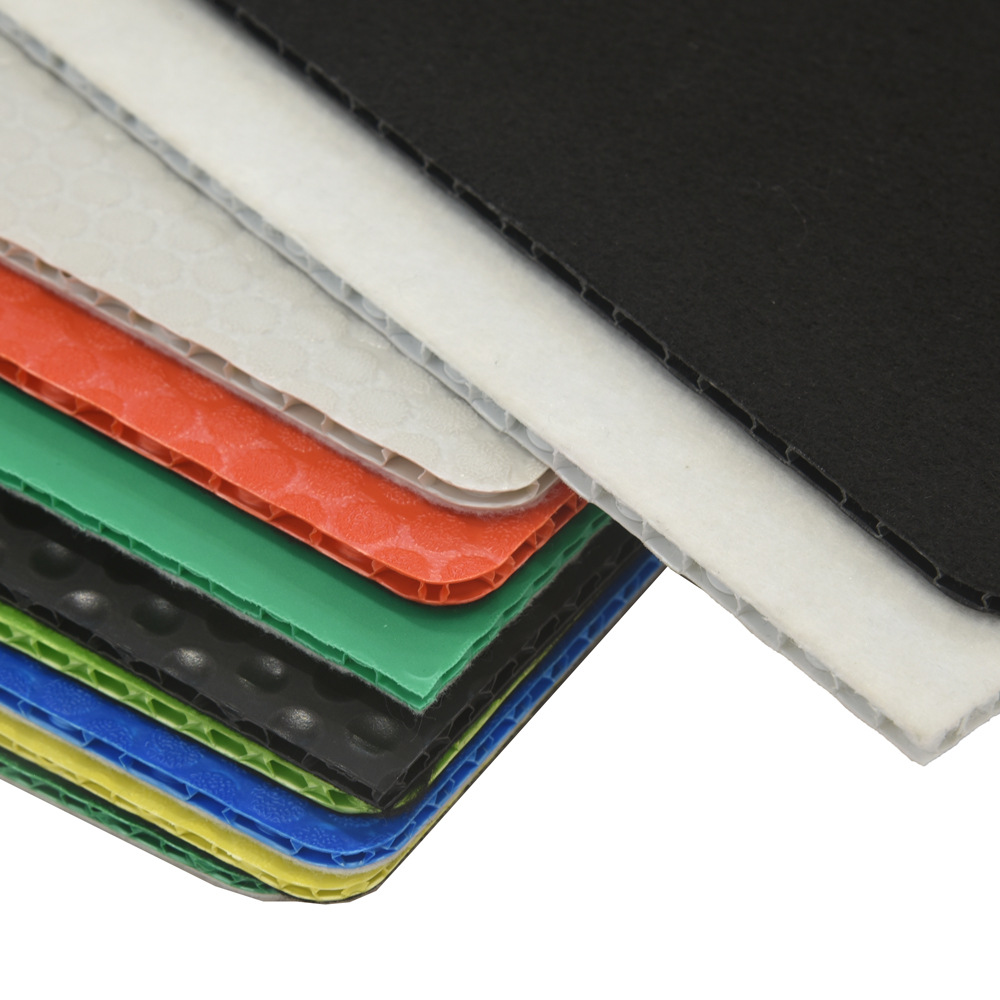
A pallet topper – the sheet that closes the top of a palletised load – has two jobs: spread the load from whatever is stacked above, and keep the top course clean and contained. For export, there is a third that decides the material: it has to survive a container crossing.
What a container does
A sealed container moving through a temperature range condenses water. It is normal and it happens on almost every long crossing. Anything hygroscopic in there is going to absorb it.
Corrugated cardboard absorbs it and loses compressive strength as it does. A topper that has softened lets the load above settle into the course below, and the result arrives as a pallet that is a few centimetres lower than it left, with a deformed top layer. Nothing collapses dramatically, which is why the claim is hard to attribute – but the receiver still books it.
So: polypropylene, in one of two forms
For a topper under a distributed load, corrugated PP sheet is enough and is the cheapest thing that survives the crossing. For a topper that has to span – a pallet with gaps in the deck, or where the load above comes down on stringers – honeycomb is the answer, because spanning is what honeycomb is for.
The choice between them is a load question, not a budget question, and it is settled quickly. We laid it out in honeycomb panel versus corrugated sheet for pallet liners.
Two things people miss
Friction. Polypropylene is slippery. A load on a smooth PP topper will shift more readily than one on cardboard, and in a container that moves, that matters. Specify an embossed or textured face where the load is not strapped down tightly.
Overhang. PP sheet cut exactly to the pallet footprint leaves nothing to strap over. Cut it slightly proud if strapping goes over the top, or the strap will cut into the load instead.
Where cardboard still wins
Short, dry, domestic moves. If the pallet is going warehouse to warehouse and arrives in a day, cardboard is cheaper and there is no argument for anything else. Also single-use where the receiver wants to bale and recycle on arrival – that disposal convenience has real value in some supply chains.
And this is a genuine point: if the topper is not coming back, the durability argument for polypropylene is about protecting the load, not about reuse. Buy it for the crossing, not for the trips.
What we would actually specify
For most export: corrugated PP sheet, embossed, cut to footprint, in a thickness sized to whatever is stacked above. For heavy or concentrated loads: honeycomb. For anything going into a particularly humid lane with valuable product: honeycomb and stop thinking about it.
We wrote separately about PP sheet versus cardboard layer pads in export, which covers the same ground for the layers inside the pallet rather than the top.
One more thing: strapping
Polypropylene compresses locally under a strap. A strap tensioned hard across the corner of a load will cut into whatever is underneath, and on a plastic topper the strap can also bite into the sheet itself if it is tensioned against a sharp edge.
Edge protectors solve it and cost very little. Use them wherever strapping crosses an edge, and specify a topper that is cut slightly proud of the pallet so the strap bears on the sheet rather than on the product.
This is a small detail that accounts for a surprising share of top-course damage, and it is worth checking on the next pallet you build.
What we can do
We supply PP honeycomb panels and corrugated sheet for export work and will quote both. Tell us the pallet, the load above, the lane and whether anything comes back, and we will specify – including when the answer is cardboard and you should keep buying it.