
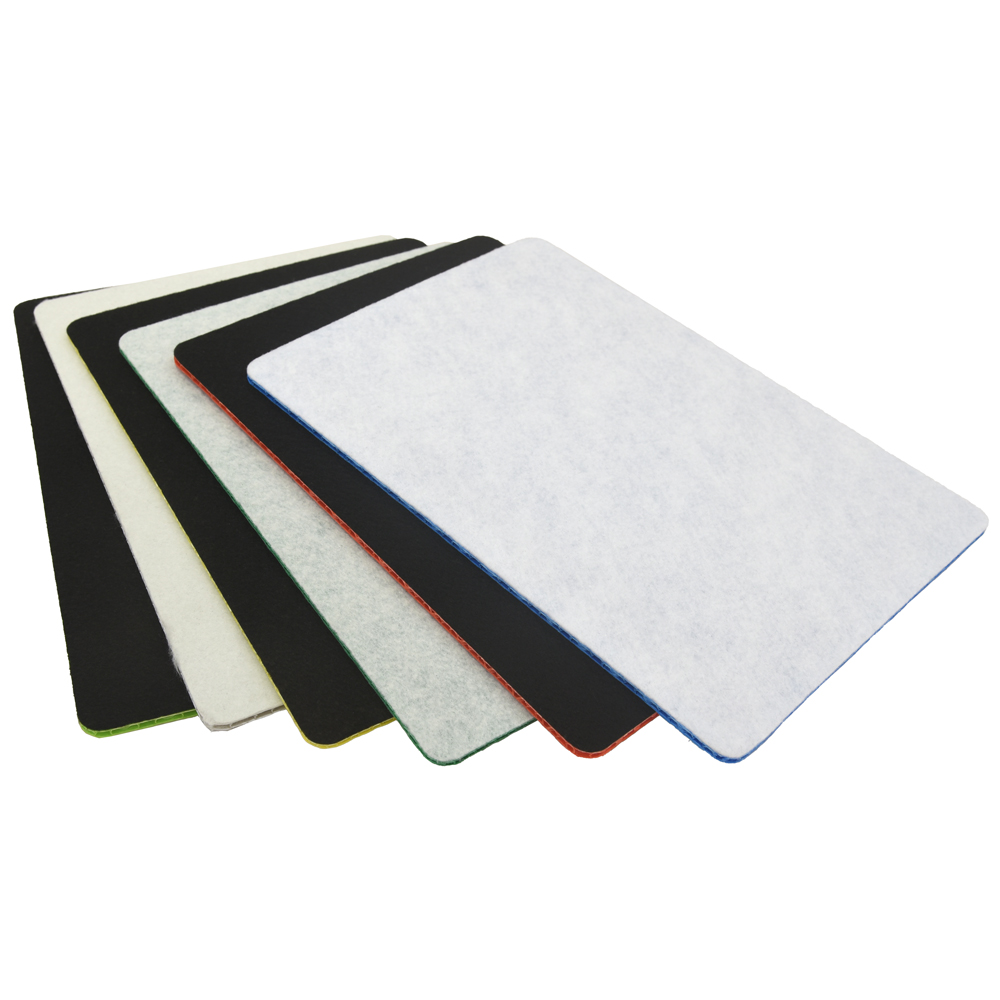
Slopes are where protection gets people hurt. The same panel that is perfectly adequate on a level corridor becomes marginal at a few degrees of incline, and marginal becomes dangerous once water or dust is added. Most protection specifications are written without anyone asking whether the route is level.
Why slope changes the requirement
On the flat, gravity presses a shoe straight down into the surface and friction resists only the sideways component of each step. On a slope, gravity adds a constant downhill component that friction has to overcome continuously, so the margin that felt comfortable on the flat disappears. Add wet contamination and the available friction drops at exactly the moment more of it is needed.
What the studded face gives you
Breaking the contact into studs means water is displaced into the channels rather than trapped as a film, so the shoe still meets polymer at the stud tips rather than a layer of water. Grip stays broadly the same in every direction, which matters on a ramp where people turn, carry and push rather than walking straight lines. A directional rib pattern is a poor choice here unless it runs across the slope.
Specify the ramp separately
Protection for a ramp should be specified as its own item rather than an extension of the corridor: a studded face, a heavier panel so it does not flex under load, and a properly ramped transition at the top and bottom. The transition is where accidents actually happen – the small step where protection meets the bare floor.
Fix the panel down
A panel that moves underfoot is worse than a slippery one. On slopes, protection must be restrained: battens at the top of the run, interlocking edges, and periodic checks that nothing has crept. Loose protection on a ramp is a genuine hazard rather than an untidiness.
Check what is on it
Dust from plasterboard and cutting, mud, and spilled grout all sit in the pattern and reduce grip. On a busy ramp, brushing protection clean is a maintenance task with an owner, not something that happens when somebody notices. We have written about testing the wet case in slip resistance on protection panels.
Where a panel is the wrong answer
Steep or long ramps carrying regular wheeled traffic should have a purpose-made anti-slip covering, not general protection board. There is a limit to what an embossed polymer face achieves at slope, and pretending otherwise is how people get injured. We will say so rather than sell into it.
Measuring the slope before specifying
Under about one in twenty, most embossed protection is adequate. Beyond about one in twelve, the panel face matters less than the fixing, because the failure mode changes from slipping on the surface to the whole panel sliding down the slope. A panel that has slid is worse than a slippery panel, because it leaves a gap at the top of the ramp with a hard edge on it. Fix the top edge of any run on a slope and the surface requirement drops substantially.
Ramps used by vehicles versus people
A pedestrian ramp and a pallet truck ramp need different things. Pedestrians need grip under a soft sole and are helped by a fine, dense pattern. A loaded wheel needs the panel not to deform, and is helped by a coarser, deeper pattern plus more thickness. Specifying one panel for both usually means the pedestrian route is harsher than it needs to be while the vehicle route is still under-specified.
What we can do
We supply honeycomb panels with a studded face in heavier constructions for ramps, cut to width with ramped transition edges. Tell us the gradient and what uses it, and we will recommend – or tell you to buy a dedicated anti-slip product instead.