
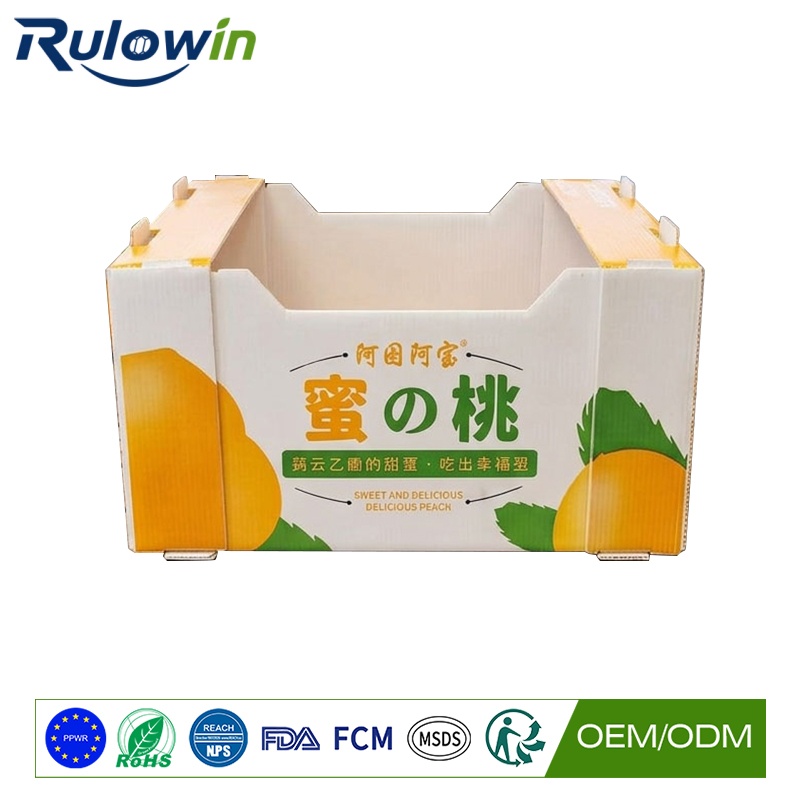
Look at a worn crate fleet and the damage is not evenly distributed. The crates that fail first are the ones that spent the most time at the top of a stack – in the yard, on the trailer, in the store. That is a predictable pattern with a predictable fix, and it costs nothing.
What the top crate takes
Full sun, if the stack is outdoors. The knocks from loading and unloading, because it is the one handled most. Rain and drainage from nowhere, because nothing is above it. And the strain of being lifted by its rim repeatedly, because that is how a top crate is grabbed. A crate that spends a season at the top of a stack ages faster than one that spends it in the middle.
The sun effect is the largest
An outdoor stack exposes the top crate completely and shades the ones below, so the UV dose difference between top and bottom is large. Over a season, the top crate can show chalking while the ones underneath look new. That is not a quality defect in the fleet; it is what happens when one crate takes all the light. Covering the top of a stack – a tarpaulin or a purpose-made cap – is the cheapest life extension available and it protects the whole stack, not just the top crate.
Rotation is not the answer
The obvious response is to rotate the fleet so no crate stays on top. In practice that is labour nobody has, and it does not solve the exposure problem – it spreads it. Covering the stack solves it. Where rotation does help is in the store, where crates at the top of a stored stack can be swapped seasonally with very little effort.
Rim damage from handling
A top crate gets lifted by the rim, and a loaded crate lifted by the rim puts the whole load on a thin section. Over enough lifts, the rim cracks. Crates designed with a base handhold as well as a rim grip give handlers a better option, and telling the site to use it is a five-minute conversation that prevents a season of rim failures.
What to inspect
Grade the fleet by looking at rims and base corners, and treat the crates that were on top as the ones most likely to need retirement. Where a fleet is inspected before the season, starting with the crates from the top of the stored stacks is the efficient order – it finds the failures first. The inspection list is in receiving inspection for reusable produce boxes.
Where the bottom crate suffers too
For completeness: the bottom crate takes the load, the standing water and whatever is on the ground. Stacks stored on soil or on a wet floor lose bottom crates to a different mechanism. Bearers or a pallet under the stack fixes that, and it is the same intervention that keeps the bottom crate clean.
Covering the stack properly
A cover has to do two things and most do one. It has to block light, which any opaque sheet does, and it has to shed water without ponding, which requires a slope or a taut surface. A tarpaulin that pools water drips steadily onto the top crate and keeps it wet for months, which replaces a UV problem with a staining one.
A purpose-made top cap – a crate lid or a rigid cover that sits on the stack – does both and lasts years. Where stacks are temporary, a taut sheet with the middle propped up works. Either is better than a loose tarpaulin, which is the commonest thing on a farm and the least effective.
What we can do
We supply produce crates with reinforced rims and base handholds so the crates that get handled most survive being handled. Tell us how the fleet is stacked and stored and we will say where to expect the failures.