
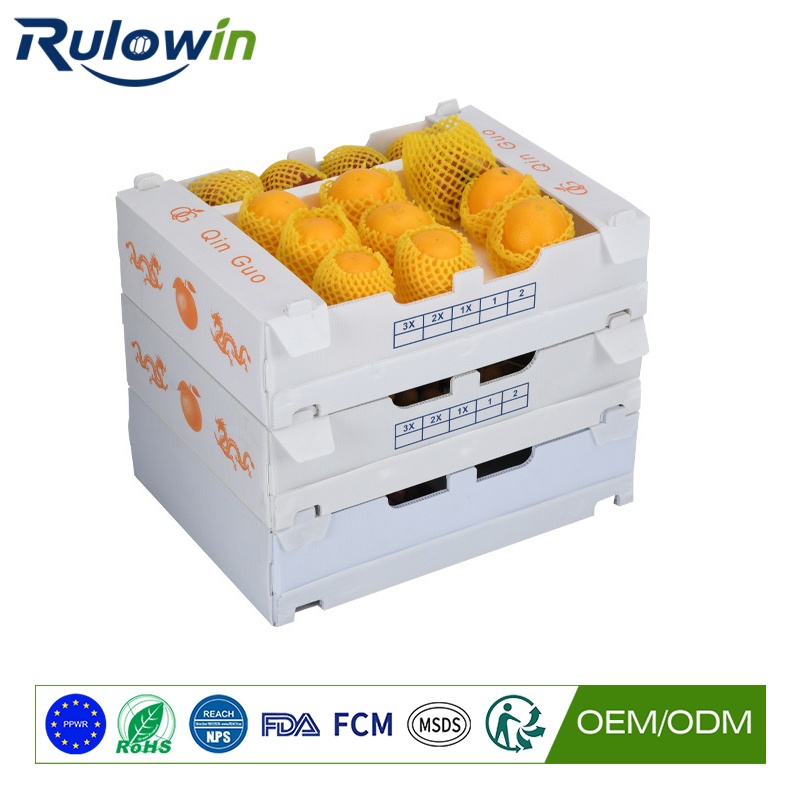
There is a persistent assumption that a lighter crate saves money on transport. For produce it usually does not, because produce freight is charged on volume and the truck is full of space long before it is full of weight. The crate’s empty weight matters for other reasons, and they are worth separating.
Where weight does not matter
On a loaded produce journey, the truck reaches its volume limit well before its weight limit, so a hundred grams off the crate changes nothing about the freight bill. Claims of transport savings from a lighter crate should be treated with scepticism unless the operation is genuinely weight-limited, which for produce is rare.
Where it does matter: handling
A picker carries a crate hundreds of times a day. Two hundred grams is not much once and is a great deal over a shift, and it shows up in fatigue and in the rate of drops. Where crates are carried by hand rather than moved on trolleys, empty weight is a genuine manual handling consideration and it belongs in the specification.
Where it does matter: the stack
A taller stack of lighter crates is easier to build and easier to move, and on a hand-stacked operation that is a real difference. It also means a stack is slightly more stable against tipping, which matters on a moving trailer and on uneven ground in a field.
Where it does matter: wash and return
Empty crates moved in bulk for washing or return are charged on volume, not weight, so again weight does not directly matter – but a lighter crate is easier to handle in a wash bay and easier to load. On an operation washing thousands of crates a day by hand, that is not trivial.
The real risk of going light
The way a crate is made lighter is usually by removing material, and the material comes from somewhere. If it comes from the base, the crate wears out faster on abrasive crops. If it comes from the rim, it cracks sooner in a stack. A lighter crate is not automatically worse, but the saving has to come from good design rather than from removing polymer from a place that needs it – which is exactly the distinction discussed in crate wall thickness versus service life.
What to specify instead
Specify the service life and the handling conditions, and let the weight follow. A crate specified for the number of trips and the drop height it will actually see will come out at whatever weight it needs to be. Starting from a target weight tends to produce a crate that meets the weight and not much else.
Where a lighter crate genuinely pays
On any operation where crates are carried by hand for long distances, weight matters through fatigue and dropped loads rather than through freight. The cost of a dropped crate is the produce in it, which is worth far more than the crate, and there is a point at which a slightly heavier crate with better grip and a stronger rim reduces total losses even though it weighs more.
The other genuine case is air freight, where weight is charged by the kilogram and volume is less of a constraint. For a high-value crop flown to market, empty crate weight is a real line in the cost, and it is one of the few situations where the lighter-crate argument holds up as stated.
What we can do
We supply produce crates with weight, stack rating and expected service life stated together, so the trade-off is visible rather than hidden. Tell us how crates are handled and we will say where weight is worth saving and where it is not.