
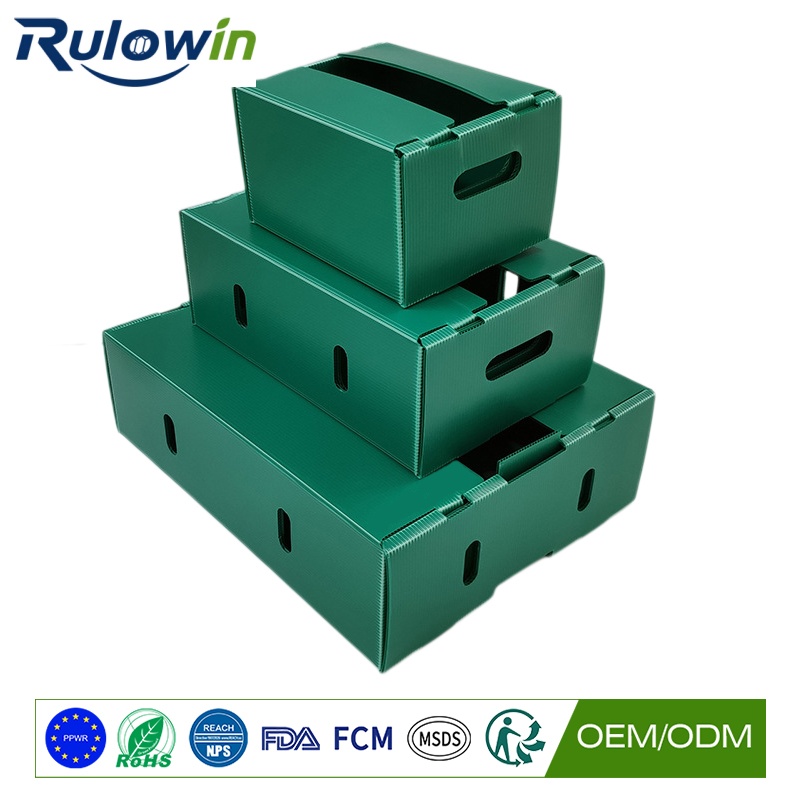
Crates go missing. They are left at a retail back door, they go home in a van, they end up in a skip at a demolition, they are used for something else entirely and never come back. Every returnable scheme experiences this, and the schemes that work are the ones that planned for it rather than the ones that assumed it would not happen.
What a realistic rate looks like
For a closed loop – one operator, own fleet, controlled collection – single-digit annual loss is achievable. For an open loop with several parties and a retail endpoint, double digits is common in the first year and improves once the process settles. Anyone quoting a loss rate below five per cent for an open loop is quoting an aspiration. Plan on the higher number and treat the improvement as a bonus.
Where crates actually go
Three places account for most of it. Retail back-of-store, where crates are stacked and then forgotten or skipped by staff who do not know they are returnable. Transport intermediaries, particularly where a third-party haulier is involved and nobody owns the return. And transfer to a second use, where a crate is genuinely useful for storage and quietly gets adopted by somebody.
Why identification is the fix
An unmarked crate is nobody’s property. A crate with a permanent code, a visible owner mark and a stated return instruction comes back noticeably more often. It is the cheapest single intervention available and it should be done at purchase, because retrofitting identity to a fleet in circulation is expensive and never complete.
The deposit question
Charging a deposit on crates that leave the site changes behaviour, and it also creates an administrative burden and a dispute. Deposits work best in closed loops with limited parties and are rarely worth it in open ones. Where they are used, the deposit should be large enough to matter and the reconciliation should be simple enough to administer – both of which are harder than they sound.
Counting is not optional
A scheme that does not count crates at each transfer point cannot find where it is losing them, and it will argue about who is at fault rather than fixing it. The minimum workable system is a count at dispatch and a count at return, recorded. Where the counts differ consistently at one point, that is where the loss is, and it is usually fixable. The reconciliation process is described in how many returnable crates a loop actually needs, and the destinations that account for most of it are set out in crates that do not come back.
What loss does to the business case
Loss converts a capital purchase into a recurring one. A fleet losing fifteen per cent a year has to be topped up annually, and the top-up is the same as buying cartons except less predictable. This is the number to stress-test before committing: run the case at the loss rate you expect, then run it at twice that, and see whether it still works.
The marking hierarchy, in order of value
A moulded permanent code is worth most, because it survives washing, cold and years of handling and it cannot be removed. A high-contrast owner panel is next – visible at a distance, which is what prompts somebody to return a crate rather than keep it. A label is last, because it comes off, and a label on a cold damp crate comes off quickly.
Where budget allows only one, choose the moulded code. It also makes counting possible later, which is how the loss rate eventually gets measured and managed. A fleet that cannot be counted is a fleet whose losses will always be an estimate.
What we can do
We supply produce crates moulded with a permanent asset number and an owner panel, and we will quote replacement top-up volumes alongside the initial fleet so the recurring cost is visible from the start.