
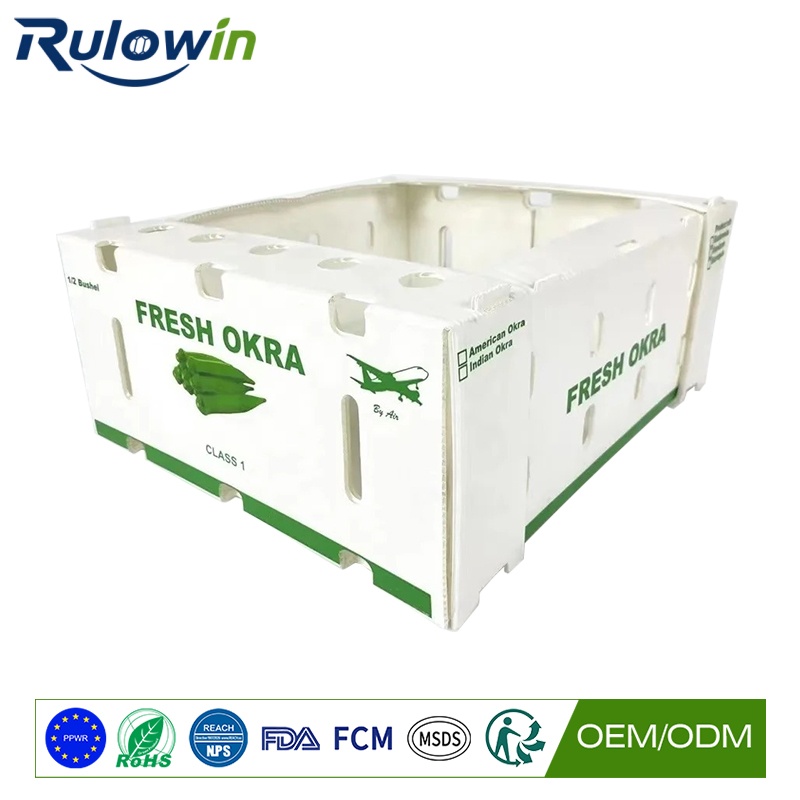
Take a pallet of crates out of a cold room into a warm, humid packhouse and within minutes it is dripping. That water was not in the crate – it came out of the air. It is the most predictable wet problem in produce handling and the one that most often gets mistaken for a drainage failure.
Why it happens
Air holds more water vapour when it is warm. When that air meets a surface below its dew point, the water comes out onto the surface. A crate that has been at 2C in a room at 85% humidity is well below the dew point of a 22C packing hall, so water condenses on every face of it, inside and out, until the crate warms up.
Where the water goes
It runs down the outside of the stack onto the floor, which becomes a slip hazard and a hygiene issue in an area where people are working at speed. It wets the outside of labels, which is why labels applied cold fail later. And it condenses on the produce itself, which is the part that matters – wet produce at packing is a quality problem and, for some crops, a shelf-life one.
The practical mitigations
Three, and they can be combined. Keep the packing hall drier and cooler than is comfortable, which costs energy and is often the least popular option. Stage crates in an intermediate-temperature space for an hour so they warm gradually. Or accept the condensation and manage the water – drip trays, floor drainage and a squeegee routine. Most sites end up doing the third and wishing they had done the second.
Why this is worse in a humid climate
In a humid growing region the air carries far more water, so the same temperature difference produces far more condensation. A handling procedure copied from a dry climate site will not work. If the packhouse is in a tropical or subtropical region, condensation management is a design consideration for the building, not a nuisance to be dealt with at the floor.
What it means for stacking
A cold stack that is going to be moved into warm air should not be stacked tight against a wall or wrapped, because it needs to shed and then dry. Crates that go into a trailer still cold will arrive with the condensation inside the trailer, which is the same effect as rain on the load – and the underlying mechanism is explained in condensation inside a palletised fruit box.
Effect on labels and print
Anything stuck to a crate at this moment will fail. Labels applied to a cold, damp surface lift, and print under a film of water is unreadable. The rule is simple: label dry, at ambient temperature, before the crate goes into the cold room – never on the way out. Where labelling has to happen on a cold crate, the adhesive has to be specified for it, which is what labels that stay on cold damp produce crates is about.
The intermediate room
A space at a temperature between the cold room and the packing hall lets crates warm gradually, so condensation forms slowly and drains rather than running. It does not have to be purpose-built – a corridor, a covered bay, even a corner of the loading area that is cooler than the hall.
An hour in such a space removes most of the problem. Where there is no space at all, the fallback is managing the water: drip trays under the stack, floor drainage that works, and a routine for squeegeeing. Less elegant, but it prevents the slip and the wet produce.
What we can do
We supply vented produce crates that drain and dry quickly after condensation, with no absorbent surfaces to hold water. Tell us the cold room setpoint and the ambient conditions in the packing hall and we will advise on the base pattern.