
The choice between a reusable board and a single-use film is usually made on purchase price and usually should be made on programme length. The crossover point is earlier than most buyers expect, and it moves earlier still once disposal and labour are counted.
What film costs
Very little per square metre, and it is fast to lay. Against that: it is slow to remove, it often leaves adhesive residue that then has to be cleaned off, and it goes to landfill. On a large floor the removal labour is the dominant cost and it is almost never in the estimate.
What board costs
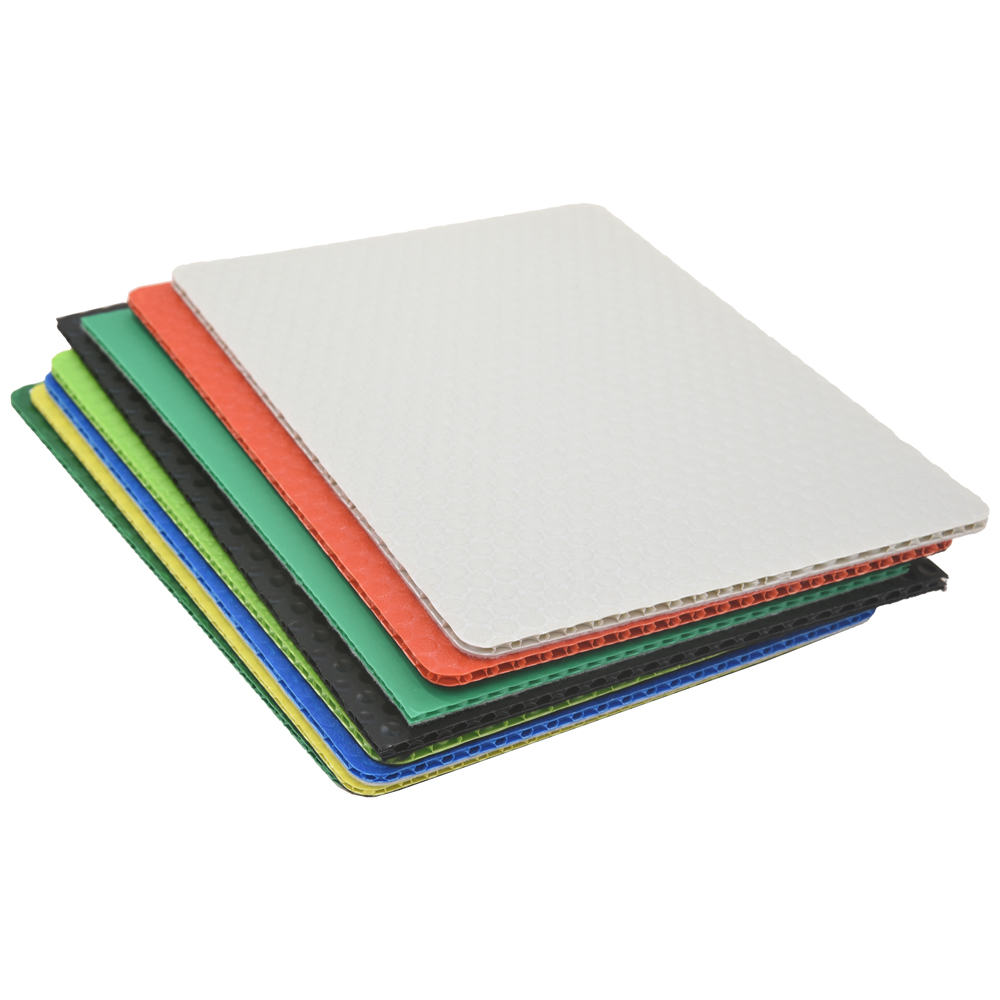
A PP honeycomb panel costs more per square metre. Against that: it lifts in minutes, it leaves nothing behind if it was laid rather than taped, and it can be used again. On the second use it is cheaper than film; on the third it is substantially cheaper. That is the whole economics and it is why programmes longer than a few weeks almost always favour board.
Where the crossover sits
Roughly three to four weeks for a straightforward job, and sooner where the floor is expensive or the disposal cost is material. A job of a fortnight with film is sensible. A job of three months with film is expensive and produces a waste bill and a residue problem at the end.
Disposal is part of the comparison
Single-use film and board both produce waste, but film produces more of it over a long programme and it is usually contaminated with paint and plaster, which puts it in a more expensive waste stream. On a job with a waste target or a landfill charge, that difference is significant.
Mixing them
The usual sensible answer: film in the areas that are being stripped or re-floored anyway, board in the areas that have to be handed over. That is often a third of the area in board and two thirds in film, and it costs less than either approach used everywhere.
Where film is clearly right
Strip-out areas and any floor that is coming up anyway. Covering a floor that is about to be removed with a reusable board is spending an asset on a skip. Film, or nothing, is correct there. The reusable board belongs in the areas that get handed over, and the split is usually obvious once somebody asks which areas those are.
The cost comparison that gets done wrong
Single-use film is compared on material price per square metre against reusable board, and film always wins that comparison. The comparison that matters is cost per square metre per month. Film goes down, gets torn, gets re-taped, gets torn again and is skipped at the end – so a phase of eight weeks can consume three applications. Reusable board goes down once and comes up at handover.
The break-even is usually around the second application, after which board is cheaper and the floor is better protected. Film still wins in two places: short decorative works measured in days, and surfaces with complex geometry where a board cannot lie flat. The other real cost of film is disposal, which is increasingly charged by weight and increasingly questioned by clients with a waste target. The arithmetic is set out properly in cost per square metre per month for floor protection.
What we can do
We supply reusable PP honeycomb protection board and will run the comparison against film for a specific programme rather than assert that board is always better. Tell us the area, the duration and what the floor is worth, and we will show both numbers. Reuse economics are set out in recovery rates on reusable floor protection.