
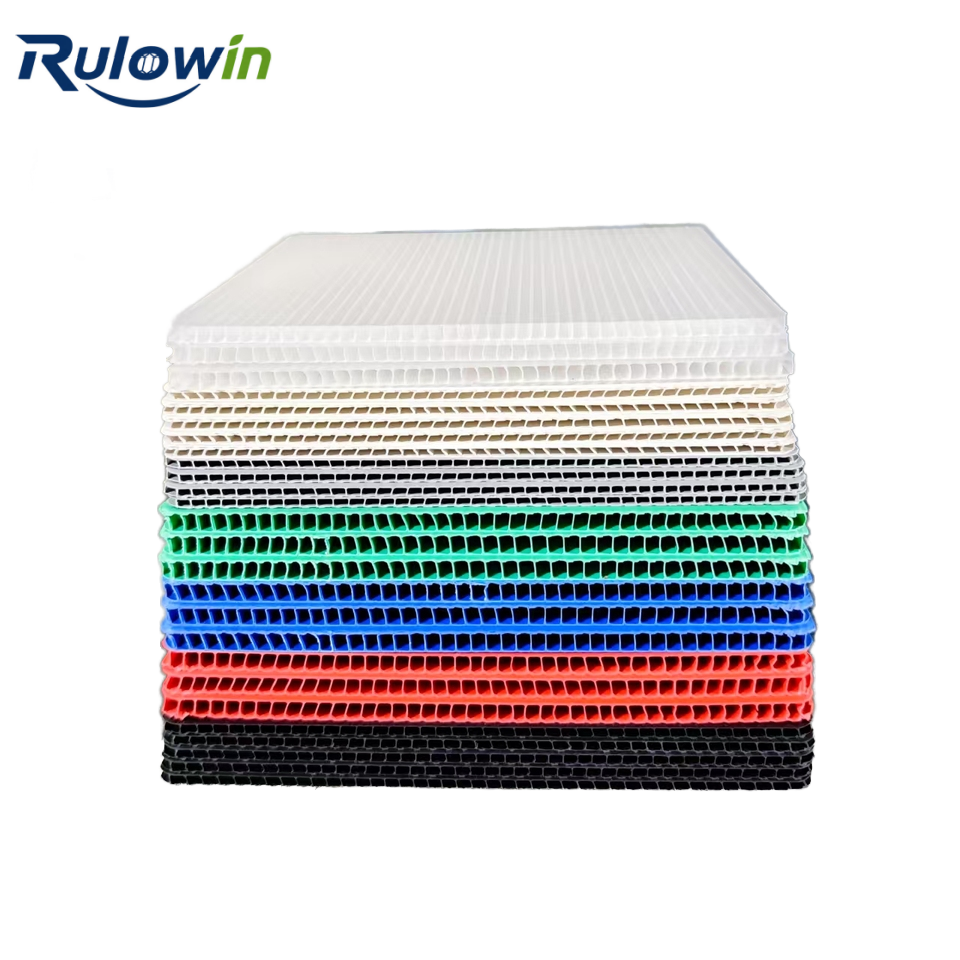
Corrugated polypropylene sheet is the default site protection material for good reasons: it is cheap, it is light, it cuts with a knife and it keeps plaster dust and paint off a finish. It is also the material most often blamed for dents it was never going to prevent. Understanding what it does and does not do saves both the floor and the budget.
What thin sheet is genuinely good at
Scratch protection, spill protection and dust protection. A 3 mm or 4 mm sheet laid over a finished floor stops grit being ground in, catches paint and grout, and keeps foot traffic off the surface. For the majority of a fit-out programme that is exactly what is needed, and paying for impact performance nobody will use is wasted money. Sheet is also the right answer on stairs and complex shapes, where a rigid panel will not sit down flat.
What it cannot do
Absorb a point impact. Thin sheet has no depth to deform through, so a dropped tool presses the sheet into contact with the floor almost immediately and the floor takes the load directly. The sheet also has a corrugated structure with flutes running one way, which means it is stiffer across the flutes than along them – so a dent near a flute line behaves differently from one between flutes, and nobody on site knows which way the flutes happen to run that day.
Why thicker sheet is not the answer either
Doubling sheet thickness roughly doubles cost and adds maybe a third more impact capacity, and it introduces a new problem: thick sheet curls. A 6 mm sheet that has been stored on a roll will not lie flat when unrolled, and curled sheet at a joint is a trip hazard as much as a protection failure. If the requirement is genuinely impact, the answer is a different construction, not more of the same one.
The hybrid that usually works
Most sites end up with both, and the sensible split is by route rather than by area. Sheet across the general floor where the risk is dirt and light foot traffic. Rigid panel in the traffic lanes, at doorways, under scaffold runs and anywhere materials are being moved or stacked. The panel is typically a fifth of the area and carries almost all of the damage risk. That split is examined from the cost side in sheet for temporary floor protection.
Where sheet is the wrong choice outright
Under standing loads, because it creeps and dishes. On external runs, because it is light enough to lift in wind. And on any surface where the sheet’s own flute pattern can print into a soft finish over weeks under load – vinyl in a warm corridor is the common one, and it shows as faint parallel lines at handover.
What sheet does better than panel
Sheet bends, and that is an advantage in three places: on curved surfaces, on stairs where a rigid panel will not sit down, and anywhere the surface underneath is uneven enough that a rigid panel would rock. Rocking protection is worse than flexible protection on an uneven floor, and it is the reason sheet still gets bought on jobs that also use panel.
What we can do
We supply corrugated PP sheet for the dirt and scratch jobs and honeycomb panel for the load and impact jobs, and we would rather sell you the cheaper one where it is adequate. Tell us which parts of the floor carry traffic and which just need covering, and we will split the order accordingly.