
Polished concrete is specified because it is hard-wearing, and then it gets damaged anyway – usually not by a single catastrophic event but by weeks of abrasive grit dragged across it, or by a liquid that etches the surface. Knowing what actually harms it changes what protection needs to do.
What damages it
Abrasion from grit is the main one, and the mechanism is mundane: hard particles trapped between the floor and whatever is sliding over it act as a lapping paste. Some chemicals etch or dull the surface, particularly acidic ones and some cleaning agents. Steel wheeled plant can leave burn marks. Scratches from dragging are usually the visible ones on handover day.
When the risk starts
Concrete copes with a great deal while it is being ground and polished, and surprisingly vulnerable once finished. The temptation is to protect during grinding, which is unnecessary, and then strip out too early before final clean and snagging. Put the protection down immediately after the final polish and keep it until after the last trade has left.
Breathability and cure
Fresh concrete continues to cure and a dense covering can trap moisture at the surface, affecting both cure and the eventual appearance. Follow the flooring contractor’s guidance on when impermeable protection may be applied – this varies with the mix, the sealer system and the ambient conditions. Laying too soon can create problems that no amount of protection afterwards will fix.
The grit problem specifically
Nothing stops grit arriving; the question is whether it gets trapped against the surface. Overlapping or lipped joints stop particles migrating through to the floor, and lifting and cleaning protection periodically removes what accumulated. On long programme sections plan for at least one clean-and-relay cycle rather than laying once and forgetting it.
Liquid spills
Protection that lets liquid through but holds it against the floor is worse than no protection for staining risk. Check what spills are likely in the area – oils, paints, cleaning agents – and choose a panel that will not wick them underneath. Where wet trades are ongoing nearby, a sacrificial top layer catches most of it and can be replaced cheaply.
Handover cleaning
Agree with the flooring contractor what the final clean involves and what products are permitted. Some aggressive cleaners dull polished finishes permanently, and discovering that at handover is expensive. Write the approved cleaning method into the O and M information rather than leaving it to whoever turns up with a scrubber.
Sealers and what they tolerate
Polished finishes usually carry a penetrating sealer or a topical sealer, and the two behave differently. Topical sealers form a film that some adhesives and some protection materials interact with; penetrating sealers are more forgiving but can still be marked by plasticiser migration over a long dwell. Ask which system was used and follow the manufacturer’s guidance on coverings.
If nobody knows what was applied, treat it conservatively: no adhesive contact, avoid long dwell, and lift periodically to check. The cost of that caution is a few additional labour hours against the cost of repairing a finish nobody can replicate exactly. Cleaning protection between phases is covered in cleaning PP honeycomb panels.
What we can do
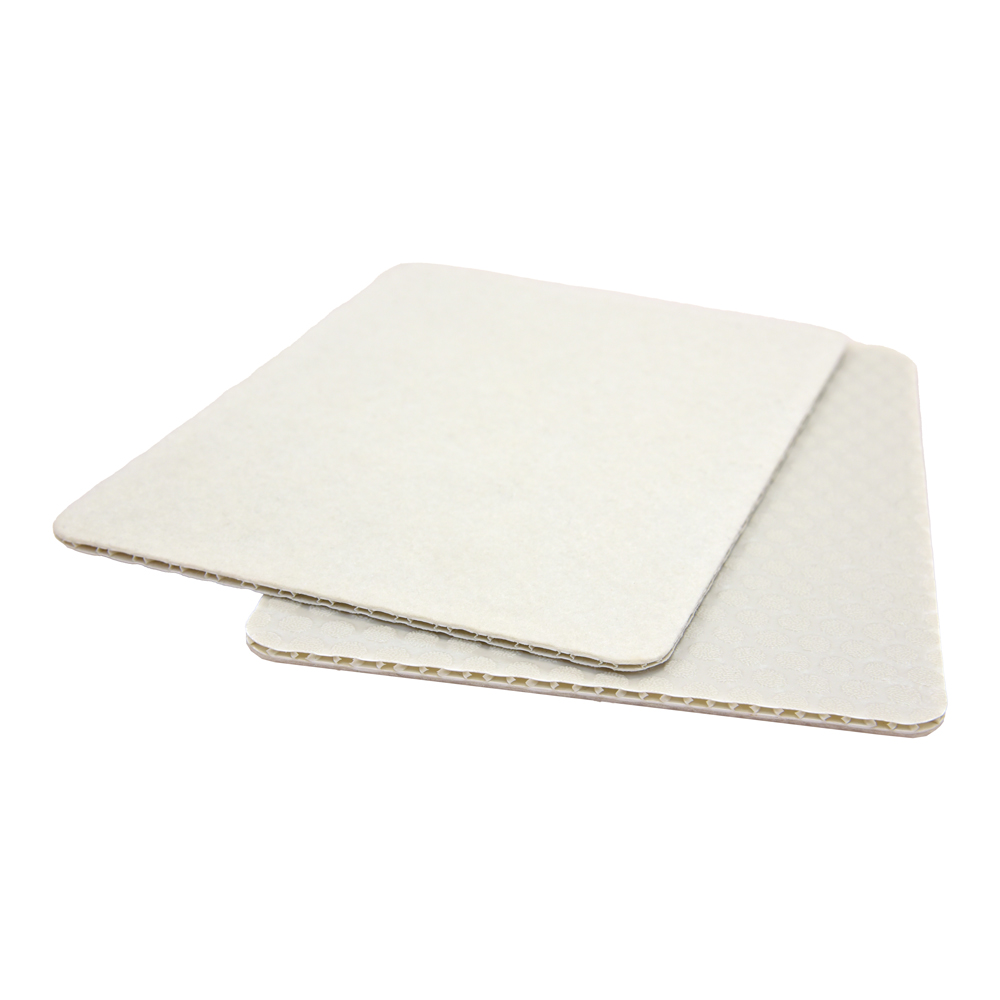
We supply honeycomb floor protection panels with sealed joints for polished surfaces, and we can supply a sacrificial top layer for areas with wet trades. Tell us what the floor finish is and what trades follow, and we will tell you where we think protection is unnecessary as well as where it is essential.