
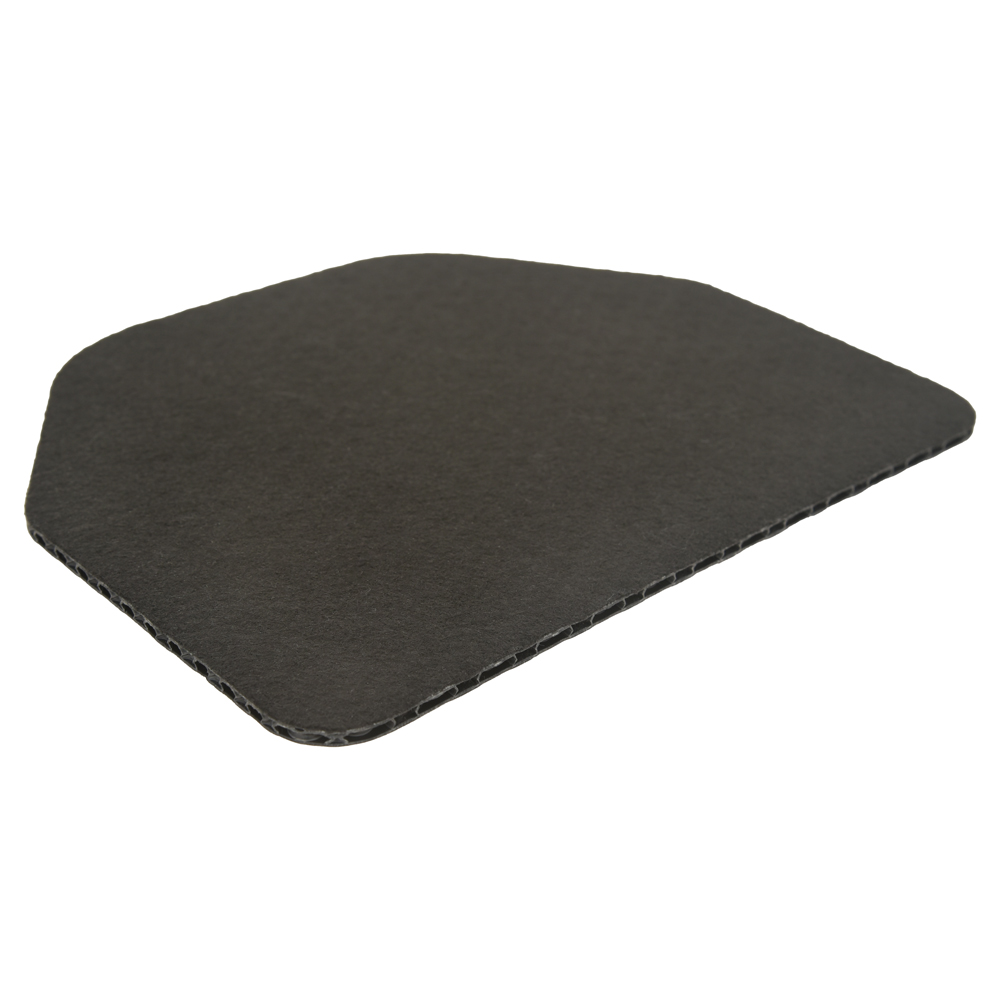
Resin floors are tough in service and sensitive during installation, and the thing that most often ruins them is not a dropped tool. It is the adhesive used to hold temporary protection in place, left longer than intended, pulling or clouding the surface when removed.
Why resin reacts badly
A resin floor cures by chemical reaction and reaches full hardness over days, not hours. Early in that window, solvents and plasticisers from an aggressive adhesive can affect the surface; later, some adhesives bond well enough to the smooth surface that removal takes coating with it. The result ranges from a dull patch to a visible outline of every tape run.
Dwell time matters more than product
Almost any tape is fine for a day. The problems start after weeks, particularly in warm conditions or where the tape is walked on and pressed repeatedly, which drives the adhesive into the surface. Set a maximum dwell time, write it down, and re-tape rather than leaving runs in place indefinitely.
Alternatives to taping panels down
Mechanical options usually beat adhesive on resin. Panels can be held by their own weight with lipped joints, by perimeter battens, or by low-tack systems designed for coated surfaces. Where panels must be taped to each other rather than to the floor, tape the joint on the top surface and avoid contact with the resin altogether.
Watch the cure schedule
Get the flooring contractor’s cure schedule in writing: when foot traffic is acceptable, when wheeled traffic is acceptable, and when any protection may be applied. Those three dates are rarely the same. If nobody obtains them, protection tends to go down too early and the finish pays.
Testing before committing
A two-day test in an inconspicuous corner – apply the intended tape, leave it, remove it, inspect in good light – prevents nearly every version of this problem. It costs nothing and it is the kind of thing that gets skipped on busy sites. We make the same argument about verification generally in testing without a laboratory.
If damage happens anyway
Act fast. Fresh adhesive residue is far easier to remove than residue that has cured and collected dirt for a month. Agree with the flooring contractor how repairs will be done and get approval for any solvent before it touches the floor, because the wrong solvent turns a small mark into a large one.
Battening instead of taping
Where the floor is genuinely sensitive, the cleanest solution is to stop taping to it. Timber or plastic battens around the perimeter of a protected area hold the first row of panels, and the panels then hold each other through lipped joints. Nothing touches resin except weight.
Perimeter battens cost slightly more to install and survive far better under foot traffic, since nothing is relying on adhesion to a smooth surface. They are also faster to strip out: remove four battens and lift everything rather than peeling hundreds of metres of tape off a floor you are trying to protect. The wider question of what adhesives do to finishes is covered in tape, adhesive and staining on finished floors.
What we can do
We fabricate honeycomb protection panels with lipped and rebated joints so they can be laid loose on resin without adhesive contact. Send the floor specification and cure schedule and we will suggest a holding method – including telling you when we think you need a specialist low-tack product we do not supply.