
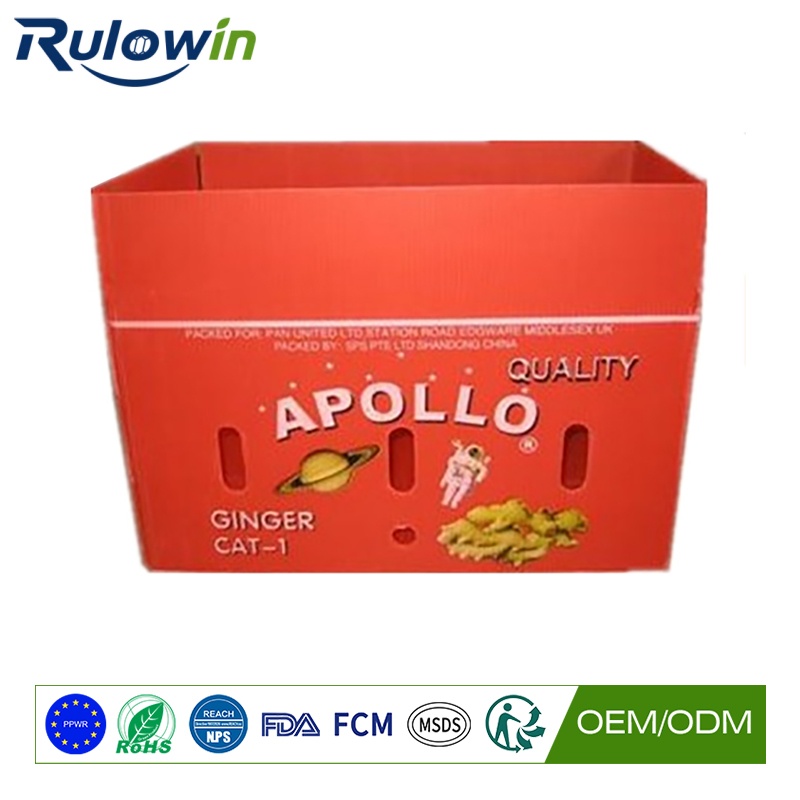
Crate specifications usually contain a footprint, a height and a nominal fill weight. Those three are easy to agree and they are the least predictive of whether the crate works. Four other things decide it, and three of them are routinely left out of the enquiry.
One: what the crate is for
Field crate or packing-house crate? A crate carried through rows by a picker has to be light, comfortable and tough. A crate that never leaves a conveyor can be optimised for volume and ventilation instead. These are different products.
An enquiry that says “20 kg tomato crate” without saying which will get a compromise that is mediocre at both. It is a one-line answer and it changes the specification substantially.
Two: vent geometry, not vent area
Everyone specifies vent area as a percentage and nobody specifies where the holes are. But bruising is caused by fruit sitting over an opening, not by the total open area. Many small holes with a ribbed floor beat fewer large ones for soft fruit, at the same percentage.
If you are specifying a crate, specify the hole size and the floor pattern, not just the ratio. We went through this in best crate type for ventilated produce transport.
Three: dwell time at height
Soft fruit under sustained load keeps deforming. So the damage is a function of load multiplied by time, and the time is the part nobody controls. A stack that stands overnight in a warm yard does more damage than one that moves within an hour.
Specify the crate for the dwell you actually have, not the dwell you wish you had. If stacks stand overnight, the crate needs to be stiffer – or the process needs to change.
Four: the wash
Crates get specified and then go into a wash cycle nobody mentioned at order time. High wash or dry temperatures warp polypropylene, and a warped crate does not stack. Specifying the wash up front costs nothing; discovering it later costs a fleet.
That one is covered in can PP crates go through an industrial wash tunnel.
And the one people over-specify
Shelf life. Crates are routinely specified for a decade of service in a chain where the dominant loss is attrition – crates that never come back. If your loss rate is high, buy the cheap crate. Durability only pays where the crate actually stays in the loop.
Two things worth adding to any crate spec
Nest ratio. How many empties occupy the space of one assembled crate. If empties travel – and in produce they usually do – this governs your return cost more than anything else in the specification.
Identification. Moulded or embossed, specified at tool-making time because retrofitting is expensive. Without it, crates cannot be attributed to anyone, and without attribution there is no conversation about where they went.
Neither affects how the crate performs on a pallet and both affect what the fleet costs to run. They are the two most commonly omitted lines and the two most expensive to add later.
What we can do
We make PP crates for fruit and vegetables and will ask all four questions before quoting. Tell us the crop, the fill, the dwell and the wash, and we will specify properly – including when a standard crate already fits and a new tool is not justified.