
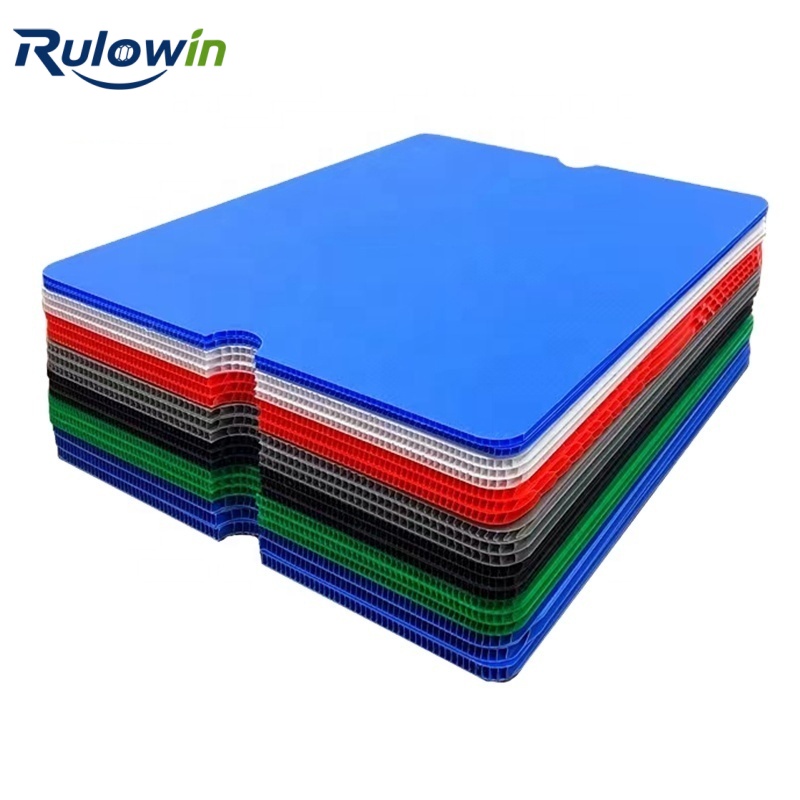
Welding polypropylene is straightforward and it is the standard way to make a durable box or tray from corrugated sheet. Tape works for prototypes and short-life items; weld is what you use when the part has to survive. Two methods, and the choice is mostly about volume.
Hot-air welding
A hot-air tool with a rod of the same material – a weld rod – melts both surfaces and the rod, and the joint cools into a continuous bond. It is slow, it needs a reasonably skilled operator, and it produces a very strong joint.
This is the method for one-offs, repairs and low-volume work. The equipment is cheap and the skill is learnable in an afternoon, which is why small fabricators use it almost exclusively.
Ultrasonic welding
High-frequency vibration melts the interface directly with no filler. It is fast – a second or two per joint – and consistent, which is what you want at volume. The tooling is expensive and specific to the part.
This is the method for production. If you are making hundreds of the same box, ultrasonic pays for itself quickly and gives a joint that does not vary with operator skill.
Where the joint can go
A weld needs two faces in contact. Corrugated sheet has its faces separated by flutes, so a weld across the flute direction has nothing to bond to except the thin webs. The practical consequence: weld along the flutes where possible, or fold the sheet so two outer faces meet.
The standard technique is a folded hem – fold the sheet so the outer face laps over itself, then weld through both layers. That gives a double thickness at the joint, which is where you want it.
What welding does not do
It does not seal the flutes. A welded corner is closed but the channels along the sheet are still open at any cut edge. If you need the part to be dust or water tight at the edges, that is a separate operation – edge sealing – and it is worth specifying at the sheet stage rather than trying to fix it afterwards.
And welding does not rescue a bad design. A joint in a high-flex area will fail regardless of how well it is welded, because polypropylene flexes and the joint does not.
Tape, for completeness
Cloth-backed tape along a folded corner is fast and requires no equipment. It creeps – the adhesive slowly lets go under sustained load – and it fails in heat and in cold. Fine for a prototype, fine for a short-life part, not for anything that has to last.
Cutting and edge options are covered in how to cut corrugated plastic sheet.
Repairs, which welding makes possible
A cracked sheet does not have to be scrapped. A hot-air weld along the crack, with a rod of the same material, restores most of the strength, and on a large or expensive part it is well worth doing.
The caveat is the same as for any repair: a crack happened because something was overloaded or badly handled, and welding it back without addressing that means it cracks again, usually beside the repair.
For boxes and trays in regular use, repair is worth it. For thin sheet and cheap parts, replacing is faster and the result is better.
What we can do
We supply PP corrugated sheet and can supply fabricated, welded parts to your drawing. Tell us the part, the volume and the expected life, and we will tell you which joining method suits – including when tape is genuinely enough.