
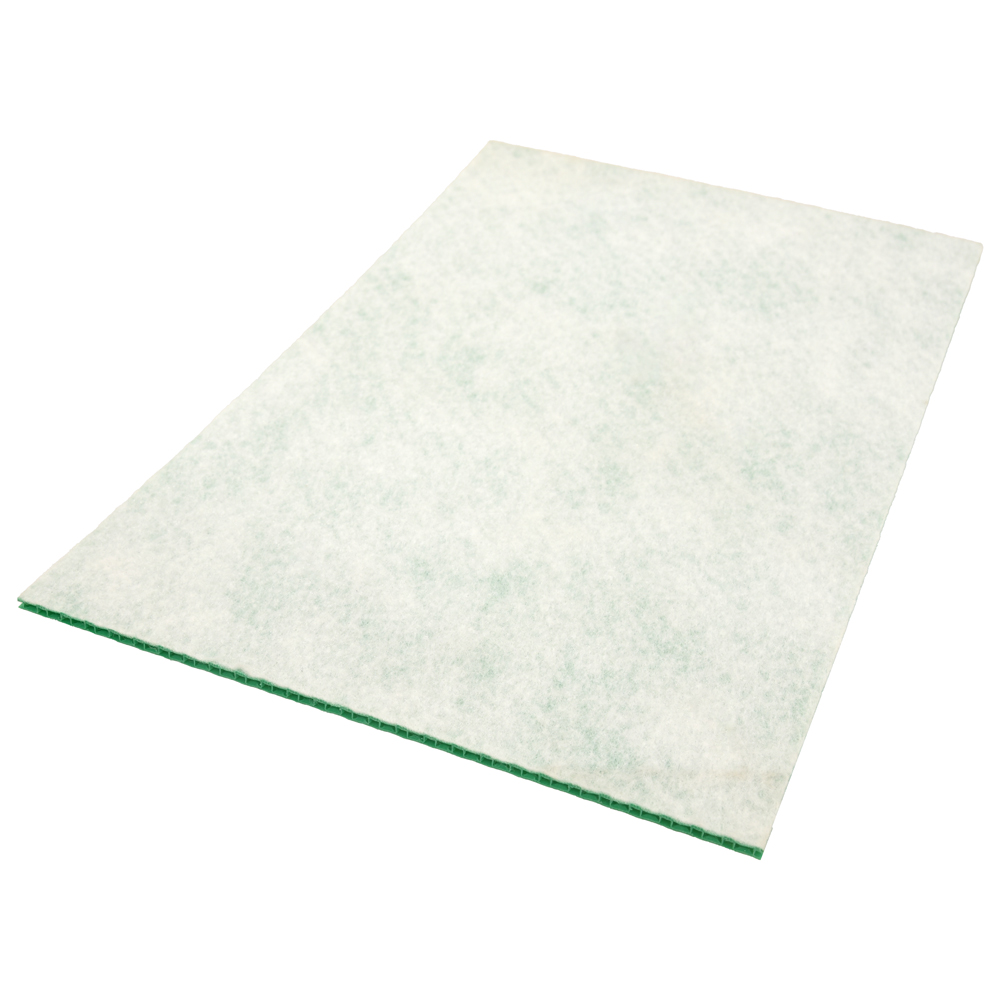
This is one of the first questions anyone importing panels asks, and the answer surprises people because it is not a weight problem. Honeycomb panel is mostly air. A container will be full long before it is anywhere near its payload limit, which means freight per panel is driven by thickness – and thickness is the thing most buyers have not fixed when they ask.
Why thickness dominates
Panels ship stacked. A stack of panels of a given footprint has a height, and that height is thickness times the number of panels. Double the thickness and you halve the count per stack, and you halve it again if the stacks are height-limited in the container. So the count scales very roughly in inverse proportion to thickness.
The practical consequence: a thin layer sheet and a thick structural panel differ by a very large factor in what fits in the same container, and therefore in landed cost per square metre. Anyone comparing quotes on a per-panel basis without accounting for this is comparing the wrong thing.
The two things that eat the space
Palletisation. Panels have to go on pallets, and the pallets have to be handled. Pallet height, the gaps between stacks, and the need to strap all reduce usable volume from the theoretical container cube. Assume you lose a meaningful fraction to this rather than a few per cent.
Stack stability. A tall stack of light panels shifts. Most loads are limited to a stack height that a forklift can move safely, not to the container’s internal height. If your stacks are limited to something well below the container ceiling, the count comes down accordingly – and that limit is usually a handling decision, not a shipping one.
What to actually ask a supplier
Not “how many fit”. Ask: how many panels per pallet, how many pallets per container, at what thickness. Those two numbers let you work out landed cost per square metre for any thickness you like, and they are numbers a supplier can give from their own packing data.
Also ask whether panels ship flat-packed on pallets or in crates. Crating protects edges better and costs volume. For a long sea leg with several handling points, the crate is often worth it – crushed edges are a real loss on arrival.
Working the landed cost
Once you have panels per container, freight per panel is the container rate divided by that number. Add the panel price and you have a landed figure that is actually comparable across thicknesses and across suppliers. It is a five-minute calculation and it routinely changes which quote looks best.
We went into what moves panel price in how much a PP honeycomb panel costs, and freight is the half that most comparisons leave out.
What to check on arrival
Count the pallets and check a sample stack for crushed edges. Edge damage is the most common arrival defect on panel shipments, and it is caused by handling rather than by the sea leg – usually by a forklift catching a stack.
Photograph any damage before the load is broken down. Once pallets have been moved and the wrapping cut, a claim becomes a negotiation; within a day of arrival it is usually straightforward.
Also check the count against the packing list. Discrepancies are rare and they are much easier to resolve while the container is still there.
What we can do
We supply PP honeycomb panels and quote panels per pallet and pallets per container as standard, so you can work out landed cost before you order. Tell us the size and thickness and we will give you the packing numbers – including when a different thickness would halve your freight per square metre.