
Filter screen enquiries usually arrive as a size – “I need a filter this big” – and a size on its own is not enough to specify from. The screen that fits and the screen that works are often not the same screen. Five numbers settle it, and they are all easy to find.
1. Face dimensions
The size of the opening the screen sits in, measured, plus the available depth. Depth matters: a deeper screen can carry more open area in the same face, which is how you get low resistance without giving up capture.
2. Airflow
Volumetric flow through the opening – cubic metres per hour, or whatever unit your fan is rated in. This is the number that decides whether a given open area is adequate. Without it, a supplier cannot tell you whether the screen will restrict the fan or not.
If you do not know it, the fan model number is usually enough to look it up.
3. What the dust actually is
This is the one people skip and the one that decides whether a washable screen is even the right product. Dry particulate – wood dust, lint, pollen, general grit – washes out and a reusable screen will run for years. Oily or greasy aerosol does not wash out and a reusable screen is the wrong answer entirely.
Tell the supplier which you have. It is a ten-second answer and it prevents the most common bad purchase in this category.
4. Open area, or let them choose it
If you know what you need, specify it. If not, give airflow and face size and let the supplier work it out – open area is what reconciles the two, and it is the number that determines pressure drop.
The trade is always the same: more open area means lower resistance and slightly less capture of the finer fraction; less open area means more capture and more resistance. As a pre-filter, favour open area. The fine stage behind it is doing the fine work.
5. Temperature and environment
Air temperature at the screen, and whether there is moisture or anything corrosive. Polypropylene handles normal HVAC conditions without trouble and has limits above that. If the air is hot, say so – it is a different product.
Also worth stating whether the screen is outdoors or indoors, because UV matters for anything in sunlight.
And one practical point
Ask how it will be cleaned. A screen that has to come out and be washed needs to be removable without tools, and a screen in a plenum that nobody can reach will never be washed. We went into what ends a washable screen in how long a washable filter screen lasts, and inaccessibility is on that list.
Two things that go wrong at installation
First, the screen being fitted the wrong way round. A screen has a clean side and a dirty side, and washing works by rinsing from the clean side outward. Fit it the wrong way and every wash drives material deeper. Mark the frame if it is not obvious.
Second, gaps around the edge. Air takes the path of least resistance, and a screen with a ten-millimetre gap around it is passing unfiltered air straight past. Seal the perimeter – a simple gasket or frame does it – or the screen is doing a fraction of what you specified it for.
What we can do
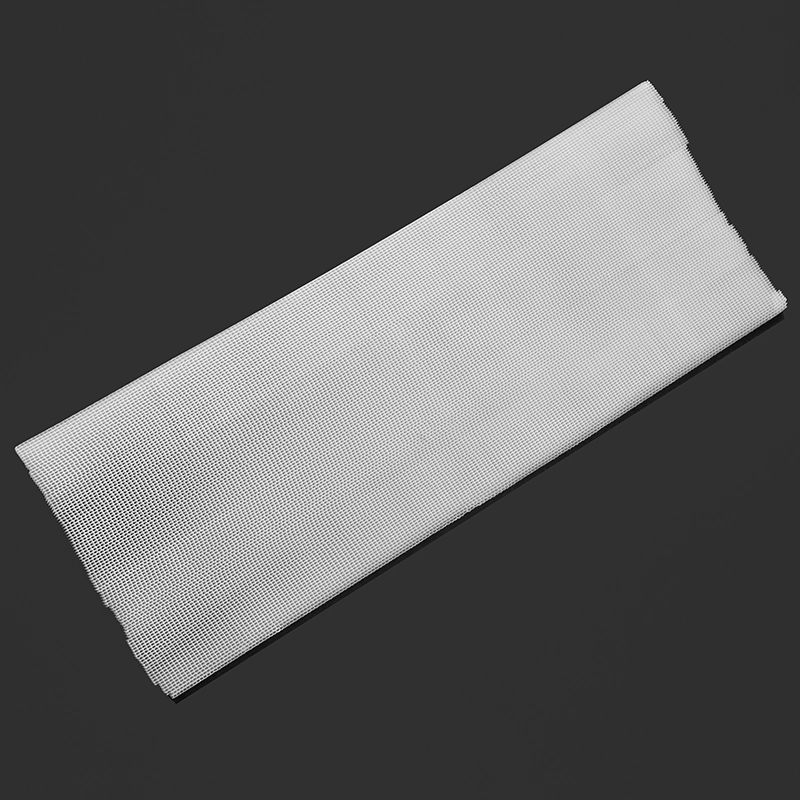
We supply reusable PP honeycomb filter media cut to your dimensions. Send us these five numbers and we will specify the open area and thickness – and tell you honestly if your dust is the kind that should not be on a washable screen at all.