
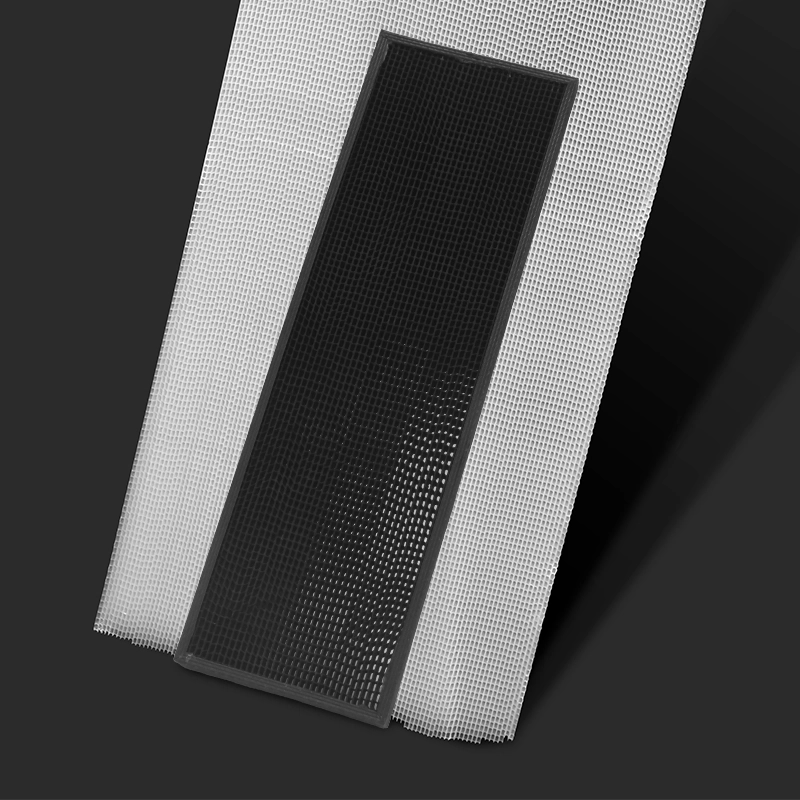
Grease screens get washed badly more often than they get washed rarely, and the reason is usually that nobody has said what “clean” means for grease. Dust can be rinsed and judged by eye. Grease leaves a film that looks clean under a kitchen light and is not.
What actually removes grease
Heat and surfactant. Hot water – as hot as is safe to handle – with a degreasing detergent, and contact time. Agitation helps where the geometry allows it. Cold water with a general-purpose cleaner moves the surface film and leaves the rest, which is why a screen can look clean and still smell of old oil when the hood heats up.
A commercial dishwasher on a hot cycle does the job well where the screen fits and the gauge tolerates it. Hand washing works where it does not. Solvent degreasers work and bring their own handling requirements.
Frequency beats method
A screen washed to a mediocre standard every day performs better than one washed perfectly every fortnight. The reason is that grease polymerises and hardens over time, and once it has done that, no amount of washing brings it back. Frequent washing keeps the loading in the state where it comes off easily.
In a busy kitchen this usually means daily. In a light-duty one, several times a week. The consequence of getting it wrong is not a dirty filter – it is a fire load in the canopy, which is why the interval should err on the short side.
What ends the screen
Heat deformation, mostly. Dishwasher temperatures and a light-gauge thermoplastic are not always compatible, and a screen that comes out wavy will not seat. Check the temperature rating before putting a plastic screen through a machine cycle.
Second is hardened grease that will not come off, which means the washing frequency was wrong for months rather than that the screen failed. Third is mechanical damage from handling – screens get dropped and leaned on.
For why the interval is set the way it is, see grease filters in commercial kitchen canopies.
A routine that survives a busy service
The washing routine has to fit around service, or it will be skipped when the kitchen is busy – which is exactly when it matters most. The practical answer is a fixed slot with a named person, and enough spare screens that washing never has to happen mid-service.
Two sets, swapped: one in the hood, one clean and ready. The dirty set gets washed when there is time, not when the hood needs it. This removes the decision from the busy moments entirely, which is why it works.
When to retire one
When it no longer sits flat, when the structure is cracked, or when hardened grease will not come off. A screen that has gone wavy lets grease-laden air past at the edges, and past the screen is into the duct – which is the risk the screen exists to prevent.
Do not retire a screen and leave the opening uncovered while a replacement arrives. In a commercial kitchen that is the one outcome to avoid, and it is why the spare set matters as much as the washing routine.
What we can do
We supply washable PP honeycomb grease screens and will ask how you clean before recommending a gauge. Tell us whether it is hand washing or machine, and roughly how often, and we will tell you what survives it – and what does not.