
A fan has a limited amount of pressure available, and every element in the path spends some of it: ductwork, bends, the coil, grilles, and each filtration stage. The budget is fixed at design. Retrofitting filtration without checking what is left is the most common way to end up with a system that cannot deliver its rated air volume.
Why it goes unnoticed
Because the loss appears gradually. A new pre-filter adds perhaps twenty or thirty pascals. That is not enough to be obvious. But it is taken from the margin that was supposed to absorb a dirty primary filter, and once that margin is gone the system has no headroom between clean and due-for-change.
The symptom shows up later as short airflow, complaints about stuffiness, or a primary filter that seems to need changing more often than it used to – because it is now doing everything with no help and no margin.
How much a stage should cost
There is no universal figure, but the useful way to think about it is by proportion. A coarse pre-filter should be a small fraction of what the primary filter costs in pressure, because its job is mass capture, not fine capture. If a pre-filter is spending as much pressure as the primary stage, it is doing the wrong job.
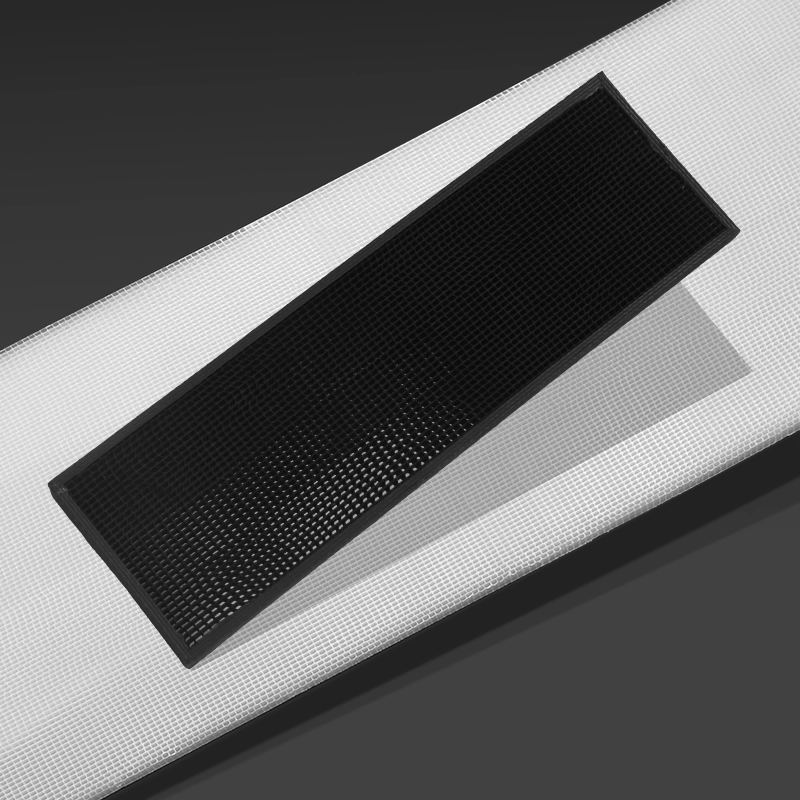
This is also why low-resistance geometry matters more than capture efficiency at this stage. Open cell structures present a lot of wall surface to the air while leaving most of the face open, and the pressure cost stays low as they load.
Measuring it instead of guessing
Two readings give you everything: the pressure drop across the stage when clean, and the drop at which you will clean or change it. That second number is the one people never set, and without it there is no definition of loaded.
A simple differential manometer, or the two-port gauges fitted to many air handling units, is enough. Record the clean reading at commissioning; that baseline is what makes every later reading meaningful.
The honest part
If a system is already at its pressure limit, adding any filtration stage will cost airflow, and there is no clever material that avoids it. The choice is then between accepting less air, increasing fan speed where the motor has margin, or increasing filter face area. Materials do not change that arithmetic.
Where the pressure actually goes
It is worth knowing that filtration is not usually the largest item. Ductwork, and particularly bends, transitions and undersized runs, often account for more of the budget than the filters do. Grilles and diffusers take a share, and the coil takes more than people expect.
That matters because it changes where to look when there is no margin left. If the system is short of air, adding filtration is the visible change and ductwork is the invisible one – and the ductwork is often where the pressure has gone.
When there is no margin
Three options, in order of cost. Increase filter face area, which lowers face velocity and the pressure that goes with it. Reduce the pressure spent elsewhere – a grille with more free area, a bend replaced with a swept one. Or increase fan speed where the motor has the margin, accepting the energy cost.
What does not work is specifying a more open filter and expecting the same capture. That is not a saving; it is a reduction in what the stage does.
What we can do
We supply low-resistance honeycomb pre-filters for fresh air systems and will quote the clean pressure drop at your face velocity rather than a generic figure. Send us the airflow and the available face area and we will tell you what the stage will cost you – before you fit it, not after.