
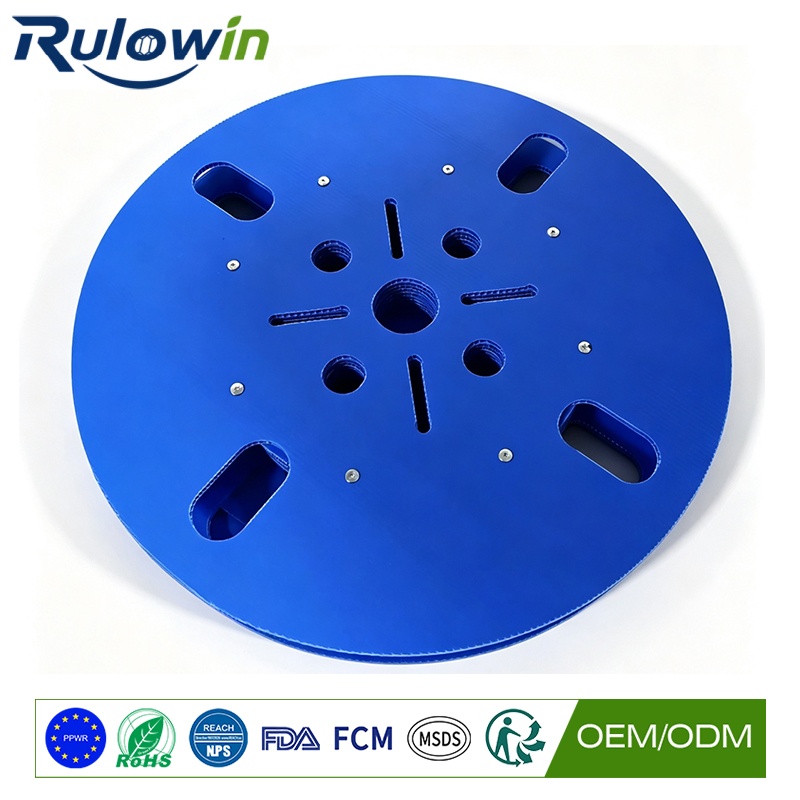
There is a moment, in most businesses that ship spooled product, when the packaging is the only thing the customer has seen of you. It arrives before anyone has used the product, it sits in their goods-in area, and it forms an impression that is not easily corrected later.
What gets noticed
From what customers actually mention:
- Condition on arrival. A cracked flange, a crushed rim, a spool that has obviously been somewhere. This is read as carelessness regardless of whose fault it was.
- Whether the pack is tidy. Uneven winding, an unsecured end, product hanging off the side. All of it reads as sloppy even when it functions perfectly well.
- Whether it is identifiable. A spool with no marking means somebody has to guess, and guessing is annoying.
- Whether it is clean. Dirt, oil, residue from a previous product.
- Whether it sits where they need it to. If it does not fit their storage or their machine, that is a problem they will remember.
None of this is about the product quality. All of it is about the impression before the product is used.
The end-of-pack problem
Specifically worth mentioning because it generates more complaints than anything else on this list. The customer reaches the end of the pack and finds:
- The last portion tangled or damaged
- The end secured in a way that is hard to release
- Product that has been crushed against the core
These are the failures discussed in our articles on doffing and the last portion of the pack. Their significance here is that they occur at the moment the customer is forming a final impression, and they are disproportionately remembered.
What customers rarely mention but notice
- Whether the spool is easy to move — weight and shape
- Whether it can be stacked without falling over
- Whether the return process is clear if it is returnable
- Whether it matches what previous deliveries arrived on, which is a consistency question more than a quality one
That last one matters more than it sounds. A customer who has set up around one spool and receives a different one has a problem, even if the new one is technically better.
Returnable spools from the customer’s perspective
Worth being clear-eyed about: a returnable spool asks the customer to do work. They have to store empties, arrange return, and keep track of them. None of that is their core business.
What makes it acceptable to them:
- Clear instructions on what to do with empties, physically on the spool
- A collection that happens rather than one they have to chase
- Not being charged for spools they did not lose
- Some notice before the arrangement starts, rather than it arriving unannounced
This is the same territory as our reverse loop article, seen from the other end.
Cheap improvements with real effect
- Secure the end properly, every time. The highest-return item on this list.
- Clean flanges before despatch. Minutes per spool, disproportionate effect.
- Mark clearly with product, quantity and what to do with the empty — see our markings article.
- Check spool condition at despatch with the same half-minute routine as our operator checklist.
- Be consistent about what you send, even if it is not optimal.
The honest counterpoint
Most customers do not care much about the spool, and it is possible to overspend on packaging appearance for no commercial return. The items above are worth doing because they are cheap and they prevent complaints, not because the spool is a marketing asset.
Where it genuinely matters is in the cases where the packaging causes the customer work — because that is remembered, and it is usually completely avoidable.
What we can do
Mark our hollow board spools with whatever your customer needs to see, supply them clean and in consistent condition, and tell you honestly whether your current packaging choice is likely to create work for the recipient. If it is, that is usually a more important problem than the unit price.