
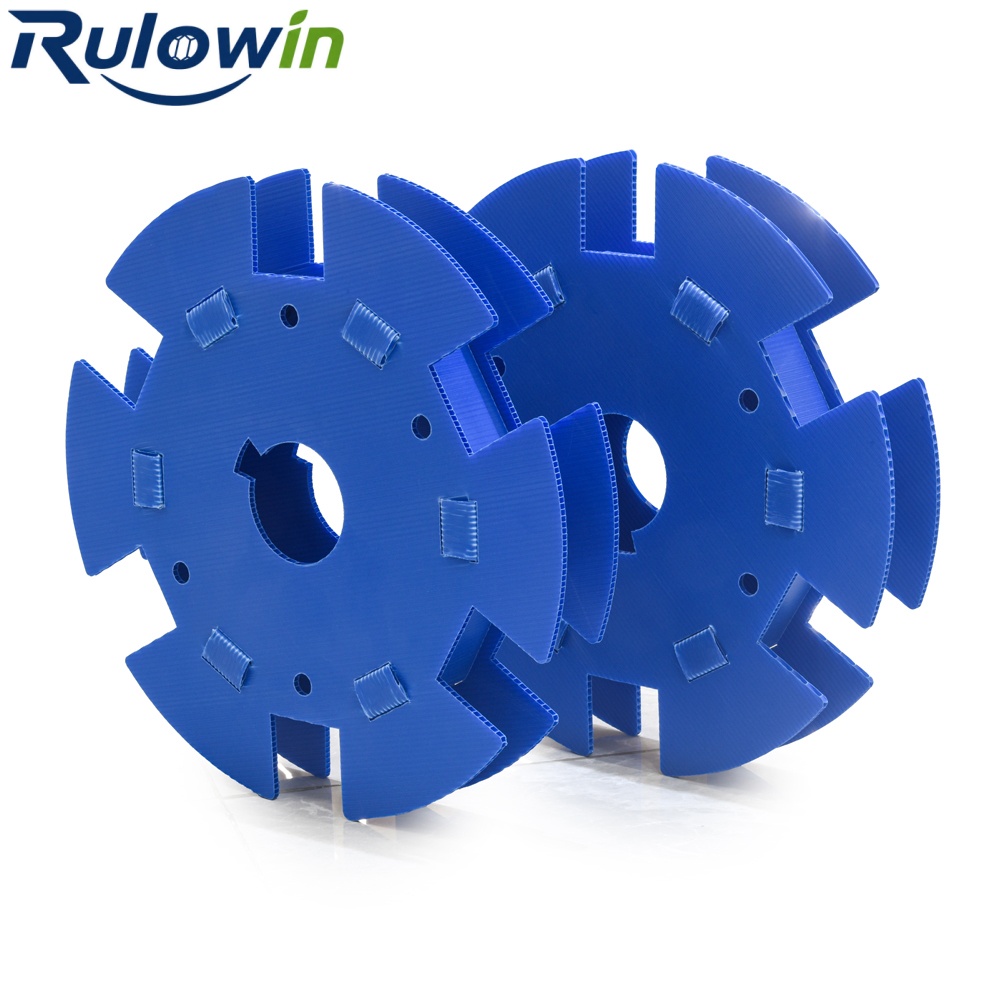
A quote for a hollow board spool is shorter than most manufacturing documents, which makes it easy to read quickly and easy to misread completely. The differences between two quotes are usually in what each one assumes rather than in what each one says.
Unit price, and what it is tied to
The obvious line and the most misleading, because it is conditional:
- Quantity. Almost always banded. A price at 500 units is not a price at 200.
- Material grade. A UV-stabilised or antistatic grade changes the number substantially. If two quotes differ widely, check whether they are quoting the same material.
- Resin price clauses. Some quotes are valid at today’s polymer pricing and some adjust. Worth knowing which, particularly over a long lead time.
- Whether tooling is included or separate, and whether there is a minimum implied by the tooling.
When comparing, get quotes against the same written specification. Comparing two quotes against two different understandings is the most common source of confusion, and it is nobody’s fault.
Tooling
Covered in more detail in our article on tooling, MOQ and lead time. On the quote specifically, check:
- Is it charged once, or amortised into unit price?
- Who owns it, and can you take it elsewhere?
- What happens if you change the design — is it modify or replace?
- Is it refundable against volume?
Minimum order quantity
MOQ exists because setup costs are largely fixed. Below some quantity the unit price rises steeply to cover them. Worth asking what the curve looks like rather than accepting a single number — sometimes 300 units costs nearly what 500 does, which changes the purchase decision considerably.
Lead time, and what it starts from
The most frequently misread line:
- Does it start at order or at approval of drawings?
- Is it production time or door-to-door?
- Is it working days or calendar days?
- What happens at peak season or around holidays?
A fifteen-day lead time that starts after fourteen days of drawing approval is not a fifteen-day lead time.
Freight and incoterms
Whether price includes delivery, and to where. The distinction matters more for bulky lightweight items like spools than for almost anything else, because freight is a large fraction of landed cost and the volume-to-weight ratio is poor.
Our article on spool weight and freight covers why this line is so significant for this product specifically.
Packing
Easy to overlook:
- Are spools shipped assembled or nested? Changes freight dramatically.
- Is protective packing included?
- Export packing, if applicable — see the options in our export packing article.
- Pallets returnable or consumed?
Samples
Are they included, charged, or credited against the order? And how many you actually need to test properly is worth thinking about — discussed in our piece on sampling and qualification. One sample is not a qualification programme.
Validity period
How long the price holds. On anything with resin exposure this is genuinely binding rather than a formality, and a quote that has expired may be quietly re-priced.
Payment terms
Standard, but they interact with everything else. A cheaper quote on tighter payment terms is not necessarily cheaper.
What is usually missing from both quotes
Things that will come up later, so worth asking explicitly:
- Expected service life and what it is conditioned on
- Tolerances actually held, rather than what is drawn
- What happens if the first batch fails inspection
- Spare availability in twelve months
- Whether the specification can still be produced in three years
How to compare properly
Give both suppliers the same drawing, the same quantities, the same delivery point and the same questions. Ask each one what they assumed. The quote that comes back with questions asked is usually not the cheaper one, but it tends to be the one that turns out right.
We would rather answer awkward questions about our hollow board spools at quotation stage than explain them after delivery.