
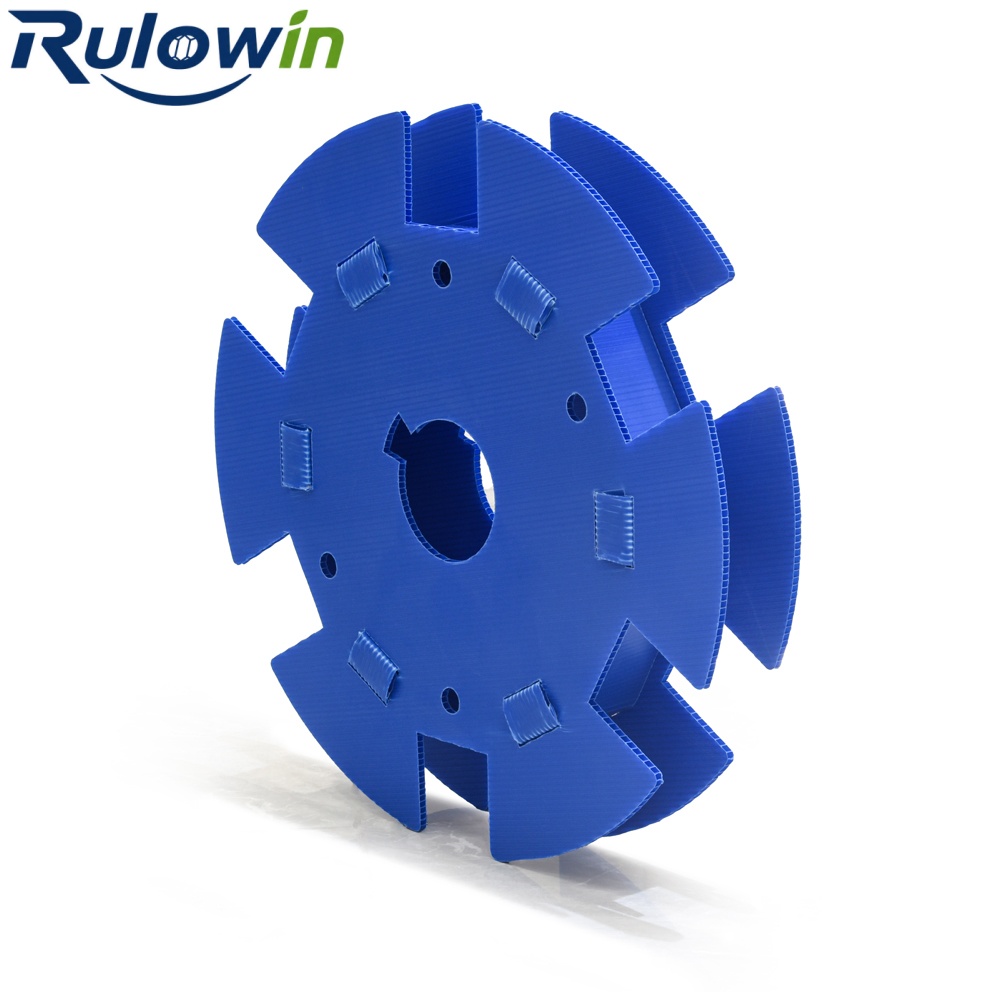
Most spool damage attributed to shipping is decided at the packing bench, not in transit. The four common methods differ in what they actually protect against, and picking one without knowing which failure you are trying to prevent is how money gets wasted on packaging that does nothing.
Method one: loose on a pallet, wrapped
Spools stacked on a pallet and stretch-wrapped. Cheapest, fastest, uses the least volume.
Prevents: nothing much. It keeps the load together and keeps the rain off.
Fails at: any impact, any point load, and any tendency for spools to shift. A wrapped pallet of spools that takes a knock in transit will have a damaged spool at the contact point.
Suits: robust product, short lanes, spools with thick flanges, and situations where a small damage rate is acceptable.
Method two: individual cartons
Each spool boxed, then palletised.
Prevents: spool-to-spool contact, moderate impacts, and most abrasion. Also hides the contents, which cuts both ways.
Fails at: crushing if the cartons are stacked too high or the board is too light, and it adds a lot of volume — on a container lane, cartons can cost more in freight than they save in damage.
Suits: moderate value product, mixed shipments, retail-ish channels where a boxed spool is expected.
Method three: layered system with separation sheets
Spools stood on a base tray, separated by sheets, stacked in a pattern that keeps load off the flange faces.
Prevents: flange crushing — which is the failure that actually ruins spools — and most point-loading damage.
Fails at: nothing much, provided the pattern is right. It is less protective than a carton against a direct impact but far better than loose packing against the damage that matters.
Suits: reusable spool programmes, because the sheets and trays come back with the spools. This is usually the best value on a lane where empties return.
Method four: crates or stillages
Rigid outer packaging, wood, plastic or metal.
Prevents: almost everything, including handling damage at both ends.
Fails at: cost, weight, cube, and — for wood — ISPM 15 treatment and the paperwork that goes with it.
Suits: large or heavy spools, very high value product, and lanes with known rough handling. Consider plastic or engineered wood to avoid the treatment question.
Choosing
Ask what damage you are actually getting. Chipped rims means impacts — cartons or crates. Crushed flanges means stacking load — a layered system. Scuffed product means abrasion and probably the outer packaging is fine but the spool is moving in it.
Then ask what the empties do. If spools come back, a layered system with reusable trays is usually the cheapest over a year. If they do not, cartons are simpler and the return flow is not a consideration.
The one thing that applies to all four
Secure against movement. A spool that can shift will shift, and every start, stop and corner in the journey adds an impact. Blocking, wedging, or strap with edge protection — never bare strap against a flange. Fill the void. A half-full pallet is where most transit damage happens.
Tell us the spool size, the lane and your current damage rate and we can suggest which method pays — including when the answer is that you are already fine.
Choosing quickly
If you do not want to run the full comparison, three questions settle most cases:
- Will the spools come back? If yes, the packing has to survive the return too, which rules out the lightest options.
- How long is the transit and how many handling points? More handling justifies more packing.
- What is the product worth? Damage to a spool is annoying; damage to the product on it is expensive. Pack for the product, not the spool.
Where the answer to the third question is “a lot”, stop optimising the packing cost. It is the wrong thing to be saving money on.