
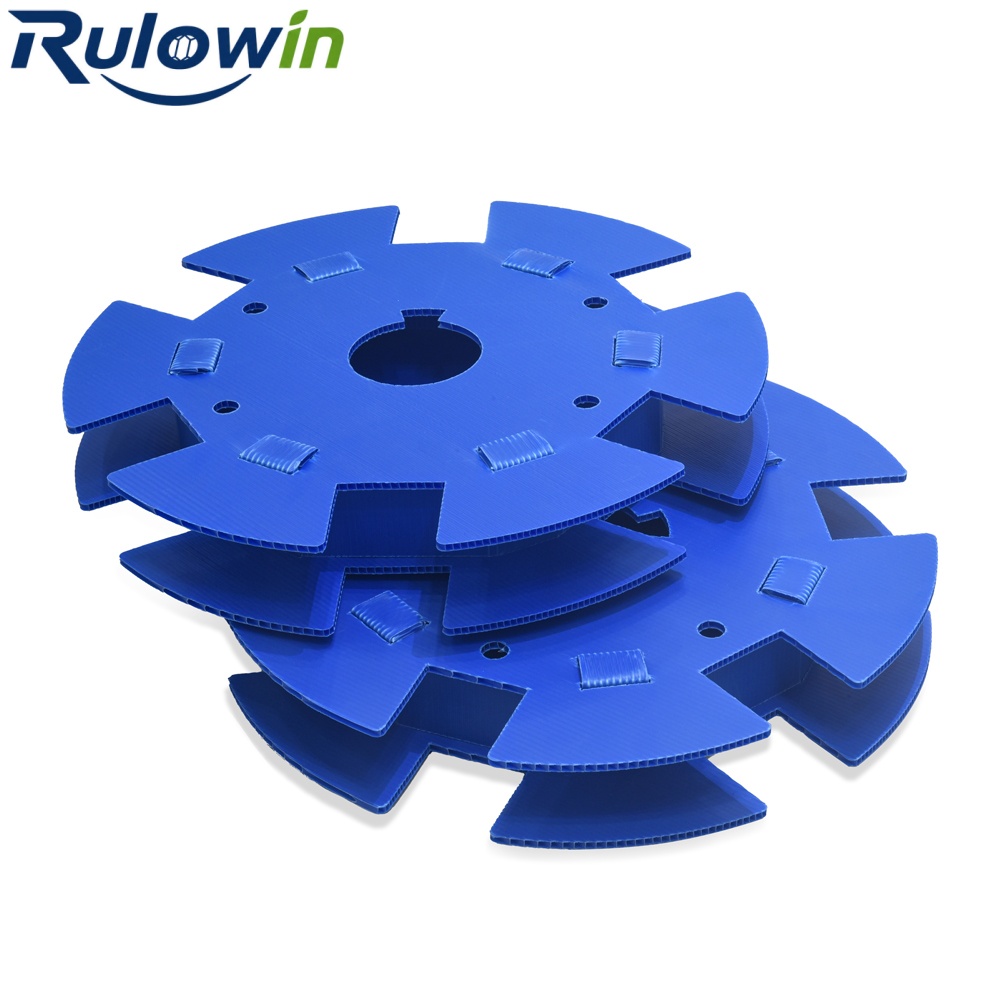
A spool that has been wound perfectly can be ruined in the thirty seconds it takes to get it off the machine. Doffing gets far less attention than winding, and it causes a disproportionate share of problems that later get attributed to the wind.
What happens at doff
The pack is under tension and held outward against nothing. Release the tension to remove the spool and everything relaxes slightly — layers settle, outer turns lose whatever constraint held them, and anything that was marginal becomes mobile.
Then someone handles it. Usually with a forklift, often in a hurry, sometimes before anyone has secured or sleeved the outer end.
Failure one: the outer end
The most common and the most avoidable. The trailing end is not secured, and either:
- It unravels during handling, sometimes several turns, sometimes most of the pack
- It gets caught on something and pulls
- It trapped under the spool and gets crushed
Securing the end is seconds of work. Depending on the product it is tape, a strap, a band, or a clip — the specific method matters less than doing it consistently, and doing it before the spool is moved rather than after.
Failure two: the release
A full spool can be gripping the shaft. Releasing under residual tension, or releasing with the pack partly supported, can let turns shift.
The practical habit worth having: fully release tension, let it settle, then remove. The extra few seconds cost nothing and prevent the kind of internal displacement that only shows up at the customer’s payoff.
Failure three: damage from the handling itself
- Forklift tines contacting the flange. The single biggest cause of flange damage, and discussed in the repair or retire article because this is where those cracks come from.
- Setting it down on the rim rather than the flange face.
- Lifting by the flange rim with a hook or grab.
- Stacking immediately onto another spool without checking the face is clean, which presses debris into the flange.
Failure four: contamination at doff
Whatever is on the floor, the shaft, the operator’s gloves or the forklift ends up on the outer layers. On applications where cleanliness matters this is the contamination event of the whole process, and it happens after all the careful winding.
See our article on cleaning between runs for why cleaning up afterwards is usually harder than not doing it.
Design things that help
Some are worth specifying on the spool:
- A recess or slot for securing the end, rather than improvising with tape over the rim
- A defined lifting feature so nobody lifts by the flange edge
- Flange geometry that protects the outer turns — some designs leave the pack exposed, others partially shroud it, which matters in transit far more than on the machine
- A rim that survives the inevitable contact, per the earlier discussion on rim reinforcement
Process things that help
- Secure the end before release, every time, no exceptions
- Full tension release, brief pause, then remove
- Set down on the flange face, never the rim
- Cover or sleeve if the product is sensitive, before the spool leaves the machine area
- Do not stack fresh spools until they have cooled, if they are coming off warm
That last one is real for some products — warm product settling under stack load behaves differently from cool product, and the consequences are usually discovered as pressure marks several layers in.
The tell
If you are seeing damage at the outer layers specifically, doff is the first suspect. Damage concentrated at the outer turns is almost never caused by winding, because winding treats every layer similarly. It comes from what happens after.
If you are seeing it in the first few inches of a customer’s unwind rather than anywhere else, that is the same answer — it was damaged at the outside, which means after winding.