
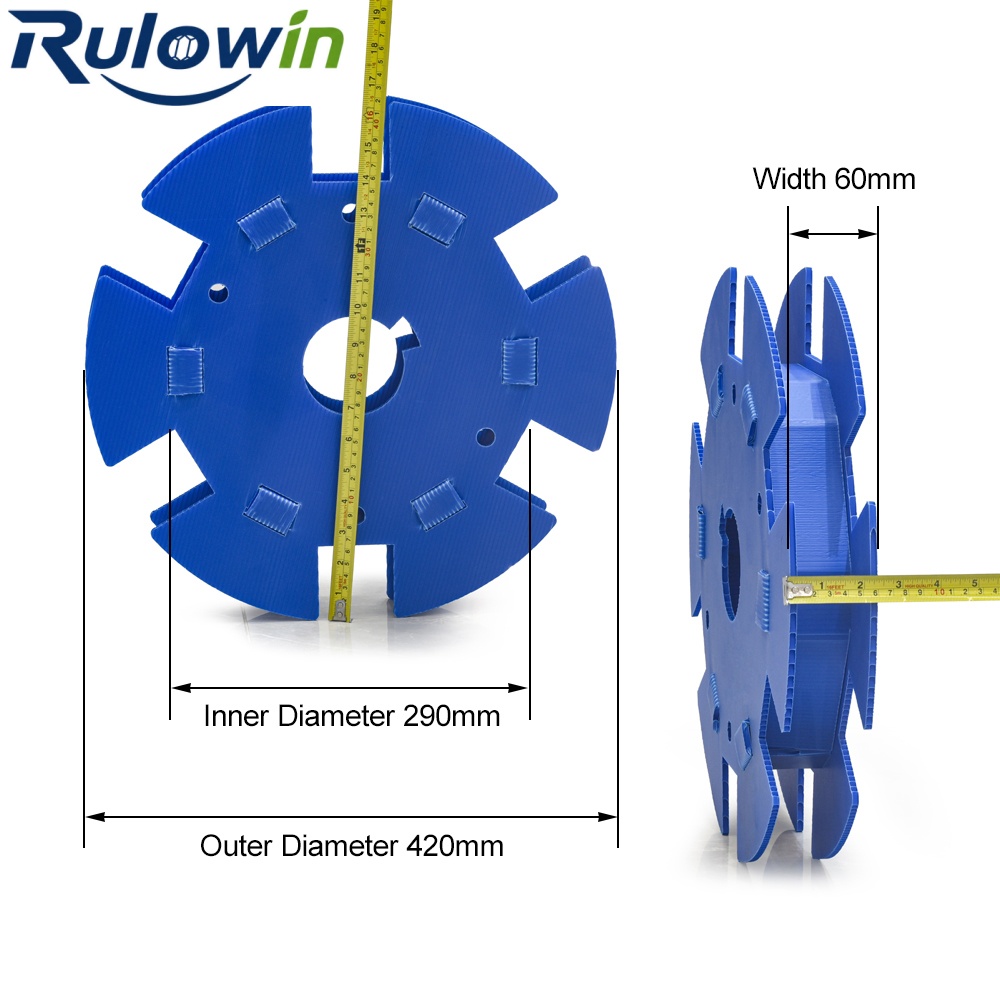
Spool cleaning sits in an awkward place. Most of the time it is unnecessary, and doing it anyway adds cost and wear. Occasionally it is genuinely required, and then doing it badly damages spools faster than the contamination would have.
First: does it need cleaning at all?
For the majority of industrial spooling — cable, wire, rope, standard hose — the answer is no. Spools come back with dust and scuffs and go straight back into service. Cleaning them is cost with no benefit, and every wash cycle is also a wear cycle on the joints, the surface and any labelling.
Cleaning is warranted when there is a reason: a product change where cross-contamination matters, a customer requirement, visible contamination that could transfer to the product, or an application with genuine hygiene requirements.
What removes what
- Loose dust and dirt. Compressed air or a brush. Not a wash.
- General grime and handling marks. Warm water with a mild detergent, applied with a cloth. This handles most of what comes back from a normal factory.
- Oil and grease. A degreaser designed for plastics, or a mild alkaline cleaner. Test on one spool first — some solvent-based degreasers attack polypropylene, and the damage appears as stress cracking days later, by which time you have cleaned a whole batch.
- Adhesive from labels. The awkward one. Peel what you can, then a citrus-based or similar adhesive remover. Aggressive scraping scratches the flange, and a scratched flange is a product-damage risk in a way that a slightly sticky one is not.
- Mould or biological growth. Occasional on spools stored damp. A diluted bleach solution works, followed by thorough rinsing. This is a symptom of storage conditions rather than a cleaning problem, so fix the storage.
What damages spools
- High-pressure washing at close range. Very effective at removing dirt and very effective at driving water into joints and delaminating the edges of hollow board if you catch the flute openings. If you pressure wash, keep the pressure moderate and the nozzle back.
- Steam. Polypropylene softens well below the boil. Steam cleaning can distort a flange. Avoid it.
- Strong solvents. Some attack PP directly. Others do not, but leave residues. If you are not sure, test.
- Abrasive pads. Removes the surface layer along with the dirt. Rougher surface means more dirt next time, and it is a scratch risk for the product.
- Very hot water. Warm is fine. Hot is approaching the territory where PP starts to lose stiffness.
Drying matters more than washing
A spool that goes back into service wet will put moisture on the product, which for a lot of cable and wire is a bigger problem than whatever you washed off. Dry thoroughly, and pay attention to the bore and any joint — those hold water longest.
If cleaning is a routine operation, budget for the drying. It is usually the bottleneck, not the wash.
Labelling and identification
Washing destroys paper labels and degrades printed ones. If spools are cleaned routinely and also need identification, the identification has to survive the process — engraved, moulded, or a tag in a protected position. Deciding this after the first wash is the usual order of events and it is the wrong way round.
How many cycles can a spool take?
It depends so heavily on the method, the temperature and the chemicals that we are not going to give you a number. What we can say is that washing is generally harder on a spool than winding is, and that if you are planning a wash every cycle, you should test it during qualification rather than discovering it in month six.
Run five or ten samples through your actual cleaning process ten times and re-measure. That tells you more than any data sheet, and it is the test we would run before committing to a wash-every-cycle programme on our hollow board spools.
Simplest advice
Clean only when there is a reason, use the gentlest method that works, and test before you standardise.