
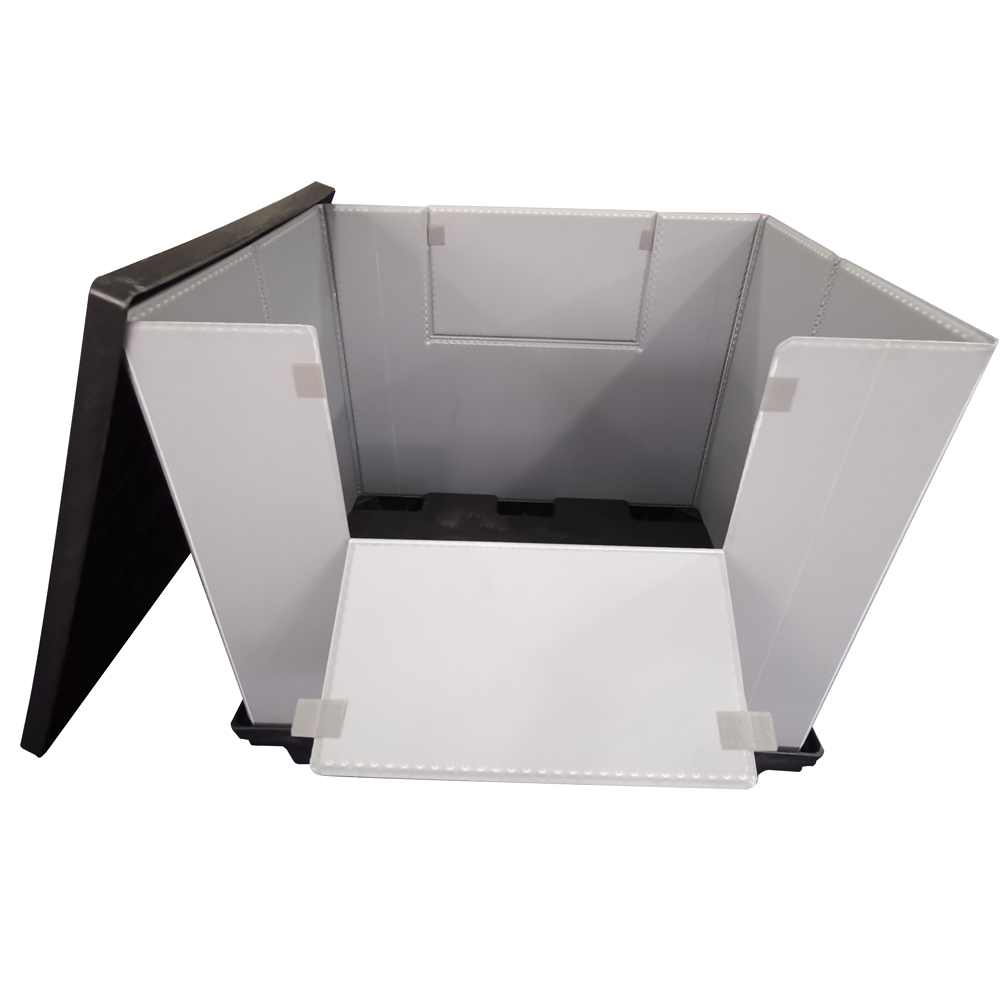
A stack of empty crates that starts to lean is a familiar sight in every yard. The usual assumption is that the crates do not stack properly, and the usual response is to stack them lower. Both are usually wrong, and the real causes are individually cheap to fix.
Cause one: the base is not flat
The bottom of the stack is sitting on something uneven – a damaged pallet, a cracked floor, a drain cover, or the ground. A lean introduced in the first two layers multiplies upward, so by layer ten the stack looks unsafe when the real problem was at layer one.
Check the base before the crates. This is the answer more often than anything else.
Cause two: mixed nesting states
A stack with some crates nested and some not has inconsistent layer heights, and the stack steps to one side as it grows. It looks like a stacking failure and it is actually a sorting failure. Mixed orientations, or mixed models that look similar, do the same thing.
One rule stated once – nested or not nested, pick one – removes it permanently. This is exactly why we put it on the one-page procedure for running a picking box loop.
Cause three: deformed units in the stack
One distorted crate in the middle of a stack tilts everything above it. Because the deformation is subtle, the stack looks uniformly bad. Pull the stack apart and check units on a flat surface; the bad ones rock.
Where deformation is widespread, the cause is usually storage: stacks that are too high, in a warm area, for too long. Polypropylene creeps under sustained load and heat, and empties are often stored far worse than loaded units.
Cause four: genuinely poor interlock
Sometimes it is the design. Flat-topped units with no interlock feature rely entirely on friction, and friction drops with dust, moisture and wear. Interlocking features – a rim that engages the base above – solve this properly and are worth specifying where stacks go high.
Height limits nobody enforces
Stack height guidance exists and gets exceeded as soon as space runs short. Because nothing bad happens immediately, the practice becomes normal. If leaning stacks appear seasonally alongside a space squeeze, that is the answer.
What the lean tells you
A stack leaning consistently one way points at the base or at a repeated sorting mistake. A stack that leans randomly points at deformed units. A stack that leans only when high points at friction or interlock. The pattern is diagnostic and free to observe.
What to do on Monday
Check the floor where the stacks stand, sweep and level it if needed, and mark the maximum stack height on the wall at eye level. Those two actions cost an hour and resolve a large share of leaning-stack complaints, because the base and the height are the two most common causes.
Then walk the yard once a week and look at the bottom two layers rather than the top of the stack. Problems announce themselves at the bottom long before they become visible at the top, and that is where the fix is cheapest.
What we can do
We supply pallet sleeve boxes and crates with interlocking stacking features and can tell you the safe stack height for the construction. Describe your storage conditions – height, temperature, duration – and we will tell you whether the design or the habit is the problem.