
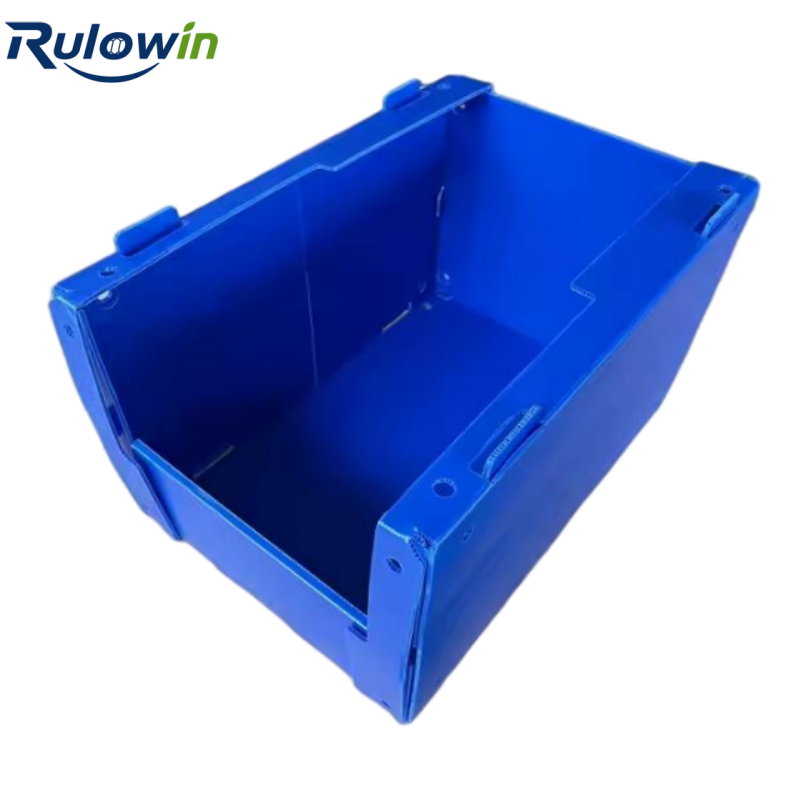
A picking box loop lives or dies on a handful of small decisions made hundreds of times a day, mostly by people who were not in the meeting where the loop was designed. The standard response is a twelve-page procedure that nobody reads. The better response is one page, six numbered steps, and one named owner.
Why long procedures fail
Packaging tasks belong to nobody specifically. Everyone touches picking boxes; nobody owns them. A long document reinforces that by making compliance feel like somebody else’s job, usually a supervisor’s.
The failure mode always looks the same: the procedure is followed for six weeks while the project sponsor is watching, then quietly stops, and six months later the loop is short on boxes and nobody can say why.
The six lines worth writing down
First, where empties go. One location, marked, with a photo on the page. Second, how a box is declared empty – upright or collapsed, lid on or off; pick one, because mixed states wreck every downstream count. Third, what makes a box unusable, with pictures of the three defects that actually occur.
Fourth, who to tell when the empty stack runs below a set level, and that level written as a number of stacks rather than a quantity. Fifth, what happens on return from a customer lane – inspection or straight to issue, decided in advance. Sixth, who owns the weekly count. The same six headings cover almost every picking box flow we have looked at.
Put the number on the floor, not in the file
A reorder trigger expressed as “when stock looks low” will not work. Express it physically: when the marked bay holds fewer than three stacks, message this name. Floor staff will act on something they can see from where they stand, and will not act on a system report they never open.
Write for the worst Thursday
Procedures fail under pressure, which is exactly when the loop needs them. Ask what happens at 16:00 on the busiest day when the empty stack is empty and there are still 200 boxes to pick. If the answer is “a supervisor decides”, write that down and name the fallback – usually a defined quantity of new board kept for exactly this case, replenished when used.
This is the part that most start-up guidance skips, and it is also where most new warehouses actually come unstuck, as we found looking at common picking box mistakes.
Review against reality, not annually
Read the page out loud to two people who do the job. If either says “we don’t do that”, change the page rather than the people. Review it after the first month and after the first seasonal peak, and leave it alone in between – constant revision is how procedures lose credibility.
What should not be on the page
Specifications, purchasing terms, supplier contacts, anything about cleaning chemistry, and anything that is true of every box everywhere. Those belong elsewhere. If you put them on the single page, the one thing that mattered gets lost three paragraphs in.
The honest part
No written procedure keeps a loop honest by itself. What keeps it honest is one person who sees the count every week and is allowed to raise it in a meeting. If that role does not exist, the best one-page document in the world buys you two months.
What changes when you add a second site
The single-page approach holds up to roughly three sites if one of them clearly owns the standard. Past that, site-to-site differences in layout start to matter and each site needs its own page against a shared set of definitions – otherwise “empty” means collapsed at one end and upright at the other, and the balance never reconciles.
Transfers between sites are where the counting breaks, because they are nobody’s issue and nobody’s receipt. Put inter-site transfers on their own line in the weekly count, even when the volume is small.
What we can do
We supply PP corrugated picking boxes and have watched enough of these loops start up to know which six lines matter. Tell us how many lanes and sites you are running and we will sketch the page with you – it takes about twenty minutes, and if your operation is too small to need a written loop at all, we will say so.