
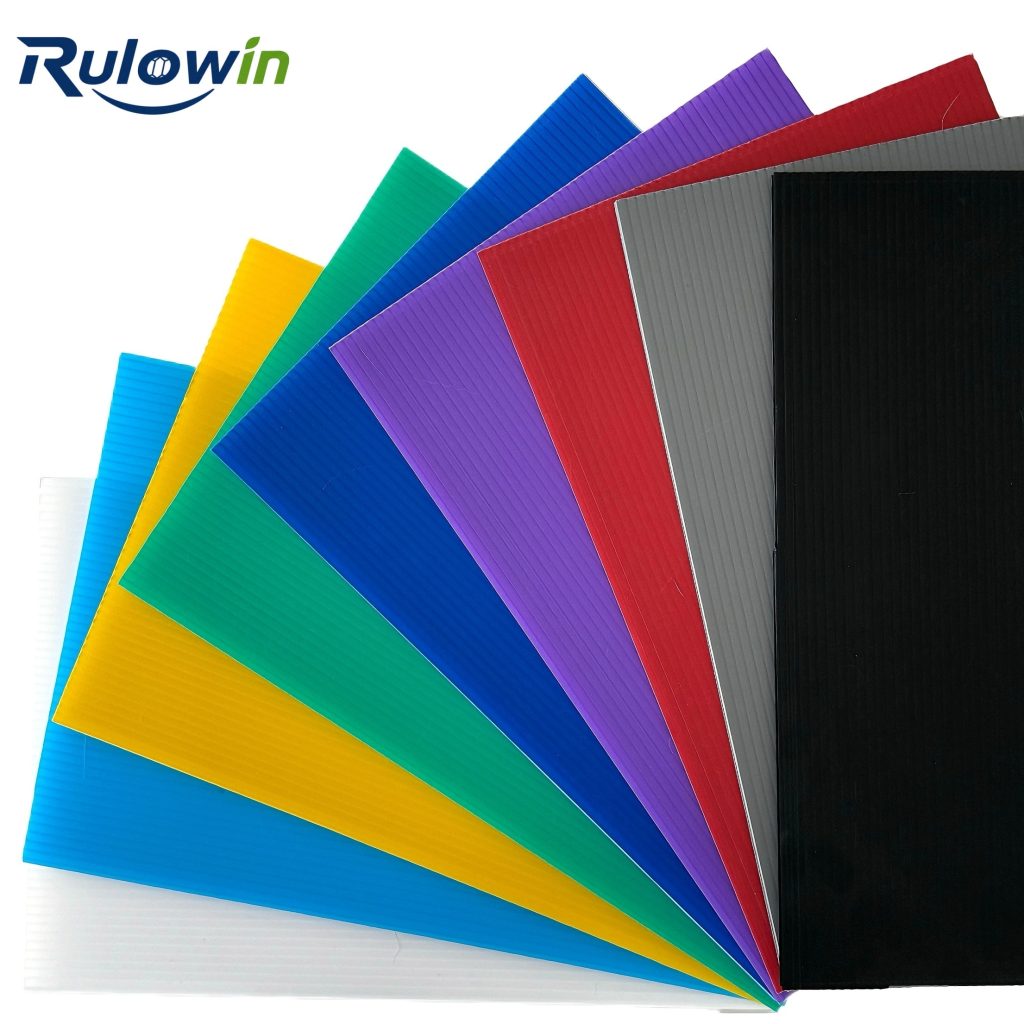
Returned corrugated polypropylene sheet and layer pads get sorted into three piles whether anyone plans for it or not: usable, usable somewhere else, and bin. The problem is that the sorting criteria usually live in the heads of whoever happens to be on goods-in, which means the same defect gets accepted on Monday and scrapped on Friday.
The economics that decide everything
A returned layer pad is worth a couple of pounds at most. Ten seconds of inspection is already a meaningful fraction of that. This is not a situation where you can justify a careful inspection regime – you need a glance-and-throw test that anybody can run at walking pace.
So the whole design problem is: how few things can we ask someone to look for, while still catching the defects that genuinely matter downstream.
Three defects that end a sheet
Creases running across the flutes. A creased sheet has lost most of its stiffness along that line and will fold in service, which is how a layer pad ends up dumping part of a load. Creases along the flute direction are far less serious.
Delamination or crushed cells at the edges, because that is where the sheet takes the strap or the pallet bearer load. A crushed edge spreads under load and the damage grows every trip.
Contamination that will not wipe off – grease, cured adhesive, certain inks. Anything that transfers to the product is terminal regardless of how sound the sheet is. This is why the incoming grade check described in verifying thickness and gram weight on delivery matters for new stock too: the wrong grade fails in weeks, not years.
Two defects that do not
Surface scuffing and cosmetic discolouration are almost always acceptable for internal use, including after UV exposure for a season. So are small corner nicks away from the load path. Scrapping these is the most common form of accidental waste we see, sometimes running to a third of everything thrown.
Write both lists down, take phone pictures of each defect, and put them on the wall above the sorting bench. Photos settle arguments far better than adjectives.
Set the sort rule before the outbound decision
A downgraded sheet needs somewhere to go or it simply becomes slow-moving stock. Decide that first: internal pallet layer only, packing-line dunnage, protective top sheet on internal transfers, or one-way outbound with the load.
If there is nowhere for the downgrade stream to land, do not run grading at all – two piles, clear rules, everything else recycled. Half-implemented grading creates a third pile nobody owns and eventually a yard full of it.
Recycle honestly
Contaminated or multi-material pieces generally are not recyclable in practice even when the base polymer technically is. Mixed-colour PP from unknown sources is also hard to place. Say so in the procedure so people are not sorting material into a stream with nowhere to go.
Sampling instead of sorting
For high-volume returns of a single grade, grading everything is not worth it. Pull a handful from the top, sides and corners of each stack; if a set fraction fails, reject or downgrade the whole stack. Faster, more consistent, and much easier to train – roughly the same logic as acceptance sampling anywhere else.
Getting rid of the reject pile
Every grading operation accumulates material nobody wants. If it sits, it absorbs space, gets rained on, becomes unrecoverable, and eventually costs more to dispose of than the sheet was ever worth. Set a maximum holding volume and honour it.
Recyclers generally want volume of a single clean stream, which argues for separating by grade and colour at the point of sorting rather than later. Below roughly a pallet load it is usually not worth their while, so either accumulate deliberately or accept that material is going to general waste and stop pretending otherwise.
What we can do
We supply PP corrugated sheet and layer pads and can tell you, per grade, which of these defects you should expect to see after roughly how many trips – including where the honest answer is that a thicker grade fails earlier than you would think because of how it is handled, not how it is loaded.