
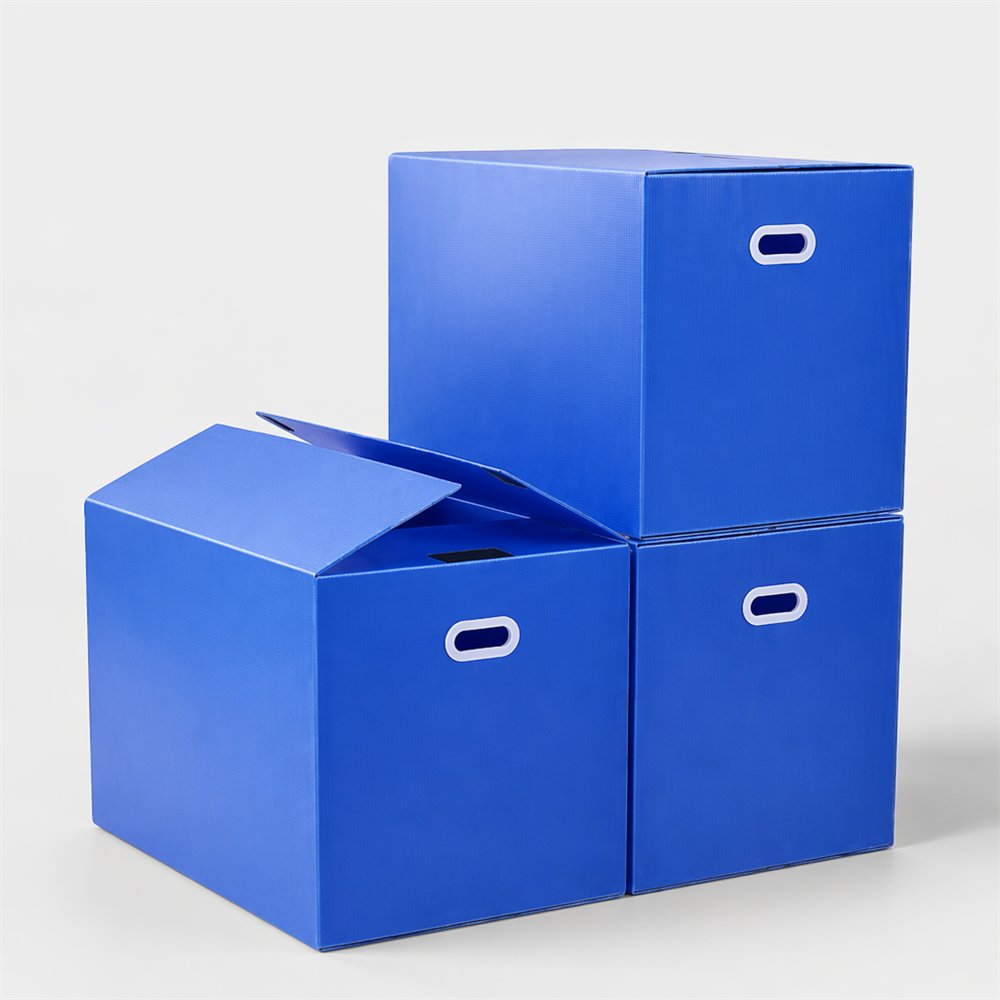
The reusable packaging case is compelling on paper and then collapses in open parcel networks for one structural reason: the return leg is not a leg, it is a hope. Everything else follows from that.
The return is not free or automatic
In a closed two-site loop the empty comes back on the same truck that delivered it, and the cost of return is effectively zero. In a parcel network the empty has to be collected from millions of doorsteps, consolidated, sorted and transported back. That reverse trip costs more than the original delivery in most networks, and it costs several times more than the packaging.
Nobody has solved this with better packaging. Proposals that claim otherwise generally assume a return density that only exists inside a closed system.
Dwell kills it next
Even where collection exists, empties sit. The customer has to remember, care and act. Recovery rates for unprompted consumer returns are low, and a fleet that loses a large share per cycle needs continuous replacement that destroys the economics.
Any model relying on the recipient to do something is a model that loses units, and it loses them in proportion to how inconvenient the ask is.
Damage and contamination come back too
What returns is not what left. Used, crushed, contaminated, sometimes with a different product’s residue. Every returned unit needs inspection before it can be reused, and that labour is frequently left out of the business case – the same omission we flagged for business cases for reusables.
Where reusables genuinely work in parcel
Three situations. Business-to-business on regular lanes, where the pickup is already scheduled. Densely populated closed catchment areas with scheduled collection rounds. And any case where the item is valuable enough that deposit economics change behaviour – which usually means the packaging is a meaningful fraction of product value.
What actually works for consumer parcels
Recyclable single-trip materials with high recycled content, correctly specified. That is not the exciting answer, and it is the honest one for most consumer networks. Where a reusable genuinely improves a parcel operation it is usually inside the network – totes between sortation centres and delivery hubs – not at either end.
The middle ground
Hybrid schemes: reusable turnover boxes on the trunk and hub network where recovery is controlled, single-trip or curbside-recyclable material at the doorstep. This captures most of the environmental benefit because the reusable part cycles hundreds of times, and it stops pretending the last mile can be closed. More on the accounting side sits in what PPWR means for buyers.
What to do instead, concretely
Put reusables where recovery is controlled: between your own sites, between your sites and a consolidation hub, and on regular business-to-business lanes. Use high-recycled-content single-trip material at the doorstep, and make sure it is genuinely recyclable in the collection systems your customers actually have, not the ones that exist somewhere.
Then measure the reusable part properly – trips per unit is the number that matters – and report it. A programme that recovers hundreds of trips in the controlled part of the network has a defensible story, and it does not depend on behaviour from people who never asked to participate.
What we can do
We supply turnover boxes for hub-to-hub and other closed flows, and we will tell you plainly when a reusable cannot work in your last mile. Describe your network and we will point at the segment where it does pay.