
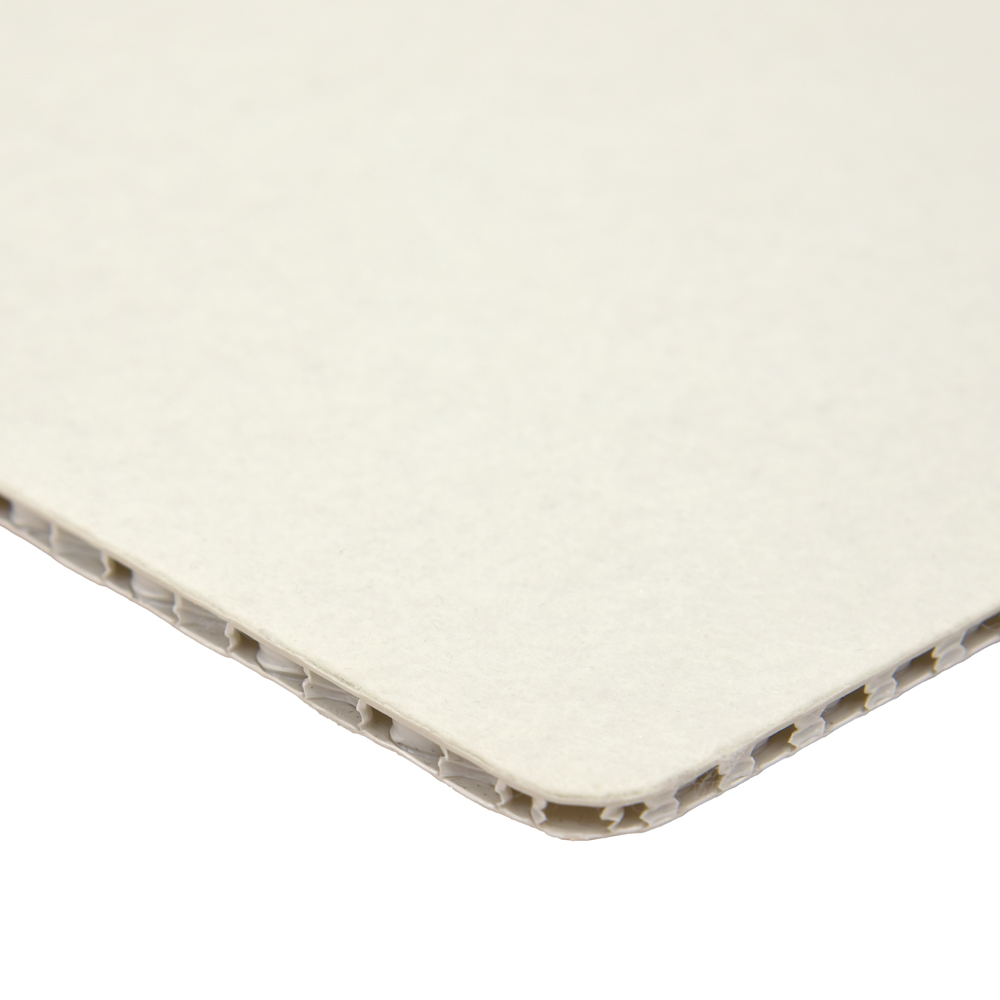
Cardboard and hardboard or MDF are still bought for floor protection because they are cheap and available. On a dry internal job lasting a fortnight they are adequate. The moment water appears – a roof that is not yet weathertight, wet trades working nearby, a leak, condensation in a drying building – both fail, and they fail in a way that damages the floor they were protecting.
What cardboard does
It absorbs water and holds it against the floor. Wet cardboard then does three bad things: it goes soft and stops protecting against impact, it slides, and it transfers its own colour and its sizing agents onto the surface below. On polished concrete or stone the result is a brown stain that follows the cardboard joints and needs a specialist clean. On timber it can raise the grain permanently.
What MDF and hardboard do
They absorb more slowly and fail more dramatically. MDF that gets wet at an edge swells, and swollen MDF is no longer flat, so every panel edge becomes a trip lip and the sheet starts to break up under traffic. It also leaches, and the residue bonds to some finishes. Hardboard behaves similarly but is thinner and fails faster. Neither recovers once wet – there is no drying them out and putting them back.
Why PP behaves differently
Polypropylene is not hydrophilic. Water sits on it or runs off it, it does not wick along the sheet or into the core, and it does not soften or swell. That single material property is the entire argument, and it is why the reusable plastic panel costs more per sheet and less per square metre per month on anything longer than a few weeks. The cost comparison is worked through in cost per square metre per month for floor protection.
The cases where cardboard is still fine
Genuinely dry interiors, short programmes, and floors that are going to be covered or treated afterwards anyway. Cardboard is also biodegradable and easy to dispose of, which matters on jobs with a waste target. We are not going to tell a contractor that a two-week dry fit-out needs plastic panels – it does not, and pretending otherwise is the kind of advice that loses trust.
Mixing materials sensibly
Where a job has both dry and wet areas, the split is usually by zone rather than by floor type: cardboard where it is dry and short, reusable panel where there is any chance of water or where the programme is long. The mistake is putting the cheap material everywhere and then re-buying the panel after the first leak, which costs both materials and a re-laying labour bill.
What wet cardboard does to a timber floor specifically
On timber the failure is worse than staining. Water held against a lacquered or oiled floor by a soaked board lifts the finish, raises the grain and in the worst case starts cupping the boards. A cardboard sheet left wet over a weekend on a new timber floor can produce damage that needs the whole area sanded back, and it is the most expensive version of this mistake by a wide margin.
Disposal is a cost too
Wet cardboard is heavy, it cannot go into the dry recycling stream, and it goes to landfill at a weight that reflects how much water it is holding. On a large site the disposal cost of soggy protection board is not trivial. It is rarely counted when the comparison against a reusable panel is made, and it is one reason that comparison lands differently to the purchase price.
What we can do
We supply PP honeycomb protection panels that do not absorb water and can be washed and re-laid, and we will tell you when cardboard is the sensible buy instead. Tell us the programme length and whether there is any chance of water, and we will quote both and let you choose.