
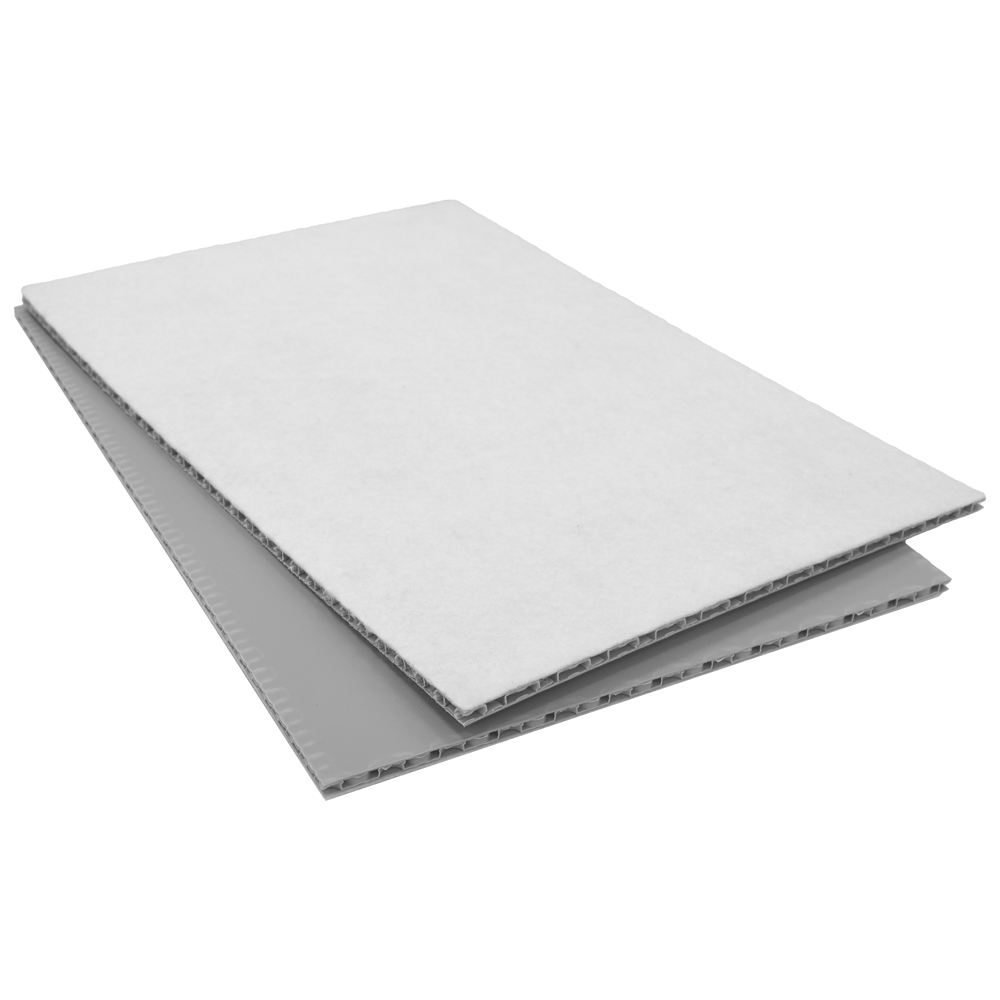
Wet trades are the reason a lot of floor protection exists and also the reason a lot of it fails. Screeding, plastering, tiling and decorating all put water, slurry and droppings onto the floor, and they do it over weeks rather than in one event. Protection that survives the first day and goes soggy by the third is not protection.
Three kinds of wet, three problems
Clean water from washing down is the easy one – it runs off and dries. Slurry from cutting and grinding is abrasive and alkaline and will etch polished surfaces if it gets underneath. And droppings – plaster, grout, paint – set hard, and once set they bond the protection to the floor and turn lifting it into a scraping job that damages the finish. The droppings are the destructive category, and they are the one nobody plans for.
Why absorptive protection makes it worse
Anything that soaks up a spill holds it against the floor for days instead of hours, and when it dries it leaves the dissolved solids behind as a film. Cardboard, MDF and untreated fibreboard all do this. A non-absorbing panel does not: the spill stays on top, gets walked through until somebody cleans it, and the floor underneath is unaffected. That is the whole advantage, and it is why a reusable panel pays back within about three re-lays on a wet job.
Joints are where the slurry gets in
A panel with a good face still fails at its joints if they are open, because that is where slurry and droppings reach the floor. Tightly butted joints, or a taped joint on the areas directly under wet work, keep the floor clean underneath. The joints in the dry zones can stay open. This is a five-minute decision at laying time that saves a lot of cleaning later.
Lifting and cleaning while work continues
On a long wet phase the protection needs lifting, washing and re-laying at least once, because a face loaded with set plaster is no longer protecting anything and is itself abrasive. Washing a PP panel is a hose and a stiff brush; it dries immediately because it does not absorb. The alternative – leaving it and hoping – is the standard route to a floor that has to be ground back at handover.
The sequencing that avoids most of it
Keep the wet trades off finished floors rather than protecting the floor from the wet trades, where the programme allows it. That sounds obvious and it is routinely not done, because the sequence was fixed before the finishes were chosen. Where it can be done, it is worth more than any protection product. Where it cannot, the right sequence question is asked in keeping wet trades off finished floors.
What to do about set droppings
Plaster and grout that has set on a panel face can be scraped off, and a plastic scraper does it without damaging the face. On a felt face, set material cannot be removed completely, and that is the point at which a panel gets downgraded to rough-surface use rather than scrapped. Trying to wash set plaster out of felt does not work – it costs water and time and leaves the panel no cleaner.
What we can do
We supply washable PP honeycomb panels that can be hosed down and re-laid repeatedly through a wet phase. Tell us which trades are working over the floor and for how long, and we will tell you what face and what joint treatment suits – including where plain sheet will do the job for less.