
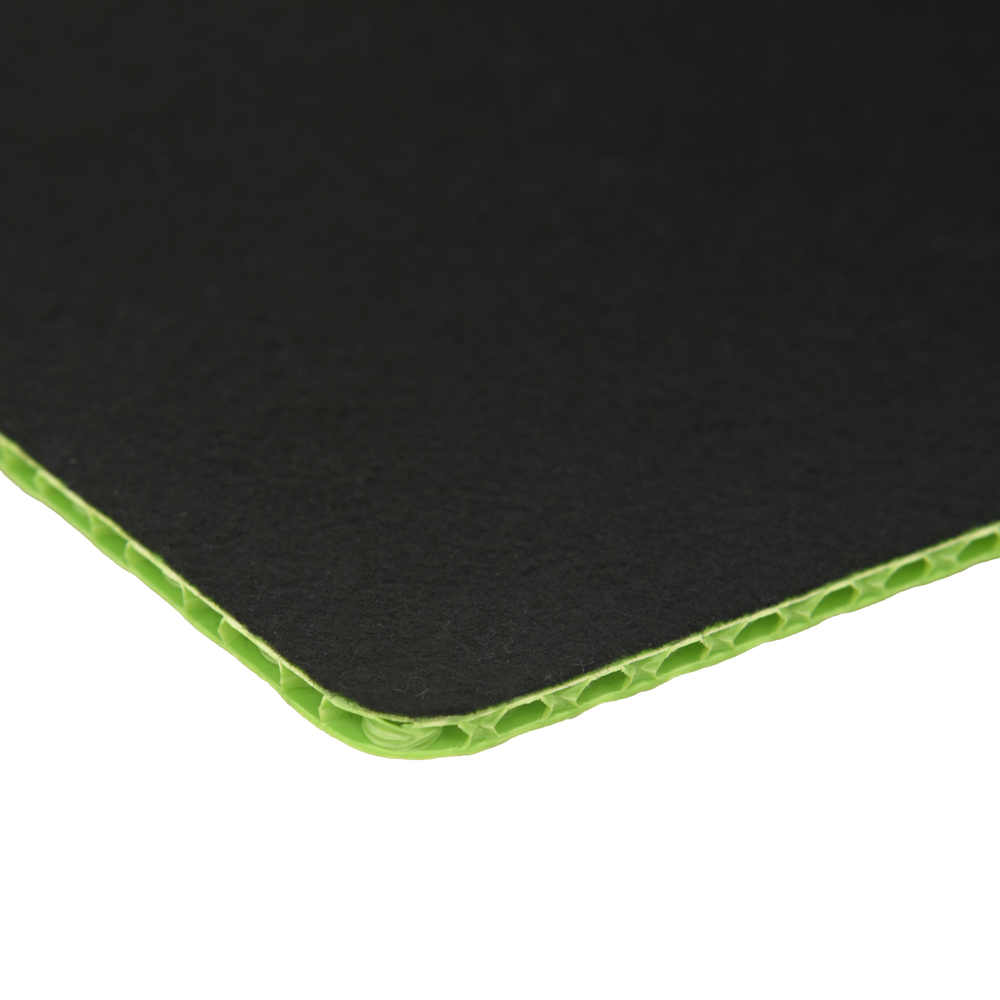
There is a natural reluctance to throw away something that still looks usable. On site this shows up as a pile of marginal panels being reused indefinitely, which is how floors get scratched by grit trapped in damaged panels and trips happen on lifted edges. Clear write-off criteria make the decision routine instead of argumentative.
Criterion one: it can no longer lie flat
A panel that will not sit flat against the floor is doing its job badly even when it is intact. Lifted edges collect grit, create trip hazards and catch wheels. If it will not flatten under its own weight on a level surface, it is finished regardless of how it looks.
Criterion two: the core is exposed or crushed
Once the core is visible along an edge, grit gets in and stiffness drops locally. Once cells are crushed, the panel has permanently lost load-spreading ability at that point. Both are generally terminal for heavy duty. Downgrade to light traffic or cut down into smaller pieces if the damage is localised to one edge.
Criterion three: contamination that will not come off
Adhesives, resins, paint and some oils do not clean off polypropylene completely and will transfer to the next floor protected. A contaminated panel is a liability rather than an asset. This matters most on finished floors, where the transferred residue becomes somebody else’s making-good.
Criterion four: it will not survive further cleaning
Panels going into hygiene-sensitive or repeated-use service get cleaned often. One whose surface has become rough, cracked or powdery will shed and hold dirt. If cleaning no longer restores it, retire it – the labour spent trying costs more than the replacement.
Set the threshold by area, not globally
A panel that is finished on a polished concrete floor may be perfectly serviceable protecting a back-of-house corridor. Running three grades – heavy duty, general and sacrificial – extracts far more value from a fleet than a single standard with the same panels going in the skip too early or staying too long.
Record the reasons
A note of why panels were written off, by area and phase, turns into useful specification evidence: you will find out which locations destroy protection and which barely touch it. That is how the next order gets sized properly rather than repeating the same mistakes. We have described this kind of counting in what to measure in a pilot.
Making the decision quickly
Write-off decisions stall because they involve judgement, so remove the judgement: a laminated card at the store showing the four criteria with photographs of pass and fail examples. Someone can then decide in about ten seconds without asking a supervisor or, worse, defaulting to keeping everything.
Update the card with photographs from your own projects. Generic images are less effective than pictures of the actual damage occurring on the actual site, because everyone recognises the example rather than interpreting it.
Downgrading rather than scrapping
A panel no longer fit for a polished floor frequently still has useful life protecting a back-of-house route, a plant room or storage area. Marking it down to a lower grade costs nothing and extracts the remaining value, whereas a single standard pushes serviceable material into the skip because it fails one demanding use.
What we can do
We supply honeycomb protection panels cut to sizes that can be downgraded rather than scrapped – the offcut from a damaged heavy panel often becomes a perfectly good threshold strip. Ask for graded packs and we will price them accordingly.