
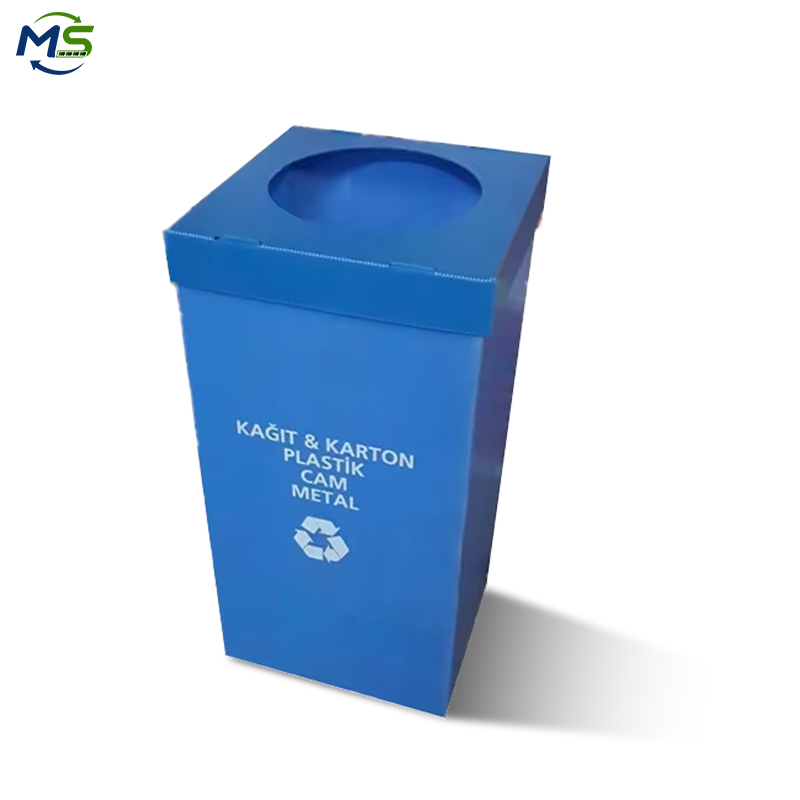
A pallet costs money, weighs 15 to 25 kg and eats 140 mm of vertical space. Removing it is one of the largest single gains available in a unit load. It is also a change that moves requirements onto the box, and the box has to be designed for it rather than merely permitted to do it.
What you gain
The pallet’s own height, which on a tall container can be another layer. Its weight, which is payload you were paying to move. And, in export, the pallet’s own compliance obligations, because wood pallets carry the same treatment requirements as wood crates. Three separate gains from one decision, which is why it keeps coming up.
What moves onto the box
The pallet was spreading the load across the deck and providing a stiff base. Without it the box base becomes the load-spreading element, and it has to do that while standing on a surface that may be uneven or dirty. This is a base design requirement, not a thickness requirement, and it is usually where pallet-free projects fail.
Handling without a pallet
The load has to be picked up some other way – a push-pull attachment, a clamp, or slip sheet handling on a fork truck. That equipment has to exist at both ends of the lane and in every intermediate transfer. A pallet-free load that meets a transfer point without the attachment is a problem that gets solved by hand.
Friction and the base surface
A slip sheet works by having a different coefficient of friction on each face: high against the load, low against the forks. Getting that wrong produces a load that slides on the deck or one that will not release. It is worth testing with the actual load rather than trusting a datasheet.
Where the gain is smallest
Routes that are volume-limited rather than weight-limited gain less, because the pallet’s weight was not the constraint. Routes with many transfer points gain less, because handling gets slower. And short domestic routes gain least of all, because pallets are cheap and abundant and the handling equipment is everywhere.
Where it genuinely pays
Long export legs where every kilogram and every centimetre is billed. Closed loops where the same handling equipment exists at both ends. Air freight, where volumetric weight makes packaging volume brutally expensive. And high-cube, low-density parts, where the pallet is a large fraction of the load.
What to check before switching
That the handling equipment exists at every point on the route. That the floor at each end is in a condition to accept a pallet-free load. And that the box base is rated for the same load without the support it had. Three checks, and skipping any one of them turns a cost saving into a damage bill. The wider cost picture is in what five points of cube is worth.
How to test it
Pick the highest-frequency lane, buy enough boxes to run it for a month, and keep the palletised method running in parallel for the first few shipments. Compare freight, damage, handling time and consumables. Four numbers, one month, and the question is settled with evidence rather than opinion.
Where the trial shows a gain, extend it to the next lane. Where it does not, the boxes are still usable on the lanes where they do. The trial is cheap either way, which is the argument for running it before making a policy.
What we can do
We build PP corrugated turnover boxes with bases designed to work without a pallet, and we will tell you honestly where that is a bad idea. Send us the lane and the part and we will run the numbers both ways. See also the companion piece, the two together give the full picture.