
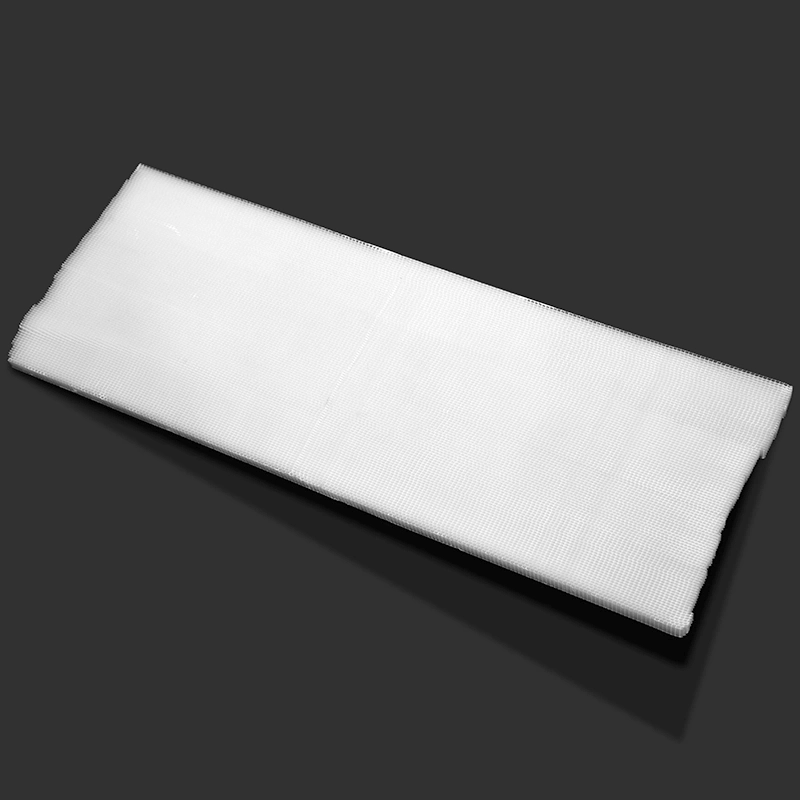
Open area is the single most useful number on a filter panel specification and the one most often missing. It is simply the fraction of the face that is open to air – the rest is structure. Everything about how a screen behaves in service follows from it, which is why it belongs on the drawing.
What it controls
Resistance, first. More open area at the same airflow means lower face velocity through the openings and lower pressure drop. That is the direct relationship and it is the reason high open area is specified on coarse stages.
Capture, second, and in the opposite direction. The structure is what catches material. Reduce the structure to near nothing and you have a very low resistance screen that catches very little. The useful range is where the structure still presents enough surface to intercept what you are trying to intercept while leaving the flow path open.
Capacity, third. More open area generally means more room for captured material before the flow path narrows appreciably, which shows up as longer intervals between cleaning.
How it is quoted, and the trap
Open area is usually a percentage of face area. The trap is that it can be quoted before or after the frame is counted, and the two differ. Ask for the open area of the filtering face, excluding the frame, or you may be comparing figures that include different things.
The other trap is comparing open area across different structures. Two panels at the same percentage can behave differently, because cell size and depth change how the structure loads. Open area is necessary and not sufficient.
Choosing a figure
For a coarse stage ahead of a fine one, high open area is usually right – the job is mass capture at low resistance, and the fine stage handles the rest. For a standalone screen that is the only filtration, a lower open area with more capture surface may be the better compromise, paid for in resistance.
The deciding input is what you are trying to catch. If the target is lint, hair and coarse debris, a high open area screen will do it at very low pressure cost. If the target is finer dust, no coarse screen is the right tool regardless of its open area.
Cell size is the main lever on it – see choosing a cell size – and the wider compromise is covered in open area versus capture efficiency.
Estimating it yourself
You do not need a laboratory. Photograph the panel face straight on, in good light, and count open area against total area – a grid overlay on the image makes it quick, and even a rough count gets you within a few percent. A phone camera is entirely adequate.
Do it on the filtering face, excluding the frame. Including the frame produces a lower number that is meaningless for comparison, because two suppliers may have very different frame widths.
Why two panels with the same figure differ
Open area says what fraction of the face is open. It does not say what shape the openings are, how deep they are, or how much wall surface the air passes. Two panels at sixty percent open area – one a thin perforated sheet, one a deep honeycomb – behave very differently, because the second presents far more capture surface to the same volume of air.
Which is why open area is the number to specify alongside cell size and thickness, never on its own. A specification giving only open area is incomplete, and two quotes meeting it can perform differently.
What we can do
We supply high open area PP honeycomb filter media in several cell sizes, and we quote open area as a figure you can specify. Tell us the airflow, the face area and what the air carries, and we will tell you what open area suits the job.