
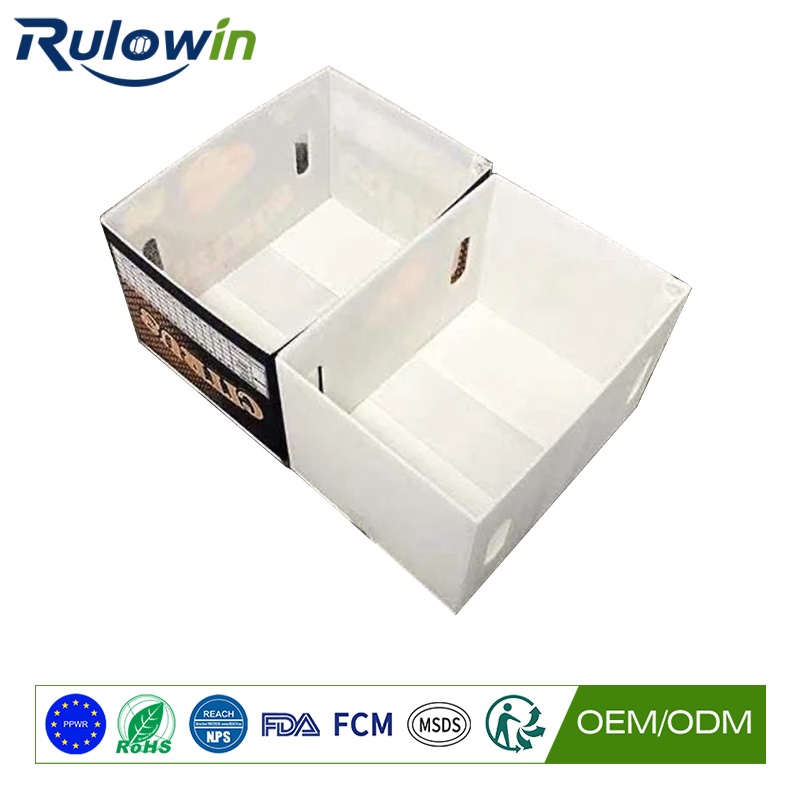
A produce crate eventually cracks, wears through or simply becomes uneconomic to keep in service. At that point it is a bulky object made of a polymer that has real value – and whether that value is recovered depends on decisions made years earlier, partly by the buyer and partly by the supplier.
Why the crate is worth recovering
Polypropylene is a clean, single-polymer stream when it comes from a crate, and it reprocesses well. A crate that is ground and re-extruded becomes usable material. That is very different from a mixed or contaminated plastic stream, which is why crate take-back schemes exist and why they work. The material has value; the question is whether anyone is set up to collect it.
Contamination is what spoils it
A crate that goes into the grinder with soil, labels, adhesive and produce residue in it produces a poor-quality regrind. Labels and adhesive are the usual problem, and a crate with a large film label is harder to recycle cleanly than one with a moulded mark. Where end-of-life recovery is part of the plan, specifying moulded or recessed identity rather than a large stick-on label makes the recovered material better.
Take-back schemes
Some suppliers take crates back, usually when volumes justify the transport. The economics are the same as any empty crate movement – bulky, so distance matters. Asking whether a take-back exists, at what minimum quantity and from where, is worth doing at purchase rather than at the point of disposal. Where a supplier does not offer it, there is usually a local plastics recycler who will take PP crate material.
Grinding on site
Large operations sometimes grind their own. That needs a granulator, space and a buyer for the regrind, and it rarely makes sense below a substantial volume. Where it does work, the regrind usually goes back into non-food products rather than into new food-contact crates, because of the documentation requirements discussed in recycled content in food-contact crates.
What to do with a small number
A grower with fifty worn crates and no take-back scheme has a problem, because a small quantity of bulky plastic is not worth collecting. The practical answers are to accumulate until there is a load, to combine with neighbours, or to use a general plastics recycler and accept a lower return. It is worth asking the supplier whether they consolidate collections regionally.
Designing for it
A crate made from a single polymer with no metal inserts, no separate label and no bonded-on second material is the easiest thing in the world to recycle. Crates with metal tags, a moulded-in second polymer or a large bonded label are not. Where end-of-life matters, that is a specification question, and it is cheaper to answer at purchase than at disposal.
Why asking at purchase changes the answer
End-of-life is a design question disguised as a disposal question. A crate with a moulded identity mark, no metal inserts and a single polymer body is straightforward to grind. The same crate with a large bonded label and a riveted tag is not, and by the time it is worn out the difference cannot be undone.
Asking about take-back at purchase also sets a quantity expectation. Suppliers consolidate collections regionally, and a grower who asks early can usually join a run that is already happening – whereas a grower who asks at disposal is asking for a dedicated collection for a load that may not justify one.
What we can do
We make produce crates from a single polymer with moulded rather than bonded identity, and we take back end-of-life crates for grinding where volumes justify the collection. Ask us what the minimum is for your region.