
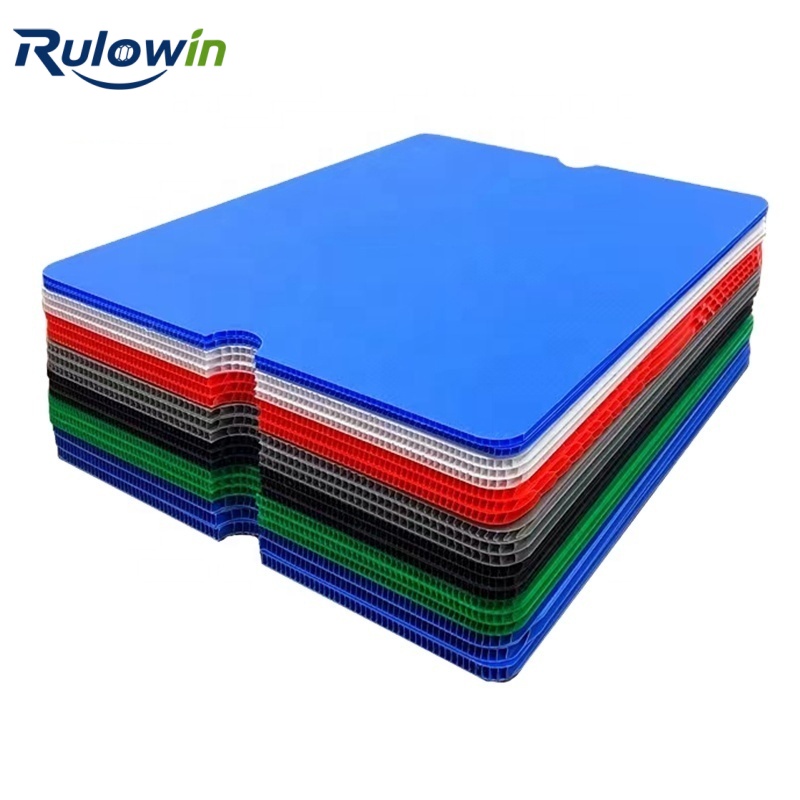
GSM – grammes per square metre – is the number most corrugated sheet is sold on, and it is one of the least useful numbers on the sheet. It tells you what a square metre weighs. It does not tell you how stiff the sheet is, how well it resists crushing, or how long it lasts, and two sheets at identical GSM can differ substantially on all three.
Why GSM persists
Because it is easy to measure and easy to compare, and because in paper it correlated reasonably well with performance. In polypropylene it correlates much less well. A sheet with heavy faces and a sparse core and a sheet with light faces and a dense core can weigh the same and behave completely differently – one resists bending, the other resists crushing.
Resin also plays in: a filled or recycled-content resin is denser, so a sheet made from it hits the same GSM at a lower thickness. Which means GSM can hide a thinner sheet.
What to ask for instead
Thickness in millimetres. This is the number that governs stiffness, and stiffness is usually what the sheet is being bought for. If you only get one number, get this one.
Flute structure. The channels running through the sheet. Their height, pitch and wall thickness determine how the sheet behaves in each direction – and corrugated sheet is markedly stiffer along the flutes than across them. Two sheets of the same thickness with different flute pitch are different products.
Resin. Virgin, recycled content, or a mix. Recycled content is cheaper and perfectly adequate for a lot of jobs, and it usually has slightly lower impact strength. Ask which you are being sold.
When GSM is actually useful
For costing freight. If you are shipping ten thousand sheets, total weight matters and GSM is how you work it out. Also for comparing two quotes for what is nominally the same product – if one is significantly lighter at the same thickness, something in the structure or the resin has changed, and it is worth asking what.
The practical version
Specify thickness and application, and let the supplier tell you the GSM. If you are buying for a layer pad, say what load it carries. If you are buying for signage, say how long it needs to last outdoors – which we covered in can corrugated plastic sheet be used outdoors. And if you want to know what to check when the delivery arrives, there is how to check corrugated sheet quality.
A practical way to compare two sheets
Take a sample of each, cut a strip three hundred millimetres long and fifty wide, clamp one end to a bench and see how far the free end drops under its own weight. Crude, immediate, and it tells you more about bending behaviour than any number on a spec sheet.
Then do the same across the flutes. The difference between the two directions is the anisotropy, and seeing it makes it much easier to remember which way a sheet has to run in whatever you are making.
What we can do
We supply PP corrugated sheet and we quote thickness, flute structure and resin rather than leading with GSM. Tell us what the sheet has to do and we will specify it properly – and if a lighter sheet will do the job, we will say so.