
Warranties on reusable packaging are narrower than buyers expect and that is not unreasonable – a product designed to be handled hundreds of times is going to wear, and wear is not a defect. Understanding the boundary prevents most of the arguments.
What is normally covered
Manufacturing defects: a face that delaminates without provocation, a weld that fails, a crack appearing early in a place that has not been struck, a dimension outside tolerance. Failure to perform to the stated specification under normal use.
Time-limited, usually, and with a remedy – replacement or credit – rather than cash.
What is normally not covered
Wear. Abrasion, scuffing, gradual loss of stiffness. Damage from handling – forklift strikes, drops, dragging. Damage from conditions outside the specification: temperatures above the stated range, exposure to solvents, ultraviolet where the grade was not stabilised.
And consequential loss. A warranty on the packaging does not extend to the product it was carrying, however the failure occurred. That is what insurance is for and it is worth checking yours.
The questions worth asking
Not “is there a warranty” but four specifics. How long. What it covers, named. What the remedy is and who pays freight on the replacement. And what you have to do to claim – photographs, samples, return of the failed item.
The last one catches people out. A claim that requires returning fifty failed units is a claim nobody will make, and that is sometimes not accidental.
What matters more than the document
Whether the supplier will actually do something. A generous warranty from a supplier who argues is worth less than a modest one from a supplier who replaces without discussion.
Worth testing early and cheaply: raise a small, legitimate issue on the first order and see what happens. The response tells you more than the terms do.
And the honest limit
We can tell you what we will replace and under what conditions. What we are not going to do is warrant against a handling practice we have not seen, or against an application we were not told about – which is why the application belongs in the enquiry.
Wear rates and what to inspect are covered in how many times you can reuse a pallet sleeve box.
What to do when something fails
Photograph before you do anything else, and keep the failed units. Most claim processes want evidence, and a failure that has been thrown away is a failure you will not be credited for.
Then say what you want: replacement, credit, or an investigation. Being specific shortens it. A supplier who is told “some of these failed” will ask questions; one told “forty units failed like this, we want them replaced” can act.
Where the boundary usually gets argued
Wear versus defect. A crack at a stress point is one or the other depending on handling, and it is genuinely hard to attribute. This is why the application and the handling belong in the enquiry – a warranty assessed against an application the supplier did not know about is not a meaningful warranty.
And why a small test claim early is worth more than a large document.
What we can do
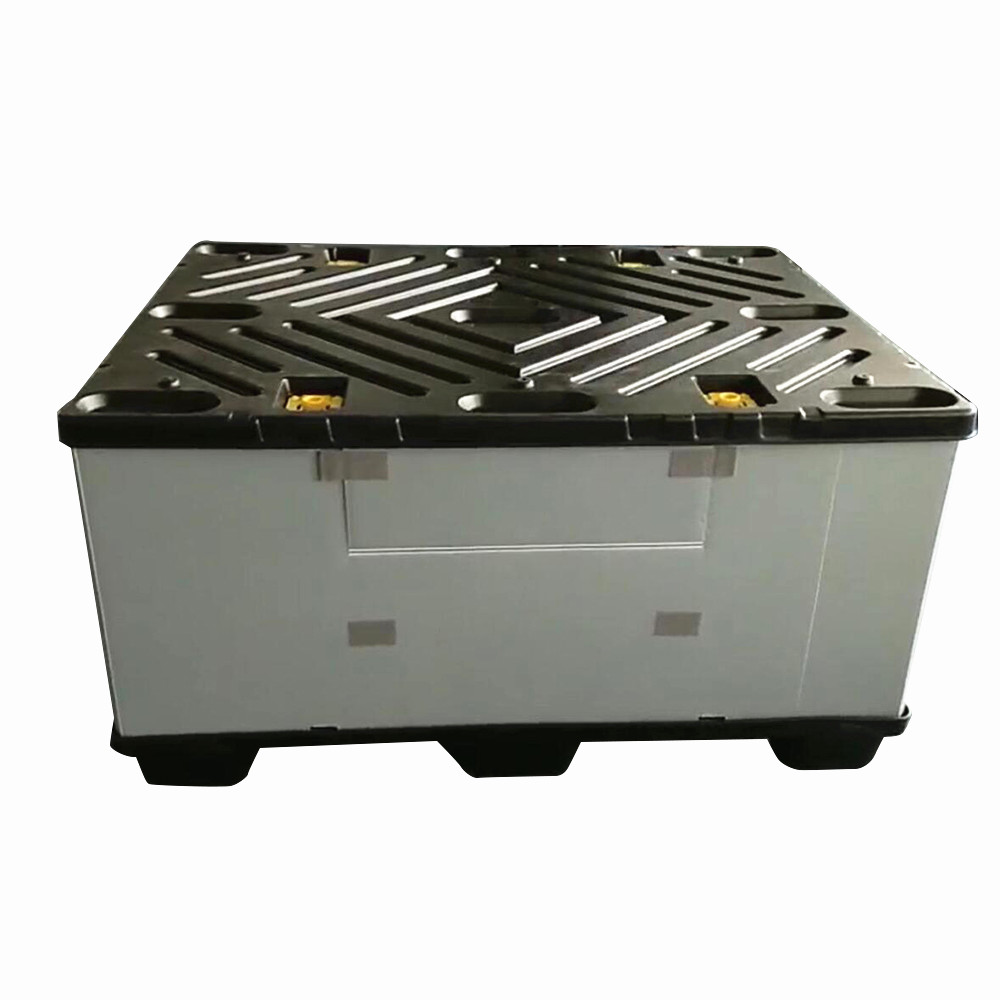
We supply heavy-duty pallet sleeve boxes with the warranty stated in specifics rather than in generalities. Tell us the application and the handling, and we will tell you what we will stand behind – and what we will not.