
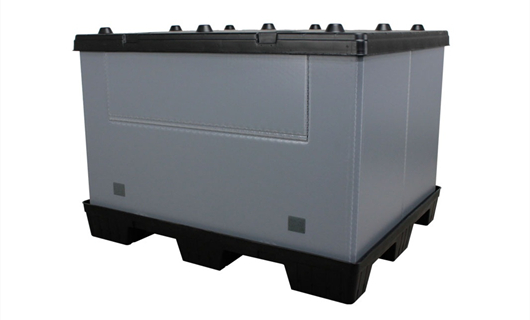
A trial order is how you find out whether something works before committing a budget, and most trial orders are too small to answer the question. Two principles: enough units to run a real operation, and the full set of parts including the ones that wear.
Enough to run a lane
Twenty sets on one lane is a common starting point and it is about right. Fewer than that and you are not testing the thing – you are testing the boxes. Enough that they circulate, get handled repeatedly, and come back several times.
The circulation is the point. A single trip tells you almost nothing about a returnable system; five trips tell you most of what matters.
Include the wearing parts
For a sleeve system that means bases as well as sleeves and lids. Bases wear first and a trial that only includes sleeves will not show you the base replacement rate – which is the number you need for the business case.
This is the most common trial design error and it produces a payback calculation that is wrong in the favourable direction.
Decide what you are measuring, first
Three numbers for most returnable trials: damage rate at the receiving end, return rate, and how long assembly takes against your current method. Decide before the trial rather than after, and take a baseline on damage before the boxes arrive – without a baseline you have nothing to compare against.
The measurement framework is set out in running a pallet sleeve box pilot.
Set the duration
Six months is typical for a returnable system: long enough for several trips and long enough to see wear. Three months is the minimum for anything meaningful. A fortnight is not a trial.
Put the review date in the diary when the order goes in, not when you think of it later.
And plan the receiving end
Who unloads, who folds the empties, where they wait for collection. A trial that does not test the return leg is testing half a system, and the return leg is where these things fail. Give the receiving site five minutes of instruction – it prevents most creased returns.
How many, concretely
Enough to cover the lane plus what is in transit plus what is being handled at either end – typically three times the number physically on the lane at once. Below that you will run short during the trial and draw conclusions from a system that was starved.
Being short is not neutral. A trial that runs out of packaging tells you the packaging does not work, when what it actually tells you is that you ordered too few.
What to write down as it runs
Every failure, with a date and a photograph. Not a summary at the end – a running note, because nobody reconstructs three months of incidents accurately from memory.
Record the return rate as a number each week rather than an impression. “Most of them came back” is not data, and it is the number the business case depends on.
What to do with a trial that partly fails
Find out which part. A trial where the packaging works and the return leg does not is a successful product test and a failed logistics test – different problems, different fixes, and worth separating before concluding anything about the product.
What we can do
We supply industrial returnable pallet sleeve systems and will help size a trial properly, including the base ratio. Tell us the lane and what you use now, and we will tell you what to order and what to measure.