
Samples are free information and most buyers use them badly: they arrive, get looked at, and get approved. The value is in what you do to them, and the useful tests take fifteen minutes.
Ask early, and ask properly
Ask at quote stage rather than after. A supplier’s response tells you something – a confident one sends a sample without hesitation, and reluctance or delay is information about how the relationship will work.
Be specific about what you are testing. A sample for a dimensional check is different from a sample for a load test, and asking for “a sample” often gets you a sales piece rather than a production item.
Check the basics first
Dimensions against the drawing, with a caliper. Weight. Then look at the construction – the finish, the edges, whether it matches the specification you were quoted. Discrepancies here are common and they are the easiest to resolve before an order rather than after.
Confirm it is a production sample and not a specially made one. This is a real phenomenon and it leads directly to the problem described in why the sample is sometimes not what ships.
Then abuse it
Load it to your working load and leave it for a week in the conditions it will actually see – the cold room, the warm yard, the humid store. Drop it on a corner. Stand on it. Whatever is closest to what your operation will do to it.
Fifteen minutes of deliberate misuse tells you more than any data sheet, and it costs one sample.
And test it in the system, not alone
A panel is not used alone; it is used on a pallet under a load with strapping over it. A crate is used on a conveyor and in a stack. Test the sample in the configuration it will actually be in, because incompatibility almost always shows up at an interface rather than in the item itself.
This is the test most often skipped and the one that catches the expensive problems.
What to record
Photograph the sample the day it arrives and the day you finish testing it. Keep the measurements. If there is a dispute later, or a question about whether a batch matches the approved sample, that record settles it in minutes.
The question to ask when you request one
Whether the sample is from production or made for the purpose. A production sample means what ships will look like what you tested. A purpose-made one means you have approved something that does not exist at scale.
Suppliers answer this honestly when asked directly, and the answer is the single most useful piece of information attached to a sample.
How many to ask for
Three rather than one. One to test destructively, one to keep as the reference, and one to send to whoever else has a say. Samples are cheap and a single sample forces you to choose between testing it and keeping it.
If there is a colour or finish involved, ask for two from different lots. Colour varies between production runs more than most buyers expect, and seeing that early prevents a complaint later.
And what it costs
Usually nothing at reasonable volume, sometimes the freight. If a supplier charges for a sample on a credible order, that is a commercial decision rather than a warning sign – but ask whether the cost is credited against the order, which is common and worth one line.
What we can do
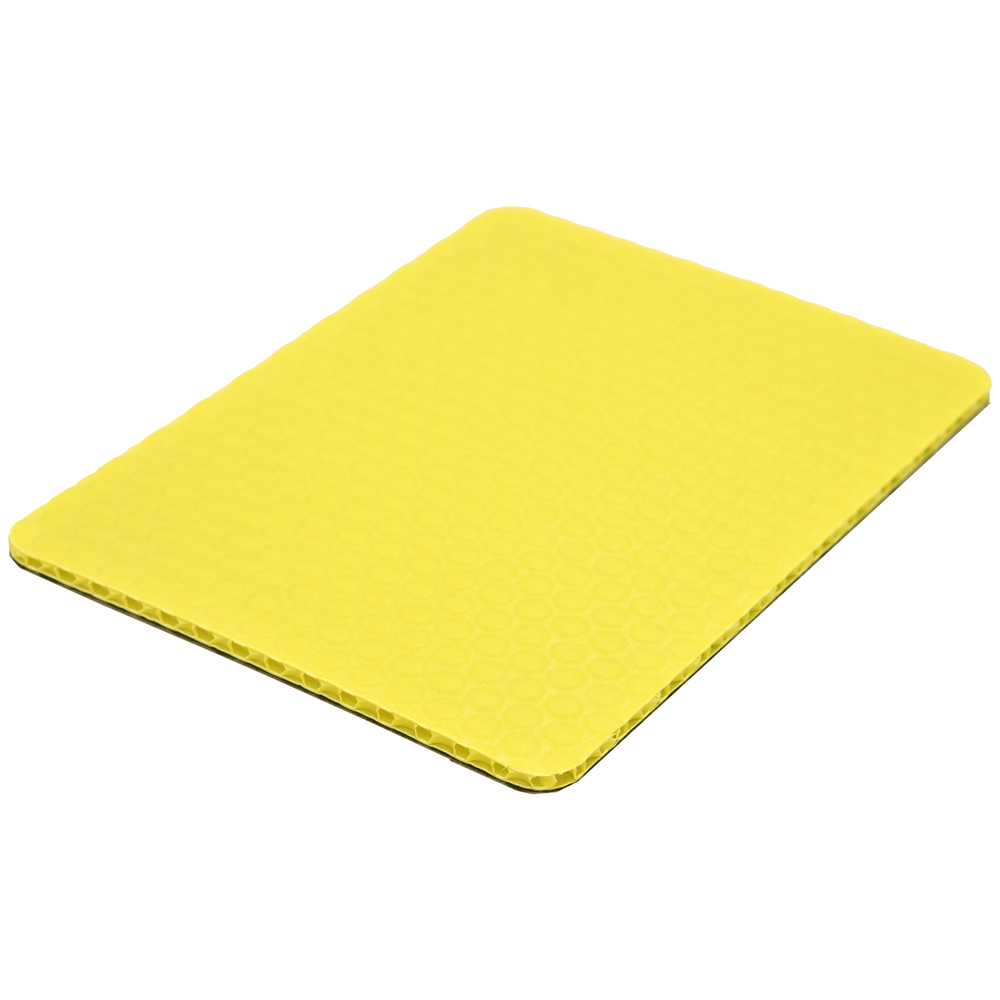
We supply PP honeycomb panels and send production samples rather than sales pieces. Tell us what you intend to test and we will send accordingly – including suggesting a test you had not considered.