
Every order eventually needs to go faster than planned, and the standard response – asking the supplier to rush – is the least effective thing you can do. Three levers work, and they work in a clear order.
Lever one: remove your own delays
The largest single cause of a slipped date is time spent waiting on the buyer: an unapproved sample, an unanswered specification question, an unconfirmed delivery detail. That time is usually longer than any saving available from the supplier.
Before asking anyone to rush, check what is sitting with you. It is often a fortnight, and it is free to recover.
Lever two: pay for the freight
A shared container waits to fill, and that wait is unpredictable – a fortnight is common. A dedicated container leaves when it is ready. On a bulky packaging order this is usually the single largest saving available, and it is a straightforward cost-versus-time decision.
The second freight option is air freight, which for packaging is rarely economic because the product is bulky relative to its value. Worth pricing, but expect the answer to be no.
Lever three: accept a partial shipment
If you need some of the order urgently and the rest can follow, say so. Most suppliers can split a shipment, and getting the critical quantity early often solves the actual problem.
Be explicit about which quantity is critical. “As much as possible” is not a plan and produces a split that helps nobody.
What does not work
Asking for a rush on a production queue. Suppliers allocate slots on commitment, and a phone call does not move one – though a contract customer asking is in a better position than a spot buyer, which is one of the quiet arguments for contracting your critical lines.
And asking without offering anything. If you want a slot moved, the useful question is what it would cost to move it, asked plainly.
What to do instead, next time
Work out which lines actually stop you if they are late, and hold a buffer on those. Holding two weeks of a critical item is cheaper than expediting once, and it removes the problem rather than managing it.
We covered which lines are worth contracting in annual contract vs spot buying.
What to say, concretely
Not “please expedite”. A message with three parts: the committed date, the quantity that is genuinely critical, and what the delay costs you. That last part is what allocates attention – a delay with no stated consequence goes to the bottom of the list.
Then ask the useful question: what would it cost to move this. Sometimes the answer is a freight upgrade, sometimes a partial shipment, sometimes nothing can be done. All three are better than a vague promise.
And what to change afterwards
Every expedited order is information about which lines need a buffer. Two expedites on the same item means that item should be held in stock rather than ordered – the buffer is cheaper than the freight upgrade, and it removes the problem instead of managing it.
What we can do
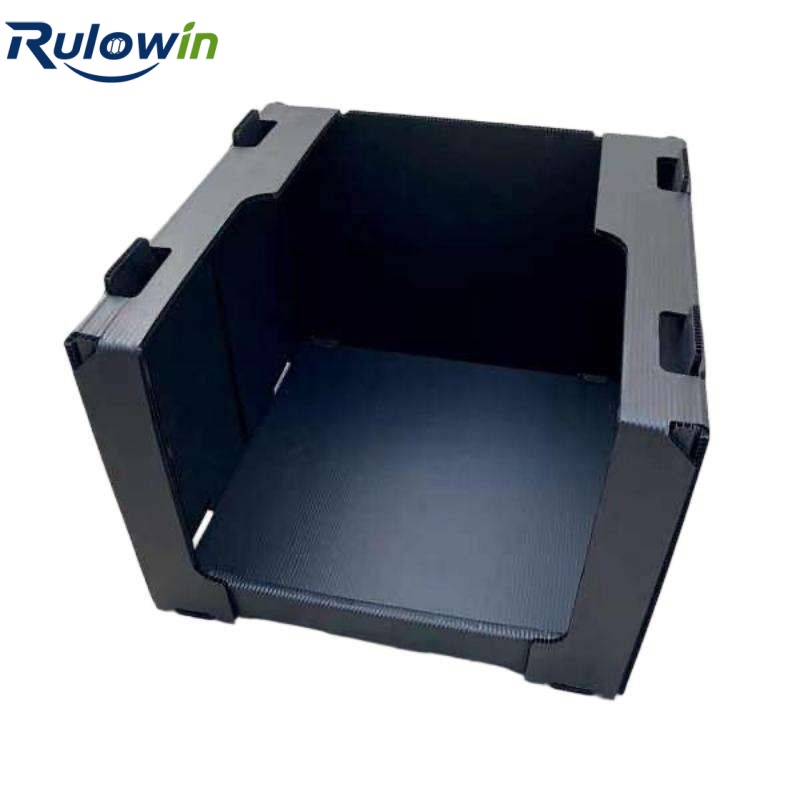
We supply picking boxes and will tell you honestly what can be moved and what cannot. Tell us the deadline and what quantity is genuinely critical, and we will propose the split – including when the answer is that it cannot be done.