
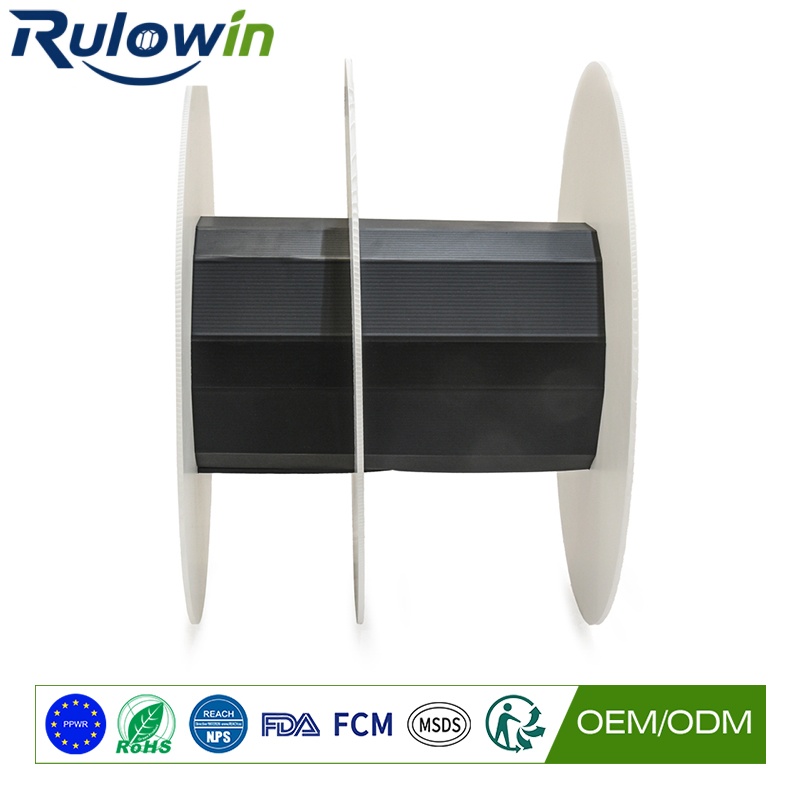
A spool causes a stoppage. The spool cost twelve currency units, so the problem is filed as trivial. Nobody prices the stoppage, which is why the same problem recurs for years.
What is actually in the number
- Lost production time on the affected line, at whatever margin applies
- Labour for everyone standing idle, plus whoever fixes it
- Scrap — product in process, product already wound, product damaged at restart
- Restart cost — thread-up, stabilisation, the start-up waste described in our start-up scrap article
- Downstream effects — if the line feeds something else, that stops too
- Expediting — overtime, express freight, rescheduled deliveries
- Administrative time — investigating, reporting, arguing
Most people only count the first and the third, and they underestimate both.
A rough way to get a number
You do not need precision. Enough to make the decision:
- How long does a stoppage last? Not the interruption — the full time to running normally again.
- What is an hour of that line worth? Contribution margin per hour is the honest measure; revenue per hour overstates it.
- How often does it happen? Per year, roughly.
Multiply. The answer is usually larger than anybody expects, and it is frequently larger than the annual spend on the packaging that caused it.
Why this changes decisions
Because the comparison is rarely packaging price versus packaging price. It is:
- A dearer spool that eliminates a recurring stoppage against a cheaper one that does not — the dearer one usually wins by a wide margin
- Time spent on prevention against time spent on response
- A second spool line against the risk of a single point of failure
Once stoppages are priced, spending on packaging stops looking like a cost and starts looking like insurance, and the conversation with finance gets easier.
Where the stoppages come from
Specifically packaging-related ones, in our experience:
- Spools that will not mount — bore problems, which is the bore wear story
- Packs that will not unwind — winding or handling, per the unwinding article
- Breakages at payoff, described in the back-tension article
- Bird-nesting, which is its own article
- Running out of spools because the fleet was too thin — the topic of our fleet sizing piece
That last one is a packaging-caused stoppage in the most literal sense and it is almost never counted as one.
How to capture it
You need three things, and none is complicated:
- A reason code for stoppages that includes packaging
- Duration recorded in whatever system you already use
- Somebody reviewing it occasionally, which is the part that usually does not happen
Without a reason code the packaging-caused ones are invisible, filed under general downtime.
The honest caveat
Packaging is sometimes blamed when it is not at fault — the point made throughout our root cause article. Pricing stoppages does not mean attributing all of them to spools.
But it is worth finding the ones that are. A recurring stoppage with a packaging cause is usually cheap to fix, once somebody has priced it.
What we can do
If you are seeing stoppages you suspect involve our hollow board spools, tell us what happens and how often, and we will be honest about whether the spool is a plausible cause. Where it is, the fix is usually a specification change and it usually costs very little compared with the disruption.