
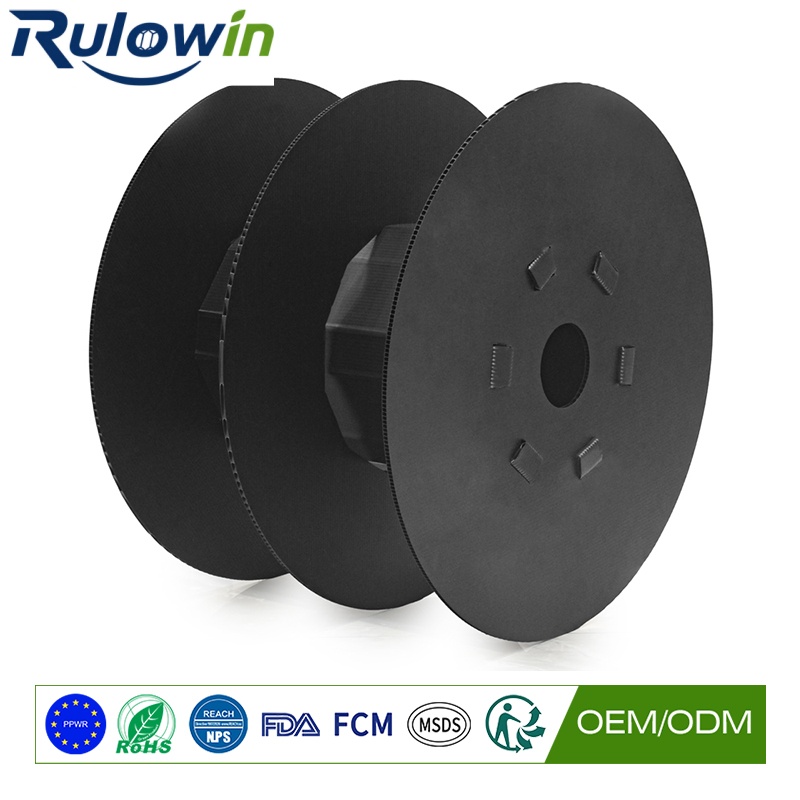
Nobody has ever praised a welding wire that feeds badly. The wire kinks at the liner, the arc wanders, the weld is inconsistent, and the operator blames the wire. Sometimes it is the wire. Quite often it is what happened to it on the spool.
Cast and helix, plainly
Cast is the curvature the wire retains from having been wound around a core. Take a length off the spool, lay it on the floor, and the diameter of the circle it forms is its cast.
Helix is twist. Lay the same length on the floor and, instead of forming a flat circle, it lifts into a spiral — that is helix, and it comes from the wire having been rotated during winding or payoff.
Both are normal and both are specified. The problems start when they are larger than the feeding equipment can manage.
Where they come from
Cast is set almost entirely by the core diameter. Wire held at a small radius for months takes a set at that radius; wire held at a larger radius retains less curvature. There is not much else to it — if cast is your problem, the lever is the core.
Helix comes from handling rather than geometry. Every time wire is paid off over the flange instead of tangentially, one twist per turn goes into it. Wire transferred between spools without the axes aligned picks up more. This is a discipline issue, and it is free to fix.
Why it matters at the feeder
Wire with heavy cast rubs against the liner on the way through, which increases feed resistance and makes the feed inconsistent — and inconsistent feed is what produces an inconsistent weld. Wire with helix does something worse: it rotates as it feeds, so the contact tip wears unevenly and the arc direction wanders.
For manual welding, an experienced operator compensates without thinking about it. For robotic welding, nothing compensates, and the result is a weld quality problem that looks like a wire quality problem.
What the spool can do about it
- Larger core. The single most effective change for cast, and the reason wire spools tend to have larger cores than their size suggests.
- Consistent winding tension. Wire wound slack settles unevenly; wire wound tight holds its shape. Both extremes are worse than a controlled, consistent tension.
- A smooth core surface. Any irregularity at the core transfers to the innermost layers, and on wire that shows up as feeder chatter.
- Correct orientation on the feeder. Obvious, and wrong often enough to be worth saying: the spool must pay off in the direction it was wound, tangentially.
What the spool cannot do
It cannot fix helix that was put in during a transfer, and it cannot compensate for a spool that has been lying on its side and paid off over the flange. If helix is your problem, look at the handling before the hardware.
Specifying
Give the supplier the wire diameter, the alloy, the acceptable cast range from your feeder specification, and how the spool will be stored before use. Storage time matters: cast develops over weeks, so a spool that feeds fine the day after winding may not feed the same way after six months.
If you tell us the wire specification and the feeder requirements, we can recommend a core diameter and tell you what cast to expect — and what to change if it is outside your window.