
Ask how often to wash a pre-filter and the honest answer is that it depends on the dust load, which is not a number most people have. Calendar intervals are a starting point, and they are wrong in both directions: too often and you spend labour for no benefit, too rarely and the unit runs restricted for weeks.
Why the calendar is a poor guide
Dust load varies more than any schedule assumes. The same purifier in a bedroom and in a workshop next to a sander sees perhaps twenty times the loading. A season matters too – pollen periods, open windows in summer, heating season circulation. A fixed four-week interval is almost never right for more than part of the year, and it is the wrong interval for the rest.
Two signals that work better
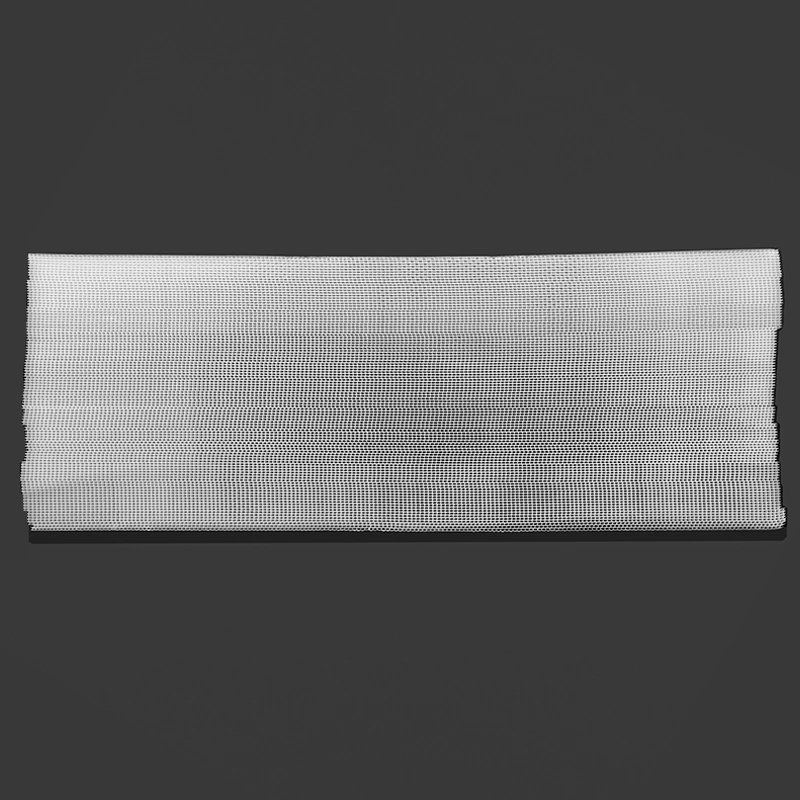
Look through it. Hold the panel up to a window or a lamp. A loaded honeycomb screen visibly darkens and the cell walls thicken with captured material. You are not judging to a standard, you are comparing with what it looked like clean – so take a photograph the day it goes in. It takes seconds and it settles every later argument about whether it is dirty yet.
Listen to the unit. A rise in fan noise at the same setting, or a purifier that has switched itself up a speed to hold its delivery, is telling you the air path is restricted. Most units give you this for free.
How to wash it
Rinse from the clean side outward, so the captured material is pushed back the way it came rather than driven deeper into the grid. Lukewarm water and a little mild detergent handles household dust; grease needs something stronger and is a separate case. A soft brush helps on stubborn loading. Avoid high-pressure jets close up – they can deform cell walls on a light-gauge panel.
Dry it before it goes back. A wet screen in a warm dark cabinet is a place mould will grow, and that is a worse problem than the dust you removed. An hour stood on edge in moving air is usually enough.
When washing stops working
Two things end a washable screen’s useful life. Mechanical damage – cracked cell walls, a bent frame, a torn face – does not wash out. And loading that has worked into the structure: oily or greasy aerosol that has penetrated rather than sat on the surface will not rinse away, and once it is in there the panel is finished.
In a domestic purifier neither is common within a few years. In a kitchen or a workshop they are the normal end-of-life, and it is worth expecting them rather than treating the failure as a defect.
Two things that shorten the interval sharply
Cooking aerosol is the first. Oil mist behaves nothing like dust: it wets the surface, it holds whatever else is in the air, and it does not rinse away with water alone. A purifier in an open-plan kitchen will need washing several times more often than the same unit in a bedroom, and it will need detergent every time.
The second is running the unit on a low setting continuously rather than a high setting intermittently. Low speed moves less air per hour but runs for more hours, and total air moved is what loads the filter. People often switch to continuous low to reduce noise and are surprised that the pre-filter needs attention more often, not less.
If either applies, build the wash into something you already do – the same day you change bed linen, the same day you empty the vacuum. Intervals that depend on remembering fail; intervals attached to an existing routine tend to survive.
What we can do
We supply washable purifier pre-filter media in polypropylene, which tolerates repeated washing without softening or losing shape. Tell us the intake dimensions and we will cut to fit, and we will tell you honestly if your loading is heavy enough that a washable screen is not the right answer.