
The most common way to make a purifier worse is to add a pre-filter that restricts it. The intention is protection; the result is less clean air delivered per hour, because the fan cannot move the same volume through the added resistance. Getting this right is mostly arithmetic, and it is not difficult.
The relationship that matters
A fan delivers volume against resistance. Add resistance to the path and the volume falls – how much depends on the fan curve, and cheap purifier fans are not forgiving. A pre-filter that adds little resistance costs you very little airflow. One that adds a lot can cost more airflow than the fine-stage protection is worth.
The controlling variable is face velocity: the airflow divided by the area of filter face it passes through. Halve the face area at the same airflow and you double the velocity, which raises resistance sharply. This is why a pre-filter squeezed into a small intake behaves differently from the same material given a generous one.
Give it area rather than depth
If resistance is the problem, the effective fix is almost always more face area, not a different material. A panel with double the area operating at half the face velocity restricts far less than a denser panel of the original size. Where the intake is small and cannot change, pleating or a spaced stand-off to increase effective area is the usual route.
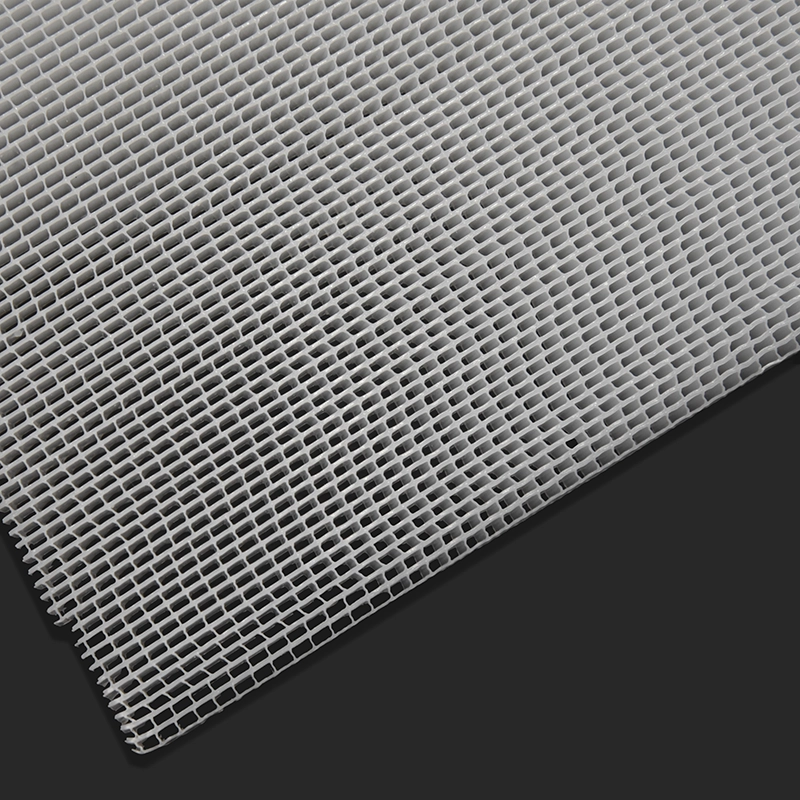
A washable screen has an advantage here. Because it is rigid and self-supporting, it can be stood off the intake face or formed into a shallow V without a supporting frame, which buys area without a new housing.
What to check before you fit one
- The rated airflow. Usually quoted in cubic metres per hour or CFM at the unit’s highest setting. Everything else follows from it.
- The intake area. Measure the opening, not the outer housing. A panel that overhangs a smaller opening is not using its full face.
- Whether the unit monitors airflow. Some purifiers report a filter-life figure derived from runtime rather than actual restriction. Adding a pre-filter does not reset that, and the unit may prompt a cartridge change on schedule regardless.
The honest trade-off
You cannot have maximum capture and minimum resistance from the same face at the same airflow. A pre-filter that catches a great deal catches it by presenting more obstruction. The point of a pre-filter is to catch only the coarse fraction – cheap to catch, large in mass – and leave the fine work to the stage designed for it.
When someone asks for a pre-filter that catches everything, what they are really asking for is a second fine filter in front of the first one, and that costs airflow for no gain.
Checking the result without instruments
You do not need a manometer to know whether a pre-filter has restricted the unit. Three checks take a minute between them.
Feel the outlet. Before fitting, note how the discharge air feels at a given setting – hand held a fixed distance away. After fitting, repeat. A noticeable drop means you have added real resistance. This is crude and it is surprisingly reliable.
Listen. Most fans change pitch slightly when they are working against more restriction, and units that regulate speed will audibly shift up. Any change is information.
Watch the runtime counter, if there is one. Some purifiers estimate remaining filter life from runtime and airflow together. If the estimate moves faster after fitting a pre-filter, you have restricted it more than the unit’s designers expected.
If any of the three is worse, the fix is almost always more face area rather than a more open material – and if the intake will not give you more area, the honest conclusion may be that this unit is not a candidate for a pre-filter at all.
What we can do
We supply PP honeycomb pre-filter media cut to purifier intakes, and we will ask for the airflow and the intake dimensions before recommending an open area. Send us both and we will tell you what the panel should be – including where the honest answer is that the intake is too small to add a pre-filter usefully.