
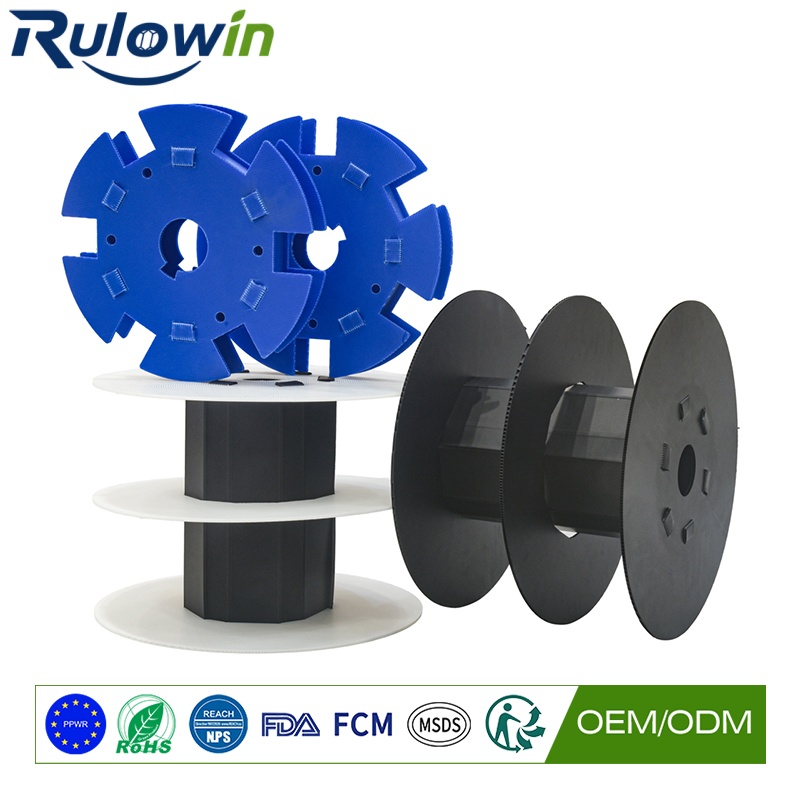
Somebody ships spools by air, gets the invoice, and it is several times what the weight suggested. Nothing was mispriced. The charge was calculated on volume, and spools are almost pure volume.
How it works
Carriers charge on whichever is greater: actual weight or volumetric weight. Volumetric weight is calculated from dimensions using a divisor set by the carrier, and for a bulky lightweight item the volumetric figure is nearly always the larger of the two.
A spool is close to the worst case for this. It encloses a great deal of air, and that air is what you pay to move.
Why this catches spool shipments specifically
- Low density. A hollow board spool weighs a fraction of what the same volume of most manufactured goods weighs.
- Empty spools are the extreme case. Shipping empties by air is almost never economic, because you are freightting air held in a spool shape.
- The divisor varies between carriers and between air and express services, so two quotes for the same shipment can differ substantially for reasons unrelated to service.
- Nesting changes everything. If the construction allows it, a knocked-down shipment has a fraction of the volume, and therefore a fraction of the cost.
That last point is the actionable one. Whether your spools can ship nested is a design decision, discussed in our take-apart article and in the nested versus assembled comparison.
What to do about it
- Ask for the volumetric calculation before booking, not after invoicing. Any freight forwarder can tell you the divisor and the resulting chargeable weight.
- Reduce the dimensions. Nesting where possible; removing unnecessary packaging; choosing a pallet that fits rather than one that is available.
- Compare modes honestly. For bulky goods the sea or road option is often dramatically cheaper, and the question is whether the lead time difference is worth the premium rather than whether air is affordable.
- Do not air-freight empties unless there is an unusual reason. This is the most common expensive mistake in returnable spool programmes.
- Check whether the quote is dimensional or by weight. A suspiciously low air quote is often one that will be re-invoiced.
The sample problem
Samples almost always go by air, because they are urgent and small in number. A single spool sample can cost more to ship than it costs to make, which is worth knowing before promising somebody a sample by Friday.
Practical responses: ship nested or partially assembled where the design allows, ship fewer than you think you need only if you are sure, and consider whether a dimensional drawing and a set of photographs would answer the question instead. Our article on sending samples internationally covers the rest.
Planning for it
If air freight is genuinely part of your model — urgent spares, high-value product, unpredictable demand — then volumetric weight should be an input to the spool design, not a surprise at the booking stage. It argues for:
- Nestable or knock-down construction
- Minimum practical flange diameter for the duty
- Packing that does not add volume
These are the same things that reduce return freight generally, so the work is not wasted even if you never use air.
What to ask us
Tell us if air freight is in your plan and we will tell you what the knocked-down volume is for our hollow board spools at the size you need. It is a number worth having before you commit to a design, because a spool that cannot be nested economically rules out a whole transport mode.