
The last week of a job is when floors get damaged and when handover arguments start. Removal is treated as a half-day task and it is not: it is a sequence with a cleaning step and a settling period, and compressing it produces a floor that looks worse than if it had never been covered.
Sweep before lifting anything
Everything that has accumulated on top of the cover comes off onto the floor the moment the cover is tilted. Vacuuming or sweeping the top surface first, panel by panel, removes the majority of it. It doubles the removal time and it is the single change that most reduces handover damage.
Lift in reverse order
Start at the point furthest from the exit and work towards it. That way nobody walks across uncovered finished floor with site boots on, and the route out stays protected until the end. Lifting from the door inwards means walking over exactly what has just been uncovered.
Clean, then let it settle
A floor that has been covered for months has a film on it, and sometimes a colour or moisture difference that evens out over a day or two once the cover is off. Clean it, then leave it before the client walkthrough. Handover on the same day as removal shows the floor at its worst.
Leave the routes until last
The entrance, the lift lobby and the main corridor are the last to come up, because they are still being used. They are also the areas the client sees first, so they need the most cleaning time. Sequence them last and give them the most of whatever time is left.
What to do with the panels
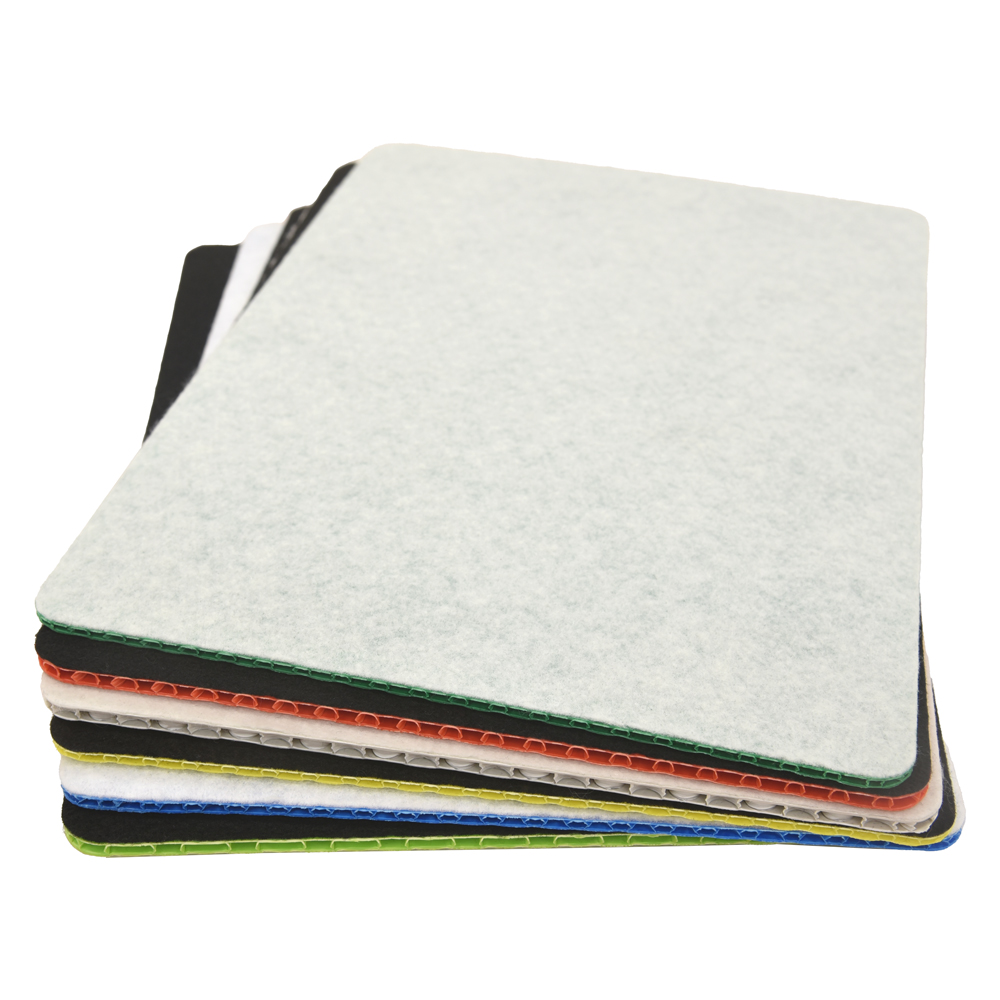
If they are reusable, they get cleaned and stacked on the day, while there is still labour on site. Left until the end of the week, they get skipped – and the whole reuse economics of the job disappears in the skip. Naming who does this, and when, is worth more than any product decision.
Removal and the cleaning window
Removal produces dust, and cleaning needs the area empty. On a large floor these cannot happen in the same day across the whole area – so sequence by zone: remove and clean zone one completely before starting zone two. It keeps a clean area clean and it means the client can be shown finished areas progressively rather than everything at once.
Site traffic during removal
Removal happens while other trades are still finishing, and they will walk across the floor the moment it is uncovered. Agree a route that stays protected until the very end, and tell everyone what it is. A floor uncovered on Monday and walked on by three trades before Friday is a floor that needs cleaning twice.
What to do about the last room
There is always one area that cannot be uncovered until the last minute – usually the entrance or the room where the materials are staged. Plan for it explicitly rather than discovering it on the day: clear the staging first, then remove, then clean. Leaving it to chance means it gets done last, in a hurry, with the worst result.
What we can do
We supply reusable honeycomb panels and can advise on the removal and cleaning sequence for a specific programme. Tell us the areas and the handover date, and we will work backwards to a removal schedule. Removal technique is described in removing protection without damaging the floor below.