
What Makes the Honeycomb Core Structurally Efficient
The honeycomb geometry is nature’s answer to the stiffness-to-weight problem that bulk containers face every day in a busy yard. Rulowin bulk containers use a PP honeycomb board with cell sizes of 8 to 12 mm, producing a panel that is 60 percent lighter than an equivalent solid sheet yet retains 85 percent of the bending stiffness needed to hold a stacked load.
The hexagonal cells distribute point loads radially, so a forklift tine impact localizes rather than propagating a crack across the whole wall during a shift. That damage tolerance means a minor knock does not write off the entire container, which is a key reason honeycomb has become the default core for returnable bulk packaging in demanding industrial supply chains across Europe and Asia.
Fold Mechanism and Hinge Design
A foldable container must collapse thousands of times without fatigue, so the hinge is the most engineered part of the product and the one we test hardest. We specify a living hinge zone with a minimum radius of 1.5 mm and a polypropylene copolymer grade that keeps its elongation at break above 400 percent after accelerated aging in a heat chamber.
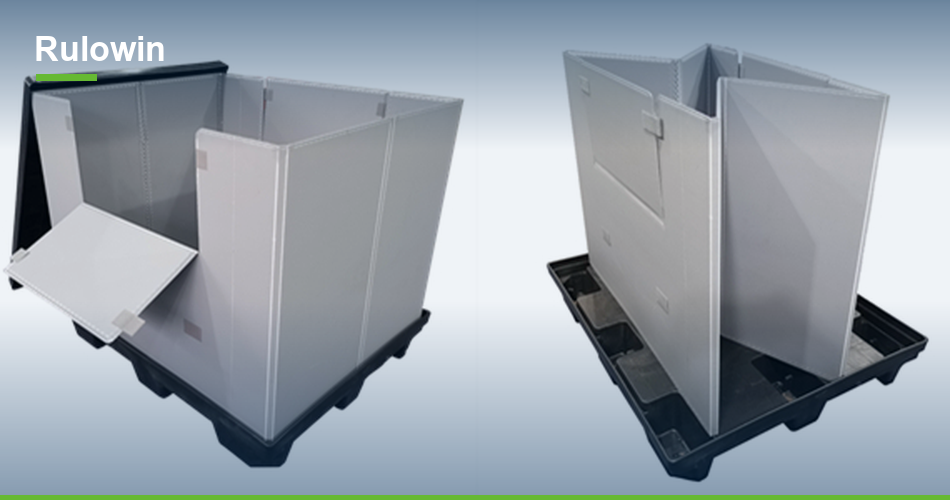
Field data from a tier-one automotive supplier shows 4,000 fold cycles before hinge replacement is even considered, which translates to years of normal use before any maintenance event occurs on the fold line. The sidewalls fold inward and the base drops, cutting return volume by up to 78 percent so the empty container takes almost no space on the returning truck or in the warehouse corner.
Load Testing and Safety Factors
Every container is validated to a 2.5 safety factor against its rated load, which is conservative by design and exceeds typical industry practice for reusable bulk boxes in the field. A 500 kg unit is tested to 1,250 kg static and 750 kg dynamic on a vibration table running at 3 to 5 Hz that simulates a rough road.
Color-coded load plates indicate the rated capacity so floor staff never overload a unit, and the result is a bulk container that survives 150 to 200 loops in harsh industrial duty before the PP is recovered and re-extruded. The tested safety margin also gives the quality team confidence to approve the container for high-value contents without a separate engineering review for every new product loaded into it.
Integration With Handling Equipment
Foldable honeycomb containers are designed for the equipment already in the building, not a hypothetical future automation that may never arrive. Fork pockets are molded to standard dimensions and the base is flat enough for conveyor transfer and AS/RS cranes that pick from a defined edge without slipping or jamming during a high-speed retrieval cycle.
Drop-in dollies let staff move a loaded unit by hand on the floor without a forklift, which is useful in cells where a truck would be overkill and slower than a simple wheeled transfer across a short distance between two workstations. This flexibility means the same container serves both automated and manual areas of the plant without a separate variant being purchased and stocked by the logistics team.