
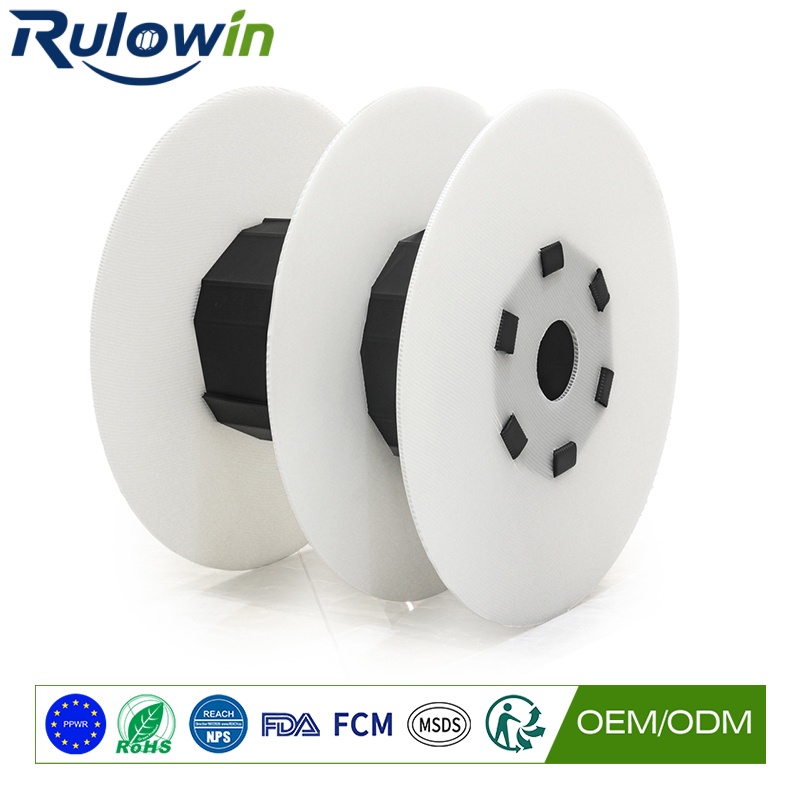
Both are called rope, both get wound onto similar-sized spools, and they ask for nearly incompatible things. If you have switched from steel to synthetic and kept the spools, most of what has gone wrong since can probably be explained by that.
Weight is the obvious difference
Steel wire rope is heavy; synthetic is light. So the total load on a synthetic spool is low, which means:
- Flange load is much lower — you do not need the structural margin
- The flange design thinking for steel is over-specified here
- Handling is easier, but the spool may be too light to sit stably where a heavy one did
That last point surprises people. A stack of empty synthetic-loaded spools is light enough to be moved by wind or by a nudging forklift in ways a stack of steel ones is not.
Bend radius goes the wrong way
This is the important divergence. Steel wire rope has a minimum bend radius that is generous and largely determined by construction. Synthetic rope tolerates much tighter bends — but it takes permanent set far more readily.
Practical consequences:
- You can go smaller on the core without exceeding the minimum — but you may not want to, because set-in is the bigger problem
- Synthetic remembers being bent more than steel does, which connects directly to the set discussion in our article on product curl
- Kinks and hockles are a synthetic problem with no steel equivalent
Surface is far more important
Steel rope will abrade a rough surface, mostly damaging the surface. Synthetic rope is damaged by it. A burr, a rough core, a protruding joint — these fray synthetic fibres and you see it as product damage rather than wear.
Every comment about smooth surfaces in our soft wire article applies here with more force.
Creep changes everything
Synthetic fibres creep under sustained load. This is well established behaviour for high-modulus polymers, and it has a consequence specific to this product: a synthetic rope left wound under tension for months will take a set that steel would not.
Combined with the sustained-load behaviour discussed generally in our piece on long-term wound storage, it means synthetic spools should be turned over reasonably briskly rather than held.
Tension
Lower, and for a different reason than usual. Synthetic rope deforms; steel does not. Wind it tight and you stretch it, and unlike steel it may not come back. There are also safety implications specific to stored energy in rope under tension that sit outside what this article covers — worth raising with your product supplier rather than your spool supplier.
Chemical rather than mechanical concerns
Synthetic rope cares about UV, chemicals and heat in ways steel largely does not. For the spool this mostly translates into:
- Nothing in the spool that degrades in UV and transfers onto product
- No residues from previous products — our cleaning article covers which methods damage PP
- No trapped water against the product
What carries over
Not everything differs. Traverse behaviour, the need for clean layer separation, most handling considerations, and the fact that most damage happens at doff rather than during winding — all the same.
The practical recommendation
If you are switching from steel to synthetic, do not assume the existing spools transfer. Review core diameter against the new product’s requirements, review surface condition with fresh eyes, and reconsider whether the duty justifies the spool specification you inherited.
Odds are you will end up running lighter-duty our hollow board spools than you think, with better surface finish and possibly a larger core than the minimum suggests. Tell us what you are running now and what you are moving to, and we will tell you what we would change.